
Understanding Depreciation Expense: A Comprehensive Guide
When a long-term asset is purchased, it should be capitalized instead of being expensed in the accounting period it is purchased in. Assuming the asset will be economically useful and generate returns beyond that initial accounting period, expensing it immediately would overstate the expense in that period and understate it in all future periods. To avoid doing so, depreciation is used to better match the expense of a long-term assetPP&E (Property, Plant and Equipment)PP&E (Property, Plant, and Equipment) is one of the core non-current assets found on the balance sheet. PP&E is impacted by Capex, to periods it offers benefits or to the revenueSales RevenueSales revenue is the income received by a company from its sales of goods or the provision of services. In accounting, the terms "sales" and it generates.
There are different methods used to calculate depreciation, and the type is generally selected to match the nature of the equipmentPP&E (Property, Plant and Equipment)PP&E (Property, Plant, and Equipment) is one of the core non-current assets found on the balance sheet. PP&E is impacted by Capex,. For example, vehicles are assets that depreciate much faster in the first few years; therefore, an accelerated depreciation method is often chosen.
Example of Depreciated Asset
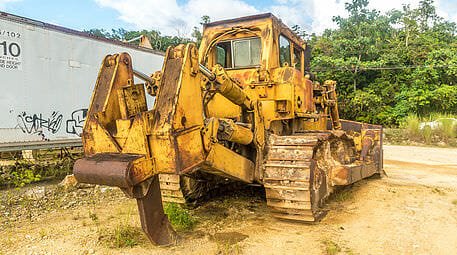
What are the Depreciation Expense Methods?
There are three common methods of calculating depreciation for a company:
- Straight-line depreciation
- Declining balance (accelerated depreciation)
- Units-of-production
1. Straight-line depreciation
The straight-line depreciation method is the most widely used and is also the easiest to calculate. The method takes an equal depreciation expense each year over the useful life of the asset.
Periodic Depreciation Expense = (Fair Value – Residual Value) / Useful life of Asset
For example, Company A purchases a building for $50,000,000, to be used over 25 years, with no residual value. The annual depreciation expense is $2,000,000, which is found by dividing $50,000,000 by 25.
To learn more, check out our free accounting fundamentals course.
2. Declining balance
A declining balance depreciation is used when the asset depreciates faster in earlier years. As the name implies, the depreciation expense declines over time. To do so, the accountant picks a factor higher than one; the factor can be 1.5, 2, or more.
A 2x factor declining balance is known as a double-declining balance depreciation schedule. As it is a popular option with accelerated depreciation schedules, it is often referred to as the “double declining balance” method.
Periodic Depreciation Expense = Beginning Value of Asset * Factor / Useful Life
The depreciation expense amount changes every year because the factor is multiplied with the previous period’s net book value of the asset, decreasing over time due to accumulated depreciation.
For example, Company A owns a vehicle worth $100,000, with a useful life of 5 years. They want to depreciate with the double-declining balance. In the first year, the depreciation expense is $40,000 ($100,000 * 2 / 5). In the next year, the depreciation expense will be $24,000 ( ($100,000 – $40,000) * 2 / 5).
See how the declining balance method is used in our financial modeling course.
3. Units-of-production
Under the units-of-production method, the depreciation expense per unit produced is calculated by dividing the historical value of the asset minus the residual value by its useful life in terms of units (or the total number of products that it is expected to be able to manufacture). The method records a higher expense amount when production is high to match the equipment’s higher usage. It is, obviously, most useful for depreciating production machinery.
Unit Depreciation Expense = (Fair Value – Residual Value) / Useful Life in Units
Periodic Depreciation Expense = Unit Depreciation Expense * Units Produced
For example, Company A has a machine worth $100,000, with a residual value of $5,000. Production of units is 95,000. Thus, on a unit basis, the expense is ($100,000 – $5,000) / 95,000 = $1. In one year, company A produces 10,000 units and, thus, records a depreciation expense of $10,000
The units-of-production method is often used in mining operations. Check out our financial modeling course specialized in the mining industry.
Learn More
CFI offers the Financial Modeling & Valuation Analyst (FMVA)®Become a Certified Financial Modeling & Valuation Analyst (FMVA)®CFI's Financial Modeling and Valuation Analyst (FMVA)® certification will help you gain the confidence you need in your finance career. Enroll today! certification program for those looking to take their careers to the next level. To keep learning and advancing your career, the following resources will be helpful:
- Debt ScheduleDebt ScheduleA debt schedule lays out all of the debt a business has in a schedule based on its maturity and interest rate. In financial modeling, interest expense flows
- Bonds PayablesBond PayablesBonds payable are generated when a company issues bonds to generate cash. Bonds payable refers to the amortized amount that a bond issuer
- Accounts PayablesAccounts PayableAccounts payable is a liability incurred when an organization receives goods or services from its suppliers on credit. Accounts payables are
- Share CapitalShare CapitalShare capital (shareholders' capital, equity capital, contributed capital, or paid-in capital) is the amount invested by a company’s
-

Understanding Discretionary Expenses: Definition & Examples
A discretionary expense is a non-essential expense that is incurred by an individual, household, or business. Another way to think of discretionary expenses is to classify them as “wants”
-

Understanding Warranty Expense: Definition & Impact
Warranty expense is an expense related to the repair, replacement, or compensation to a user for any product defects. In other words, a vendor or manufacturerOriginal Equipment Manufacturer (OEM)An Or
Accounting
- Accelerated Depreciation: A Comprehensive Guide
- Accounting vs. Tax Depreciation: Key Differences Explained
- Accounting Profit Explained: Calculation & Importance
- Understanding Accumulated Depreciation: A Comprehensive Guide
- Understanding Asset Disposition: Definition & Tax Implications
- Understanding Insurance Expense: Definition & Accounting
- Understanding Rent Expense: Definition & Significance
- Tax Depreciation Explained: A Comprehensive Guide for Taxpayers
- Understanding Wage Expense: Definition, Types & Accounting
-
 Understanding Utilities Expense: Definition & Accounting
Utilities expense is the cost incurred by using utilities such as electricity, water, waste disposal, heating, and sewage. The expenses are incurred over the course of the reporting period, calculated...
-
 Variable Costing Explained: A Clear Guide for Businesses
Variable costing is a concept used in managerial and cost accounting in which the fixed manufacturing overhead is excluded from the product-cost of production. The method contrasts with absorption cos...