
Homogeneous Cost Pools: Definition, Examples & Benefits
A homogeneous cost pool is essentially an accounting term used by the management of a company to group together costsFixed and Variable CostsCost is something that can be classified in several ways depending on its nature. One of the most popular methods is classification according that show a similar cause and effect, or benefits received, or relationship in terms of the allocation base of costs. In short, homogeneous cost pools are a way of logically grouping together related costs. The more similar the cost pools are, the more easily they can be attributed to a specific cost.

An activity cost pool is one of the most common forms of homogeneous cost pools. It involves the grouping together of all costs that are associated with a given task within a companyCorporationA corporation is a legal entity created by individuals, stockholders, or shareholders, with the purpose of operating for profit. Corporations are allowed to enter into contracts, sue and be sued, own assets, remit federal and state taxes, and borrow money from financial institutions., such as the making of a specific product. Pooling together all the costs associated with all activities required to complete a given task makes it easier to obtain a solid estimate of how much the task will actually cost the company.
Breaking Down Homogeneous Cost Pool
The allocation base of cost determines how the cost is assigned to a cost pool. For example, the costs associated with maintaining machineryPP&E (Property, Plant and Equipment)PP&E (Property, Plant, and Equipment) is one of the core non-current assets found on the balance sheet. PP&E is impacted by Capex, would likely be assigned based on hours of operation. The longer the machinery runs, the higher the estimated maintenance cost assigned to the cost pool.
The cause and effect relationship focuses on why resources need to be used or consumed and on identifying what specifically drives the cost of one activity or another. For example, say that the number of hours spent on quality control is a cost allocation base.
A manufacturer producing a good that is intricately designed and requires a lot of parts all working together perfectly – such as a high-technology product – needs to spend a substantial amount of time ensuring that each product’s quality is up to standards. For this reason, quality control, then, is a significant cost driverCost DriverA cost driver is the direct cause of a cost, and its effect is on the total cost incurred. For example, if you are to determine the amount of electricity consumed in a particular period, the number of units consumed determines the total bill for electricity. In such a scenario, the units of electricity consumed in the manufacturing process.
The grouping by benefits into cost pools is determined by which departments benefit from the allocation base. For example, consider advertising expenses. A company’s advertising produces benefits for the entire company, not just for a single department. Therefore, it seems appropriate that a company would distribute advertising expenses evenly across all departments.
The Good and the Bad of a Homogeneous Cost Pool
The larger the number of cost drivers within a company, the bigger the number of homogeneous cost pools there will likely be. Identifying such cost pools can genuinely help a company better estimate and account for costs, ultimately helping improve its bottom line.
The primary difficulty with cost pools, especially when there are a lot of them, is that they can require a significant amount of effort and time to establish what should be included within them and then to them over the long-term.
Therefore, it’s advantageous for a company to limit the number of its cost pools as much as possible in most cases. However, doing so may mean that each cost pool may become less homogeneous – the costs within it may not be similar. While this can make establishing accurate cost estimates more difficult, in the end, it can save companies a good deal of time and money when it comes to establishing and maintaining the cost pools themselves.
For smaller, activity-based costingActivity-Based CostingActivity-based costing is a more specific way of allocating overhead costs based on “activities” that actually contribute to overhead costs. An activity is projects, there is less of an issue with cost pools. There is a smaller number of costs to be considered, and therefore, the pool’s accuracy level can be more easily monitored and estimated.
While they come with some inherent difficulties, homogeneous cost pools can make a huge difference for companies in accurately determining and managing costs. Using cost pools can help companies more effectively anticipate and plan for expenditures.
Additional Resources
CFI is the official provider of the global Financial Modeling & Valuation Analyst (FMVA)® Become a Certified Financial Modeling & Valuation Analyst (FMVA)®CFI's Financial Modeling and Valuation Analyst (FMVA)® certification will help you gain the confidence you need in your finance career. Enroll today! certification program, designed to help anyone become a world-class financial analyst. For more information, check out the following CFI resources:
- Cost of Goods Manufactured (COGM)Cost of Goods Manufactured (COGM)Cost of Goods Manufactured (COGM) is a term used in managerial accounting that refers to a schedule or statement that shows the total
- Cost of Goods Sold (COGS)Cost of Goods Sold (COGS)Cost of Goods Sold (COGS) measures the “direct cost” incurred in the production of any goods or services. It includes material cost, direct
- Marginal Cost FormulaMarginal Cost FormulaThe marginal cost formula represents the incremental costs incurred when producing additional units of a good or service. The marginal cost
- Variable CostingVariable CostingVariable costing is a concept used in managerial and cost accounting in which the fixed manufacturing overhead is incurred in the period that
-

Customer Acquisition Cost (CAC): Definition & Calculation
Customer acquisition cost (CAC) is the cost related to acquiring a new customer. In other words, CAC refers to the resources and costs incurred to acquire an additional customer. Customer acquisition
-

Understanding Direct Cost of Sales (COGS): Definition & Components
Direct cost of sales, more commonly known as cost of goods sold (COGS), is the amount of cash that a company invests in the production of a good or service it sells. Direct cost of sales do
Accounting
- Pool Heating Costs: A Comprehensive Guide to Average Expenses & Savings
- Cost of Capital: Definition, Calculation & Importance
- Understanding Allowed Depreciation: Tax Deductions for Businesses
- Capitalized Costs Explained: Definition & Examples
- Cost Allocation: Definition, Methods & Importance
- Cost Drivers: Understanding What Impacts Your Business Expenses
- Depreciated Cost Explained: Calculation & Importance
- Differential Cost Analysis: A Guide for Business Decisions
- Marginal Cost: Definition, Calculation & Examples
-
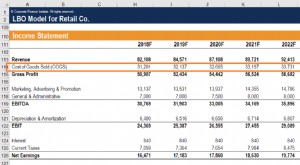 Cost of Goods Sold (COGS): Definition, Calculation & Importance
Cost of Goods Sold (COGS) measures the “direct cost” incurred in the production of any goods or services. It includes material cost, direct labor cost, and direct factory overheads, and is...
-
 Cost Recovery Method: Understanding Revenue Recognition
The cost recovery method of revenue recognitionRevenue RecognitionRevenue recognition is an accounting principle that outlines the specific conditions under which revenue is recognized. In theory, the...