
Job Order Costing: A Comprehensive Guide for Businesses
In managerial accounting, there are two general types of costing systems to assign costs to products or services that the company provides: “job order costing” and “process costing”. Job order costing is used in situations where the company delivers a unique or custom job for its customers. Every customer is treated uniquely and delivered products to specifically suit their individual needs.

To learn more, launch our free accounting courses!
Job Order Costing vs Process Costing
As an example, law firms or accounting firms use job order costing because every client is different and unique.
Process costing, on the other hand, is used when companies offer a more standardized product. No matter who the customer is, they all end up receiving the same product.
For example, Coca-Cola may use process costing to track its costs to produce its beverages. In job order costing, the company tracks the direct materials, the direct labor, and the manufacturing overhead costs to determine the cost of goods manufactured (COGM)Cost of Goods Manufactured (COGM)Cost of Goods Manufactured (COGM) is a term used in managerial accounting that refers to a schedule or statement that shows the total.
Actual Costing (form of job order costing)
One type of job-order costing is called actual costing. The actual costing system, like the name implies, is a costing system that traces direct and indirect costs to a cost object by using the actual costs incurred in the job.
Although this system is much more simplistic, actual costing systems are not commonly found in real-world situations because actual costs cannot usually be determined in a timely manner because they are often not known until long after the job has been completed.
To learn more, launch our free accounting courses!
Normal Costing
Due to the practical difficulties of using actual costing, many companies instead utilize a normal costing system to obtain a close approximation of the costs on a timelier basis, especially manufacturing overhead costs. Direct materials and direct labor are much more feasible in terms of access to actual costs from materials requisition forms and labor time sheets, while manufacturing overhead costs pose difficulties in determining actual costs.
Due to the need for immediate access to job costs, many companies use a predetermined/budgeted, manufacturing overhead rate to estimate manufacturing overhead costs.
Commonly, predetermined rates may be derived from the company applying overhead costs on the basis of labor hours or machine hours. This means that the company uses labor hours or machine hours (i.e., the primary cost driver) to reasonably estimate manufacturing overhead costs.
To learn more, launch our free accounting courses!
The formula to determine this overhead rate:
Overhead rate = estimated manufacturing overhead / estimated cost allocation base
Where the cost allocation base refers to the estimated machine hours or estimated labor hours, depending on which one the company chooses to estimate its overhead costs by.
Example of calculating overhead rate
XYZ Company estimates that for the current year, it will work 75,000 machine hours and incur $450,000 in manufacturing overhead costs. The company applies overhead cost on the basis of machine hours worked.
This means that the company would estimate $6 in manufacturing overhead costs for every one machine hour worked. So, if the company actually worked 5000 machine hours, the estimated overhead costs would be $30,000.
To learn more, launch our free accounting courses!
The Role of Work in Process (WIP) Inventory
The WIP inventory asset account is where the actual direct materials cost, actual direct labor cost, and estimated manufacturing overhead costs are recorded in order to determine the COGMCost of Goods Manufactured (COGM)Cost of Goods Manufactured (COGM) is a term used in managerial accounting that refers to a schedule or statement that shows the total. This can be clearly seen through a WIP Inventory T-accountT Accounts GuideIf you want a career in accounting, T Accounts may be your new best friend. The T Account is a visual representation of individual accounts.
The T-account would look like this:
Work in Process (WIP) InventoryBeginning Balance a
Direct Materials b
Direct Labor c
Manufacturing Overhead (estimated) d
f COGMEnding Balance e
On the credit side of the T-account is COGM. By knowing the opening and closing balances of the inventory account in addition to the actual DM and DL costs and the estimated MOH costs, the COGM can be calculated.
The estimated manufacturing overhead value can be compared to the actual manufacturing overhead value in a separate manufacturing T-AccountT Accounts GuideIf you want a career in accounting, T Accounts may be your new best friend. The T Account is a visual representation of individual accounts to determine any significant differences.
To learn more, launch our free accounting courses!
Job Order Costing – Under or Over Estimated Overhead
Because the predetermined overhead rate used by companies is purely based on estimates, the actual overhead cost incurred during the year may be higher or lower than the amount estimated. This is referred to as “under or overapplied overhead.”
When overhead is underapplied, manufacturing overhead costs have been understated and upward adjustments need to be made to inventory and/or expense accounts, depending on which method the company decides to use.
In contrast, when overhead is overapplied, manufacturing overhead costs have been overstated and therefore inventories and/or expenses need to be adjusted downward. There are two ways to adjust for the under or overapplied overhead amounts.
Method 1Method 2ProcessDifference is closed out to Cost of Goods Sold (COGS)Difference is prorated between Work in Process Inventory, Finished Goods Inventory, and COGSFrequencyMore commonly usedRarerJournal Entry: Situation where MOH is overapplied by $10,000DR MOH 10,000
CR Cost of Goods Sold 10,000
DR MOH 10,000
CR Cost of Goods Sold 10,000/x
CR WIP Inventory 10,000/y
CR FG Inventory 10,000/z
Value of x, y, z depends on the company
To learn more, launch our free accounting courses!
More useful accounting guides and resources
We hope this has been a helpful guide to job order costing in accounting. Our mission is to help you advance your career, and with that in mind we’ve created these additional CFI resources to help you along your way:
- Cost of Goods Manufactured (COGM)Cost of Goods Manufactured (COGM)Cost of Goods Manufactured (COGM) is a term used in managerial accounting that refers to a schedule or statement that shows the total
- Cost of Goods Sold (COGS)AccountingOur Accounting guides and resources are self-study guides to learn accounting and finance at your own pace. Browse hundreds of guides and resources.
- Financial accounting theoryFinancial Accounting TheoryFinancial Accounting Theory explains the why behind accounting - the reasons why transactions are reported in certain ways. This guide will
- Inventory write-downAccountingOur Accounting guides and resources are self-study guides to learn accounting and finance at your own pace. Browse hundreds of guides and resources.
- Analysis of financial statementsAnalysis of Financial StatementsHow to perform Analysis of Financial Statements. This guide will teach you to perform financial statement analysis of the income statement,
-

Variable Costing Explained: A Clear Guide for Businesses
Variable costing is a concept used in managerial and cost accounting in which the fixed manufacturing overhead is excluded from the product-cost of production. The method contrasts with absorption cos
-

Understanding Variable Costs: Definition & Examples
Variable costs are expenses that vary in proportion to the volume of goodsInventoryInventory is a current asset account found on the balance sheet, consisting of all raw materials, work-in-progre
Accounting
- Limit Orders: A Comprehensive Guide for Investors
- Understanding Held Orders: A Quick Guide for Traders
- Stop Orders: A Comprehensive Guide for Investors
- Stop-Loss Orders: Protecting Your Investments & Managing Risk
- Absorption Costing: A Comprehensive Guide for Businesses
- Backflush Costing: Definition, Benefits & Implementation
- Capitalized Costs Explained: Definition & Examples
- Understanding Contribution Margin: A Key Profit Metric
- Construction Job Costing: A Comprehensive Guide to Optimization
-
 Understanding Product Costs: Direct Materials, Labor & Overhead
Product costs are costs that are incurred to create a product that is intended for sale to customers. Product costs include direct material (DM), direct labor (DL), and manufacturing overhead (MOH).&n...
-
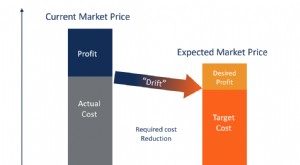 Target Costing: A Comprehensive Guide to Value-Based Pricing
Target costing is not just a method of costing, but rather a management technique wherein prices are determined by market conditions, taking into account several factors, such as homogeneous products,...