
Listed Property Explained: Tax Implications & Business Use
Listed property is a specific type of depreciable asset that is primarily used as a productive asset for business purposes. To qualify as listed property, the property should be used for over 50% of the company’s business, implying that it can also be used for personal purposes. The benefit derived by users of listed property results is taxable. Listed property is therefore subject to specific taxation rules.

Summary
- Listed property is a specific type of depreciable asset that is primarily used as a productive asset for business purposes. It is subject to its own taxation rules.
- Listed property can be any asset that is eligible to record depreciation in accordance with the Internal Revenue Services rules.
- Listed property rules were introduced as a component of the U.S. tax code as a preventative measure to stop people from fraudulently claiming tax deductions for the personal use of property.
Criteria for Classifying Listed Properties
Listed property can be any asset that is eligible to record depreciation in accordance with the Internal Revenue Services (IRS) How to Use the IRS.gov WebsiteIRS.gov is the official website of the Internal Revenue Service (IRS), the United States’ tax collection agency. The website is used by businesses andrules. As long as the asset is primarily used for business purposes, it should be depreciated in value over time.
The IRS defines listed property to be any of the following:
- Any passenger automobile. A passenger automobile is any four-wheeled vehicle primarily for use on public streets, roads, and highways and rated at 6,000 lbs or less of unloaded gross vehicle weight.
- Any other property used for transportation purposes
- Any computer and related peripheral equipment, unless the equipment is used only at a regular business establishment and owned or leased by the individual who operates the establishment. A normal business establishment includes a portion of a dwelling unit if, and only if, that portion is used both regularly and exclusively for the business.
- Any property of a type generally used for recreation, amusement, or entertainment, purposes. Property used for amusement can include any communication, phonographic, photographic, and video recording equipment.
What is Depreciation?
Depreciation expense quantifies the usage of an asset over time. Although depreciation is a non-cash transaction, it is a significant operating expenseOperating ExpensesOperating expenses, operating expenditures, or "opex," refers to the expenses incurred regarding a business’s operational activities..
Depreciation of assets can be reported through the following three methods:
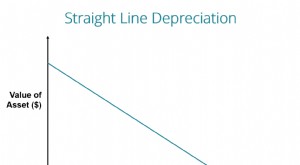
1. Straight-line depreciation
Straight-line depreciation is the most common method of computing depreciation for financial reporting. In this method, the salvage valueSalvage ValueSalvage value is the estimated amount that an asset is worth at the end of its useful life. Salvage value is also known as scrap value of the asset is subtracted from the historical cost of the asset and divided by the useful life of the asset.
2. Double-declining balance (DDB)
The double-declining balance method is a type of accelerated depreciationAccelerated DepreciationAccelerated depreciation is a depreciation method in which a capital asset reduces its book value at a faster (accelerated) rate than it would, where more depreciation expense is recognized in the early years of an asset’s life and a lesser amount of depreciation in the latter years. An accelerated depreciation method results in lower net income during the early years of an asset’s life and a higher net income in the latter years.
3. Component depreciation
Component depreciation is allowed under GAAP; however, it is very rarely used. Under component depreciation, each component of the asset has its useful life estimated, and then the depreciation expense is computed separately for each.
Introduction of Listed Property Rules
Listed property rules were initially introduced as a component of the U.S. tax code as a preventative measure to stop people from claiming tax deductions for the personal use of property, falsely claiming that it was for business purposes. Companies must take extremely detailed records of all assets that are deemed listed property, including the maintenance costs.
What is the Predominant Use Test?
The costs incurred in operations at the listed property are deemed non-deductible business expenses. Therefore, tax-paying entities are required to provide evidence that the property is used for business-related purposes.
The predominant use test stipulates that the business usage of the listed property needs to be used at least 50% of the time for business purposes. The fact must be proven for every asset that is considered listed property. It must be done so the business can:
- Claim a bonus deduction
- Claim an expense
- To depreciate the property
Additional Resources
CFI offers the Capital Markets & Securities Analyst (CMSA)®Program Page - CMSAEnroll in CFI's CMSA® program and become a certified Capital Markets &Securities Analyst. Advance your career with our certification programs and courses. certification program for those looking to take their careers to the next level. To keep learning and advancing your career, the following resources will be helpful:
- Accounting Depreciation vs. Tax DepreciationAccounting Depreciation vs Tax DepreciationBefore we discuss accounting depreciation vs tax depreciation, let us first talk about depreciation itself. Essentially, depreciation is a method of
- Economic LifeEconomic LifeEconomic life refers to the length of time an asset is expected to be useful to the owner. It is also called useful life or depreciable life
- Federal Income TaxFederal Income TaxThe income tax that one pays at the federal level is determined by applying a predetermined rate to the funds an individual or business has
- How to Use the IRS.gov WebsiteHow to Use the IRS.gov WebsiteIRS.gov is the official website of the Internal Revenue Service (IRS), the United States’ tax collection agency. The website is used by businesses and
-
Property, Plant & Equipment (PP&E): Definition & Financial Significance
Property, Plant, and Equipment (PP&E) is a non-current, tangible capital asset shown on the balance sheetBalance SheetThe balance sheet is one of the three fundamental financial statements. T
-
Straight-Line Depreciation: Definition, Calculation & Example
With the straight line depreciation method, the value of an asset is reduced uniformly over each period until it reaches its salvage valueSalvage ValueSalvage value is the estimated amount that a
Accounting
- Understanding Residual Property: What Happens When There's No Will?
- Understanding Income Properties: A Guide to Real Estate Investment
- Accelerated Depreciation: A Comprehensive Guide
- Accounting vs. Tax Depreciation: Key Differences Explained
- Understanding Accumulated Depreciation: A Comprehensive Guide
- Understanding Allowed Depreciation: Tax Deductions for Businesses
- Understanding MACRS Depreciation: A Guide for U.S. Taxpayers
- Tax Depreciation Explained: A Comprehensive Guide for Taxpayers
- Real Estate Flipping: A Beginner's Guide to Quick Profits
-
 Contra Asset Accounts: Definition & Accounting Explained
In bookkeeping, a contra asset account is an asset account in which the natural balance of the account will either be a zero or a credit (negative) balance. The account offsets the balance in the resp...
-
 Fully Depreciated Assets: Definition, Causes & Implications
A fully depreciated asset is an accounting term used to describe an asset that is worth the same as its salvage valueSalvage ValueSalvage value is the estimated amount that an asset is worth at the en...