
Understanding Income Properties: A Guide to Real Estate Investment
Income property is a property or piece of real estate that is bought and developed with the purpose of generating income by renting or leasing the property to others.
Furthermore, income properties offer the secondary benefit of asset appreciation, where the value of the property or piece of real estate grows over time. In other words, an income property is bought with the goal of generating cash flowCash FlowCash Flow (CF) is the increase or decrease in the amount of money a business, institution, or individual has. In finance, the term is used to describe the amount of cash (currency) that is generated or consumed in a given time period. There are many types of CF from it.

Many refer to income properties as a form of passive income. Also, they also account for the costs needed to maintain the property or piece of real estate; more specifically, the income generated from an income property is calculated as the nominal revenues from renting/leasing the property, less the variable costs needed to maintain and upkeep the property or piece of real estate.
It is also important to note that income properties can be either residential or commercial. An example of a residential income property is an investor buying a house and renting it out to generate passive income.
An example of a commercial income property is an investor purchasing a shopping mall and renting or leasing the spaces in the shopping mall to those who wish to operate their businesses in the shopping center. The main goal of the investor would be to generate income from the rent and lease flows of the tenants, and the secondary goal would be the asset appreciation of the shopping mall.
Income Property Considerations
Investors must consider many factors when deciding whether to pursue an income property or not, including:
1. Source of financing
First, the financing for the acquisition of the income property is key. It is critical to analyze the optimal amount of leverageLeverageLverage is a strategy that companies use to increase assets, cash flows, and returns, though it can also magnify losses. There are two main types of leverage to use to purchase the property and whether the cash flows from the acquisition will be sufficient to pay off the debt.
2. Interest rates
The interest rate environment is important to analyze before making such a decision. If interest rates are currently high, the interest payments on the debt will be higher. Also, high interest rates will also affect the tenants and may put downward pressure on the amount of revenue that can be generated from the property.
3. Renovation, maintenance, and upkeep costs
In addition to financing and interest rate considerations, the renovation, maintenanceMaintenance ExpensesMaintenance expenses are costs incurred on a regular basis to keep an asset working in its optimal condition. Maintenance costs come into, and upkeep costs of the property must be taken into consideration as they will add to the cost of the property.
4. Location of the property
The area in which the income property is located must also be analyzed to understand demand and pricing.
There are many more considerations to take into account before purchasing an income property; thus, it is important for investors to do their full due diligence before executing such a transaction.
Benefits of an Income Property
Income properties come with many benefits, including:
1. Tax write-offs
An important benefit is the ability to be entitled to tax write-offs. One of the largest vehicles for a tax write-off is the depreciation of the property or piece of real estate.
Most governments allow the investor to depreciate the property according to a depreciation schedule. The depreciation will decrease the investor’s taxable incomeTaxable IncomeTaxable income refers to any individual's or business’ compensation that is used to determine tax liability. The total income amount or gross income is used as the basis to calculate how much the individual or organization owes the government for the specific tax period., thus reducing the tax bill.
Other vehicles for a tax write-off are maintenance costs and interest paid on any debt; both methods help reduce taxable income.
2. Access to passive income
Another benefit is the access to passive income. Passive income is sought after as in normal times. Minimal effort is needed to keep the income stream afloat; however, it should be stated that there is a significant amount of upfront effort and costs.
3. Asset appreciation
An additional benefit to income properties is the chance of the asset appreciating over time and an investor being able to sell it for a higher price than which they bought it for.
Income Property vs. Investment Property
Income properties and investment properties are related in the sense that an investor purchases them to generate a profit.
An investment property is solely bought to sell it for a higher price than it was originally bought for. However, such an objective is just a secondary one for an income property, where the main goal is to generate rental/lease income streams.
Related Readings
CFI offers the Certified Banking & Credit Analyst (CBCA)®Program Page - CBCAGet CFI's CBCA™ certification and become a Commercial Banking & Credit Analyst. Enroll and advance your career with our certification programs and courses. certification program for those looking to take their careers to the next level. To keep learning and developing your knowledge base, please explore the additional relevant resources below:
- CommercialCommercial Real EstateCommercial real estate are buildings or land that generate income, and while the definition varies among different countries, the core Real EstateCommercial Real EstateCommercial real estate are buildings or land that generate income, and while the definition varies among different countries, the core
- Industrial REITsIndustrial REITsIndustrial REITs are companies that own and manage real estate properties that are used for manufacturing, production, storage, and distribution of goods.
- Passive IncomePassive IncomePassive income is any money earned in a manner that does not require too much effort. That said, there are some passive income generating ideas that require
- Types of Due DiligenceTypes of Due DiligenceOne of the most important and lengthy processes in an M&A deal is Due Diligence. The process of due diligence is something which the buyer conducts to confirm the accuracy of the seller's claims. A potential M&A deal involves several types of due diligence.
-

Understanding Federal Income Tax: A Comprehensive Guide
In many countries, taxes are imposed at the federal, state/provincial, and local level. The income tax that one pays at the federal level is determined by applying a predetermined rate to the earnings
-

Understanding Flow-Through Entities: Tax Advantages & Types
A flow-through entity – also known as a “pass-through entity” or “fiscally-transparent entity” – is a legal business entity where its profits flow directly to the i
finance
- Understanding Residual Property: What Happens When There's No Will?
- Understanding Discretionary Income: Definition & Examples
- EBITDA Explained: Understanding Earnings Before Interest, Taxes, Depreciation & Amortization
- Understanding Income: Definition, Types & Uses
- Understanding Income Tax: A Comprehensive Guide for Individuals & Businesses
- Understanding Interest Income: A Comprehensive Guide
- Understanding Taxable Income: Definition & Calculation
- Understanding Accounting Income: A Key Financial Metric
- Net Income Explained: A Comprehensive Guide for Businesses & Individuals
-
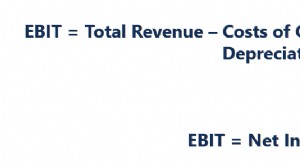 EBIT Explained: Understanding Earnings Before Interest & Taxes
EBIT stands for Earnings Before Interest and Taxes and is one of the last subtotals in the income statementIncome StatementThe Income Statement is one of a companys core financial statements...
-
 Real Estate Flipping: A Beginner's Guide to Quick Profits
Flipping is an investment strategy that many real estate investors choose to pursue. With this strategy, you will potentially be able to make quick profits and minimize risk. Here are the basics...