
Negative Assurance Explained: Auditor's Confirmation & Its Significance
Negative assurance is an accounting term used by auditors to inform external parties that a particular group of facts or financial data is deemed to be accurate since no contradicting evidence has been uncovered to dispute it. In other words, negative assurance confirms what an accountant does not know.

Negative assurance does not mean discrepancies are not present or that the audited company violated accounting regulationsSecurities and Exchange Commission (SEC)The US Securities and Exchange Commission, or SEC, is an independent agency of the US federal government that is responsible for implementing federal securities laws and proposing securities rules. It is also in charge of maintaining the securities industry and stock and options exchanges or committed fraud. It only reflects that the accountant is not aware of any such issues after conducting their review.
Summary
- Negative assurance is a term used by accountants to inform external parties that the financial data reviewed is accurate since no contradicting evidence has been uncovered to dispute it.
- It does not mean discrepancies are not present – only that the accountant is not aware of it after conducting their review.
- Negative assurance is used when an auditor reviews another auditor’s work completed for a company or reviews financial statements that will be used as part of an upcoming securities issuance.
When Does Negative Assurance Occur?
Negative assurance often occurs under the following two scenarios:
- One auditor reviews another auditor’s work completed for a company.
- An auditor reviews financial statementsAudited Financial StatementsPublic companies are obligated by law to ensure that their financial statements are audited by a registered CPA. The purpose of the that will be used as part of an upcoming securities issuance.
The first scenario typically occurs when an accountantAccountantAn accountant plays a very crucial role in an organization, regardless of whether it is a multinational company or a small, domestic one. is asked to review the certified financial statements already prepared by another accountant. The purpose of the second review is to confirm to external parties that the statements are indeed accurate and free from error.
It should be noted that in order to issue a negative assurance opinion, the examining accountant still needs to conduct the review directly and obtain evidence, as opposed to relying on information or evidence provided by third-party sources.
Negative Assurance vs. Positive Assurance
Negative assurance is often compared to positive assurance, which is considered a more reliable form of assurance.
Positive assurance is another term used by auditors to inform external parties as to what they believe based on their examination of financial documents. Positive assurance describes what an accountant knows.
Related Readings
CFI is the official provider of the global Commercial Banking & Credit Analyst (CBCA)™Program Page - CBCAGet CFI's CBCA™ certification and become a Commercial Banking & Credit Analyst. Enroll and advance your career with our certification programs and courses. certification program, designed to help anyone become a world-class financial analyst. To keep advancing your career, the additional resources below will be useful:
- Auditor OpinionsAuditor OpinionsIn the independent auditor’s report, an auditor can issue one of five different opinions:Clean (unqualified) opinion; Qualified opinion due
- Negative CovenantNegative CovenantA negative covenant, also known as a restrictive covenant, is a covenant that restricts one party from carrying out certain actions. Sometimes the agreement involves some form of compensation to the party that consents to the restriction.
- Audit AssertionsLegal Importance of an AuditThe legal importance of an audit is to uphold the reliability of financial statements for all external users. Auditors face civil and criminal
- Opinion LetterOpinion LetterAn opinion letter, also called a legal opinion, is a letter issued by a legal counsel that facilitates a lender’s due diligence process in a transaction.
-

Understanding Negative Credit Card Balances: What You Need to Know
A man is holding his credit card in front of a computer. Having a negative balance on your credit card means the company owes you money, a reversal of the ordinary situation. This is known as
-

PC Banking: A Comprehensive Guide to Online Banking Security & Features
PC banking refers to a person being able to access their banking information from a "personal computer." It has become a popular method for people to manage money and pay bills using online
Accounting
- Negative Correlation Explained: Understanding Inverse Relationships
- Understanding Negative Equity: Causes, Risks & Solutions
- Understanding Negative Growth: Causes, Impacts & Examples
- Understanding Negative Carry: Risks and Strategies
- Negative Gearing Explained: Understanding Investment Losses & Tax Benefits
- Understanding Assurance Services: Risk Reduction & Improved Decisions
- Negative Confirmation: Definition, Purpose & Audit Evidence
- Negative Goodwill Explained: Understanding Bargain Purchases
- Negative Income Tax: A Comprehensive Explanation
-
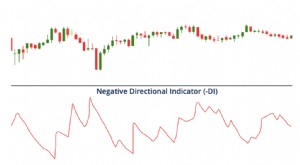 Understanding the -DI: A Guide to Negative Directional Indicators
A Negative Directional Indicator (-DI) represents the downward behavior of the financial market. An upward sloping negative directional indicator indicates that the downtrend is strengthening. Theoret...
-
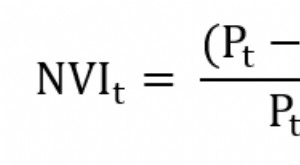 Negative Volume Index (NVI): A Comprehensive Guide
The Negative Volume Index (NVI) is a technical indicator used to identify trends in a market. It is a cumulative indicator, which means that all changes to the indicator accumulate. Put another way, t...