
Understanding Negative Carry: Risks and Strategies
Negative carry is a carry trade with a negative yield, meaning the cost of holding (carrying) the investment exceeds the yield.

How It Works
In some rare circumstances, it is prudent to purchase a low-yielding asset by using (borrowing) a high-yielding asset. Before we proceed, let us try to understand the primary motive behind such a transaction.
In finance, all investors are driven by the singular motive of generating returns. In most cases, the same is obtained by either dividends or interest incomeInterest IncomeInterest income is the amount paid to an entity for lending its money or letting another entity use its funds. On a larger scale, interest income is the amount earned by an investor’s money that he places in an investment or project.. Nevertheless, capital appreciation is also a very powerful weapon to generate returns. In the case of negative carry, the primary motive is to obtain returns via capital appreciation.
Examples of Negative Carry
A few examples, shown below, will help us understand the complicated mechanism of negative carry
1. Negative Carry in a Forex Transaction
Suppose there are two countries: Country A and Country B with currencies A and B, where both the currencies are at parity (A=B). A has a nominal interest rate of 10% with an inflation rate of 15%. B has a nominal interest rate of 5% with an inflation of 1%.
Looking at the interest rate leads us to believe there is a positive carry of 5% (10% – 5%). Purchasing power parity dictates that the currency with higher inflation should depreciate to maintain the same purchasing power. By including the tenets of purchasing power parityPurchasing Power ParityThe concept of Purchasing Power Parity (PPP) is a tool used to make multilateral comparisons between the national incomes and living standards, it becomes obvious that A must depreciate by at least 5%, and B will appreciate by 4%.
To benefit from such a scenario, an investor will need to undertake a carry trade by borrowing money in A and use the proceeds to buy B. The payoff from the transaction would look something like this – an outflow of 10% on a notional principal of A100 and an income of 5% on a principal of B100, implying a net outflow of 5.
Thus, by holding on to the trade, the investor is losing money, i.e., there is negative carry. However, as explained above, purchasing power parity will kick in, and the principal A100 will depreciate to A95, and B100 will appreciate to B104. It implies a capital appreciation of 9 on the exchange of principals at the end of the transaction. Despite negative carry, the capital appreciation of 9 makes up for the loss in carry.
2. Negative Carry in Real Estate
Consider a real estate transaction involving a house purchased for $1 million and funded by a mortgage bearing an interest rate of 2%. Suppose the house is rented out, providing a rental yield (rental income received per year divided by the purchase price of the house) of 1.6%. It is another example of negative carry at work. A low-yielding asset is funded using a high-yielding instrument.
Again, as highlighted in the previous case, capital appreciation is a key variable that will drive investors to undertake such transactions. If the prices double in three years to $2 million from $1 million, it implies a CAGRCAGRCAGR stands for the Compound Annual Growth Rate. It is a measure of an investment’s annual growth rate over time, with compounding taken into account. of ~24%, which is substantially greater than the negative carry of 0.4%.
3. Negative Carry in Credit Derivatives
In the aftermath of the 2008 Global Financial Crisis2008-2009 Global Financial CrisisThe Global Financial Crisis of 2008-2009 refers to the massive financial crisis the world faced from 2008 to 2009. The financial crisis took its toll on individuals and institutions around the globe, with millions of American being deeply impacted. Financial institutions started to sink, many were absorbed by larger entities, and the US Government was forced to offer bailouts, it became apparent that credit derivatives could be a double-edged sword. Let us consider a credit default swap (CDS), which is an insurance policy an investor buys to guard against a fall in the ability of the debt issuer to make timely interest and principal repayments.
So, on the one hand, we got an investor who is long on the CDS. It means he/she is paying a small fee as a percentage of the outstanding debt to the issuer of the CDS with the hope that the underlying debt issuer will stop making payments. The payoff would look like the one below.
Pay 2% of the outstanding debt of $100 as a premium with the hope that the underlying issuer of debt ($100) stops making payment. There’s an outflow of 2% until the time the issuer defaults.
When the issuer defaults, the CDS holder will end up with a bounty of $100. In conclusion, by paying a mere $2, an investor is capable of earning $100. It is another illustration of negative carry at work. We are paying money to purchase an asset that only entails an outflow of $2 unless a credit eventCredit EventA credit event refers to a negative change in the credit standing of a borrower that triggers a contingent payment in a credit default swap (CDS). It occurs when an individual or organization defaults on its debt and is unable to comply with the terms of the contract entered, triggering a credit derivative such as a credit default swap. happens.
Related Readings
CFI is the official provider of the global Commercial Banking & Credit Analyst (CBCA)™Program Page - CBCAGet CFI's CBCA™ certification and become a Commercial Banking & Credit Analyst. Enroll and advance your career with our certification programs and courses. certification program, designed to help anyone become a world-class financial analyst. To keep advancing your career, the additional resources below will be useful:
- Credit Default Swap (CDS)Credit Default SwapA credit default swap (CDS) is a type of credit derivative that provides the buyer with protection against default and other risks. The buyer of a CDS makes periodic payments to the seller until the credit maturity date. In the agreement, the seller commits that, if the debt issuer defaults, the seller will pay the buyer all premiums and interest
- Credit EventCredit EventA credit event refers to a negative change in the credit standing of a borrower that triggers a contingent payment in a credit default swap (CDS). It occurs when an individual or organization defaults on its debt and is unable to comply with the terms of the contract entered, triggering a credit derivative such as a credit default swap.
- Rate of ReturnRate of ReturnThe Rate of Return (ROR) is the gain or loss of an investment over a period of time copmared to the initial cost of the investment expressed as a percentage. This guide teaches the most common formulas
- Investing: A Beginner’s GuideInvesting: A Beginner's GuideCFI's Investing for Beginners guide will teach you the basics of investing and how to get started. Learn about different strategies and techniques for trading
-
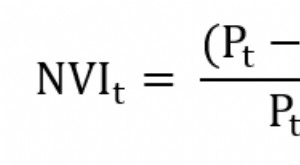
Negative Volume Index (NVI): A Comprehensive Guide
The Negative Volume Index (NVI) is a technical indicator used to identify trends in a market. It is a cumulative indicator, which means that all changes to the indicator accumulate. Put another way, t
-
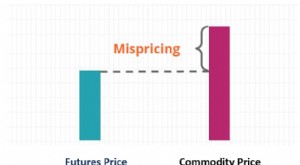
Reverse Cash and Carry Arbitrage: A Comprehensive Guide
Reverse cash and carry arbitrage is the inverse of the cash and carry arbitrage commodity trading strategy. Like cash and carry arbitrage, it is a market-neutral strategy that seeks to take advantage
invest
- Negative Correlation Explained: Understanding Inverse Relationships
- Understanding Negative Equity: Causes, Risks & Solutions
- Understanding Interest Rate Gaps: A Guide for Financial Institutions
- Understanding Negative Growth: Causes, Impacts & Examples
- FX Carry Trade: Strategy, Risks & How It Works
- Negative Gearing Explained: Understanding Investment Losses & Tax Benefits
- Understanding Negative Investment Returns: Causes & Impact
- Negative Assurance Explained: Auditor's Confirmation & Its Significance
- Negative Confirmation: Definition, Purpose & Audit Evidence
-
 Cash and Carry Arbitrage: Definition, Strategy & Examples
Cash and carry arbitrage is a financial arbitrage strategy that involves exploiting the mispricingMispricingMispricing causes a divergence between the market price of a security and the fundamental va...
-
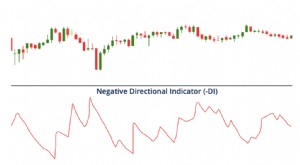 Understanding the -DI: A Guide to Negative Directional Indicators
A Negative Directional Indicator (-DI) represents the downward behavior of the financial market. An upward sloping negative directional indicator indicates that the downtrend is strengthening. Theoret...