
Nonaccrual Experience Method (NAE): Definition & Eligibility
The nonaccrual experience method (NAE) is a tax accounting procedure that the Internal Revenue Code (IRC) uses for handling bad debts. The procedure can only be applied to bad debts for services that were performed in a few select professions. Also, the company that the NAE method is being applied to must have less than $5 million of average annual gross receipts in previous tax years.

Understanding the Nonaccrual Experience Method
The Internal Revenue Service (IRS) is a governmental organization that is responsible for collecting taxes on behalf of the U.S. government. The IRS developed the Internal Revenue Code (IRC), which is essentially the tax code of the United States that covers rules related to the taxation of individuals and corporations.
The application of the nonaccrual experience method is when a company incurs bad debts. Companies incur bad debts when they cannot collect money that they are owed from customers.
Bad debts that are not claimed on the business’s tax return using the NAE method can be claimed under other charge-off methods as well. In fact, charge-offs are actually more common.
A charge-off is a debt that is deemed unlikely to be collected by a creditor from a borrower. It results in writing off the debt from the balance sheet, as well as expensing the lost funds on the income statement in the form of an expense.
How It Works
Under the NAE method of accounting, the company can estimate the debt that will end up being bad based on their own past experiences and historical records with customers, suppliers, and debtors. It is a favorable method since a company does not need to write off their entire debt balance if they expect that some of it may be collected down the line.
It allows certain service providers to be exempt from the accrual portion of the revenue that they have determined is unlikely to be collected based on their experience and formulas allowed under the Securities Exchange Commission (SEC)Securities and Exchange Commission (SEC)The US Securities and Exchange Commission, or SEC, is an independent agency of the US federal government that is responsible for implementing federal securities laws and proposing securities rules. It is also in charge of maintaining the securities industry and stock and options exchanges regulations. However, it can only be applied to companies that operate in the following industries:
- Actuarial science
- Architecture
- Consulting
- Engineering
- Health
- Law
- Performing arts
Regarding the NAE rule, a taxpayer can use the NAE method of accounting if the company uses the accrual method of accounting when recording revenues for services performed by the company, operates in one of the above industries, and the company has earned less than $5 million in gross receipts in one of the previous three years.
Accrual Method of Accounting
The accrual method of accounting is a method in which the revenues and expenses are recognized when they are incurred, not necessarily when cash is exchanged. It is in contrast with cash-based accounting, where revenues and expenses are recorded when the cash actually moves.
Therefore, under the accrual-based accounting methodAccrual AccountingIn financial accounting, accruals refer to the recording of revenues that a company has earned but has yet to receive payment for, and the, revenue is recognized when it is earned. For service providers such as the companies that fall under the domain of the NAE method, it means that the revenue is recognized when the service is provided. It can result in amounts owed from customers for services that have been provided in the past. Bad debts may arise when customers are unlikely to pay for such services.
NAE Book Safe-Harbor Method
A safe harbor is an accounting method within legal or tax regulations that allows the avoidance of the regulations. However, it also refers to when a tax regulation is made simpler in certain conditions when applying the tax code. The NAE book safe-harbor method allows companies to exclude qualifying uncollectible revenues from their taxable incomeTaxable IncomeTaxable income refers to any individual's or business’ compensation that is used to determine tax liability. The total income amount or gross income is used as the basis to calculate how much the individual or organization owes the government for the specific tax period., which is favorable for reducing the amount of taxes paid.
The NAE book-safe harbor method is generally easier than qualifying for other safe-harbor methods but can only be used by companies in the NAE-designated industries. Some safe harbor methods are difficult to utilize due to the historical information required to qualify.
For example, under some safe harbor methods, it is required that a company has financial information that is tracked for six years. Sometimes, it may be difficult to find all of the relevant information and qualify for the safe harbor methods.
Related Readings
CFI is the official provider of the global Commercial Banking & Credit Analyst (CBCA)™Program Page - CBCAGet CFI's CBCA™ certification and become a Commercial Banking & Credit Analyst. Enroll and advance your career with our certification programs and courses. certification program, designed to help anyone become a world-class financial analyst. To keep advancing your career, the additional CFI resources below will be useful:
- Actuarial ScienceActuarial ScienceActuarial science deals with applying quantitative and statistical techniques to answer uncertainties pertaining to the future. It may relate to finance,
- Allowance for Doubtful AccountsAllowance for Doubtful AccountsThe allowance for doubtful accounts is a contra-asset account that is associated with accounts receivable and serves to reflect the true value of accounts receivable. The amount represents the value of accounts receivable that a company does not expect to receive payment for.
- Bad Debt ExpenseBad Debt ExpenseBad debt expense is the way businesses account for a receivable account that will not be paid. Bad debt arises when a customer either cannot
- Safe HarborSafe HarborA safe harbor is a provision in law or regulation that affords protection from liability or penalty or reduces liability if certain conditions are met.
-

Just-in-Time (JIT) Inventory Management: A Comprehensive Guide
The Just in Time (JIT) style of inventory management – also sometimes referred to as the Toyota Production System (TPS) – is a strategy of managing inventoryInventoryInventory is a current
-

Navigating Market Downturns: A Guide to Protecting Your Investments
Can you feel it? Theres panic in the streets! Were in the middle of a stock market crash and the hysteria is starting again. As I write this, the S&P 500 is down six percent today — and 1
Accounting
- Understanding the Completed Contract Method: Revenue Recognition Explained
- Consolidation Method Explained: A Comprehensive Guide
- Cost Method Explained: Accounting & Investment Strategies
- Cost Recovery Method: Understanding Revenue Recognition
- Direct Method for Cash Flow Statements: A Comprehensive Guide
- Equity Method Accounting: Definition & Intercorporate Investments
- High-Low Method: Understanding & Application in Cost Accounting
- Percentage of Completion Method: Accounting Explained
- Understanding the Experience Curve: Cost Reduction & Efficiency
-
 Understanding Accounting Methods: Cash vs. Accrual
An accounting method refers to a set of rules that a company adheres to when keeping its financial records and reporting financial transactions. The transactions are recorded in a manner that accurate...
-
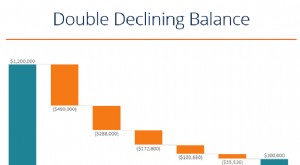 Double Declining Balance Depreciation: Definition & Calculation
The double declining balance depreciation method is a form of accelerated depreciationDepreciation MethodsThe most common types of depreciation methods include straight-line, double declining balance,...