
Direct Method for Cash Flow Statements: A Comprehensive Guide
The direct method is one of the two methods used while preparing a cash flow statementCash Flow StatementA cash flow Statement contains information on how much cash a company generated and used during a given period.. It is an accounting treatment that uses the actual cash inflows and outflows from the company’s operations. The direct method is also known as the income statement method.

Summary
- The direct method is one of two different accounting treatments used to prepare the cash flow statement.
- It requires the use of the actual cash inflows and outflows of the organization.
- The actual inflows received and the outflows paid for, and not accrued, are added and subtracted in the cash flow statement using the direct method. The accrued transactions are recorded in future cash flows when the incomes are actually received and the payments are actually made.
How is a Cash Flow Statement Prepared Using the Direct Method?
The direct method requires the use of the actual cash inflows and outflows of the organization, i.e., the actual cash inflows and outflows that took place within the company when the incomes and payments are actually received and not when they are accrued.
The actual inflows received and the outflows paid for, and not accrued, are added and subtracted from the cash flow statement using the direct method. The accrued transactions are recorded in future cash flows when the incomes are actually received, and the payments are actually made.
The net balance, after adding all inflows and subtracting all outflows, is the actual cash flow of the firm under the direct method at the end of the financial yearFiscal Year (FY)A fiscal year (FY) is a 12-month or 52-week period of time used by governments and businesses for accounting purposes to formulate annual.
What is the Accrual Concept?
The accrual accounting concept, simply known as accrual accounting, is basically an accounting method that stipulates the accounting of financial components of an organization as and when they occur, i.e., as and when revenues are earned and/or expenses are incurred, not when the payment for that transaction is actually received or made and the actual inflow or outflow of cash takes place.
The accrual method is in contrast to the cash accounting method, which stipulates the recording of financial transactions in an organization not when the income is earned or the expense is incurred, but when the actual cash inflow or outflow for the same takes place.
The cash flow statement direct method basically advocates for the use of the cash accounting concept as opposed to the accrual accounting concept.
What is the Indirect Method?
The other method used to prepare cash flow statements of an organization is the indirect method. It is different from the direct method in the sense that it uses the line items of the balance sheet to determine the net cash flow of the company.
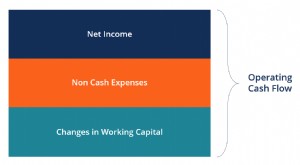
It begins with the net income or loss derived from the profit and loss statement of the company and adds and/or subtracts the non-cash items or increases and decreases of the balance sheet items of the financial year to arrive at the net cash flow amount of the company.
Direct Method vs. Indirect Method
The indirect method is the more popular method of preparing a cash flow statement. It is because most businesses around the world follow international accounting standards and the GAAP (Generally Accepted Accounting Principles)GAAPGAAP, Generally Accepted Accounting Principles, is a recognized set of rules and procedures that govern corporate accounting and financial, both of which stipulate the use of the accrual concept of accounting, as opposed to the cash concept of accounting.
Under accrual accounting, the information available is more conducive to using the indirect method to prepare the cash flow statement as it is easier and it takes less time.
Additional Resources
CFI is the official provider of the Commercial Banking & Credit Analyst (CBCA)™Program Page - CBCAGet CFI's CBCA™ certification and become a Commercial Banking & Credit Analyst. Enroll and advance your career with our certification programs and courses. certification program, designed to transform anyone into a world-class financial analyst.
In order to help you become a world-class financial analyst and advance your career to your fullest potential, the additional resources will be very helpful:
- Accrual AccountingAccrual AccountingIn financial accounting, accruals refer to the recording of revenues that a company has earned but has yet to receive payment for, and the
- IFRS vs. US GAAPIFRS vs. US GAAPThe IFRS vs US GAAP refers to two accounting standards and principles adhered to by countries in the world in relation to financial reporting
- Projecting Balance Sheet Line ItemsProjecting Balance Sheet Line ItemsProjecting balance sheet line items involves analyzing working capital, PP&E, debt share capital and net income. This guide breaks down how to calculate
- Projecting Income Statement Line ItemsProjecting Income Statement Line ItemsWe discuss the different methods of projecting income statement line items. Projecting income statement line items begins with sales revenue, then cost
-

Understanding EBT Cash Accounts: Benefits & How They Work
EBT cards are used for food and cash benefits. Electronic Benefits Transfer, or EBT, is a system provided by various governmental agencies throughout the United States to provide food stamp a
-

Understanding Asset Types: A Comprehensive Guide
An asset is a resource owned or controlled by an individual, corporationCorporationA corporation is a legal entity created by individuals, stockholders, or shareholders, with the purpose of operating
Accounting
- Direct Capitalization Method: Definition & Application
- Understanding the Completed Contract Method: Revenue Recognition Explained
- Consolidation Method Explained: A Comprehensive Guide
- Cost Method Explained: Accounting & Investment Strategies
- Cost Recovery Method: Understanding Revenue Recognition
- Equity Method Accounting: Definition & Intercorporate Investments
- High-Low Method: Understanding & Application in Cost Accounting
- Percentage of Completion Method: Accounting Explained
- Specific Identification Method: A Comprehensive Guide for Inventory Valuation
-
 Nonaccrual Experience Method (NAE): Definition & Eligibility
The nonaccrual experience method (NAE) is a tax accounting procedure that the Internal Revenue Code (IRC) uses for handling bad debts. The procedure can only be applied to bad debts for services that ...
-
 Operating Cash Flow Formula: Calculation & Explanation
The Operating Cash Flow Formula is used to calculate how much cash a company generated (or consumed) from its operating activities in a period, and is displayed on the Cash Flow StatementCash Flow Sta...