
Understanding One-Time Charges: Definition & Financial Impact
A one-time charge, or non-recurring item, is a line item that is reported on the financial statements of a firm on an irregular basis. It is unrelated to a firm’s normal business operations and arises from unexpected events like lawsuits, layoffs, asset salesDivestitureA divestiture (or divestment) is the disposal of company's assets or a business unit through a sale, exchange, closure, or bankruptcy. A partial or full disposal can happen, depending on the reason why management opted to sell or liquidate its business’ resources. Examples of divestitures include selling intellectual, etc.
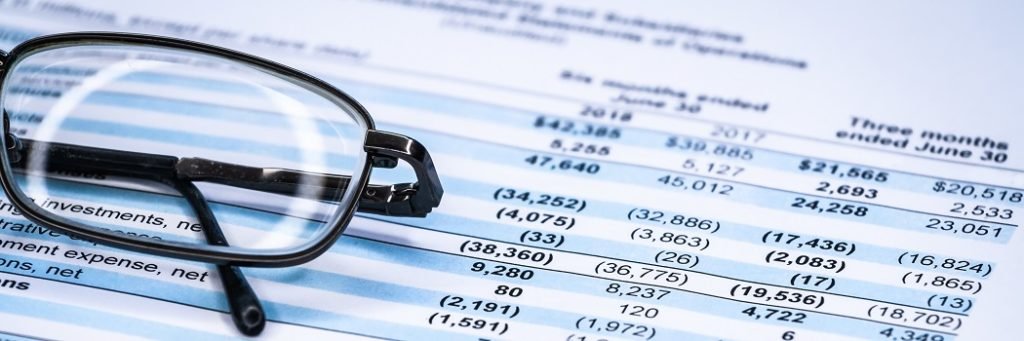
It is important to recognize and highlight a one-time charge because it can distort the financial picture and significantly change the results of important analyses like financial statement forecasting and valuation.
It is common for management to use one-time charges to understate or overstate the financial performance to change investors’ perception of the company. In the following sections, we will see some examples of misuse and what can be done to deal with one-time charges.
One-time Charges – Misuse
1. Overstating earnings
Sometimes, a company will boost its earnings by including an unusual gain within a regular line item on the income statement. One way is to include investment income in the total revenues.
Example
Airline companies are often involved in fuel hedging to control their costs. Sometimes, hedging activities generate large profits. A company may decide to include such profits in their revenue numbers even though fuel hedging is not its core business.
2. Gaming metrics
A company can misuse one-time charges to gain important performance metrics by manipulating one of its components.
Example
The P/E ratioPrice Earnings RatioThe Price Earnings Ratio (P/E Ratio is the relationship between a company’s stock price and earnings per share. It provides a better sense of the value of a company. comprises two components: price P and earnings-per-share E. The company cannot control the price as it is determined by the market, but it can reduce its earnings per share to inflate the P/E ratio. It can do this by writing down assets or aggressively booking expenses to one period.
3. False negative perception
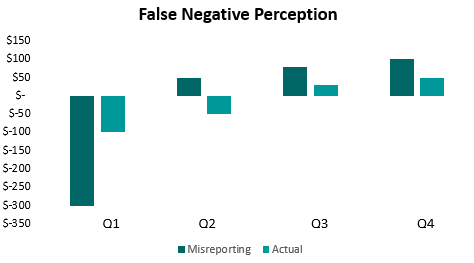
A company may not always overstate performance. It can create a false one-time charge by aggregating most of their expenses in one period, say a quarter. This creates a false perception of a better future for the company, as other quarters will look like improvements from the previous performance, which was intentionally understated. This is sometimes referred to as sandbagging.
4. Improper reporting
A company may correctly report a one-time charge on one statement but improperly report it on another.
Example
A company reports a one-time gain separately on the income statement, which makes it transparent to any reader of the financial statements. However, it then includes the increased net income on the income statement and uses it without an adjustment on the cash flow statementCash Flow StatementA cash flow Statement contains information on how much cash a company generated and used during a given period.. It can easily mislead investors who do not examine all statements closely. A better way to report the one-time charge is to report it separately on the cash flow as well.
Dealing with One-time Charges
The above examples are only a few ways in which a one-time charge may be misused by a company. There are a lot of possibilities, and it is hard to document every instance of such misreporting. However, one can take certain measures to minimize the distortion. Some of the measures are:
- Remove the effect of one-time charges on financial statements before conducting any analyses like forecasting and valuation. It is important because it not only depicts the financial situation more accurately but also because one-time charges are difficult to forecast.
- Use operating numbers instead of bottom-line numbers, as operating numbers do not include the effect of one-time charges. For example, in the case of the P/E ratio above, using operating income instead of net income for earnings-per-share will lead to a more accurate metric for value.
- Examine all financial statements collectively instead of independently. It can help detect the kind of improper reporting discussed above.
- Be on the lookout for companies that use one-time charges repeatedly. It is highly likely that those are not one-time charges but regular costs of doing business. Such a practice is indicative of poor management.
- Use GAAP/IFRS-compliant metrics and compare non-GAAP/IFRS metrics with their compliant counterparts as much as possible. Accounting standards evolve over time and ensure accuracy and rigor.
Additional Resources
CFI is the official provider of the global Commercial Banking & Credit Analyst (CBCA)™Program Page - CBCAGet CFI's CBCA™ certification and become a Commercial Banking & Credit Analyst. Enroll and advance your career with our certification programs and courses. certification program, designed to help anyone become a world-class financial analyst. To keep advancing your career, the additional CFI resources below will be useful:
- Analysis of Financial StatementsAnalysis of Financial StatementsHow to perform Analysis of Financial Statements. This guide will teach you to perform financial statement analysis of the income statement,
- IFRS vs. US GAAPIFRS vs. US GAAPThe IFRS vs US GAAP refers to two accounting standards and principles adhered to by countries in the world in relation to financial reporting
- Projecting Income Statement Line ItemsProjecting Income Statement Line ItemsWe discuss the different methods of projecting income statement line items. Projecting income statement line items begins with sales revenue, then cost
- Top Accounting ScandalsTop Accounting ScandalsThe last two decades saw some of the worst accounting scandals in history. Billions of dollars were lost as a result of these financial disasters. In this
-

Understanding the Role of an Accountant: Key Responsibilities & Importance
An accountant plays a very crucial role in an organizationTypes of OrganizationsThis article on the different types of organizations explores the various categories that organizational structures can
-

Floating Charge Explained: Definition, Examples & How It Works
A floating charge is a type of ownership interest that is issued by companies or limited liability partnerships over a collection of non-constant assets. The term floating charge comes from the
Accounting
- Acquirer Definition: Understanding Corporate Acquisitions
- Understanding Clawbacks: Protecting Stakeholders from Failed Performance
- Understanding Financial Gearing: Debt & Leverage Explained
- EBITA Explained: Understanding Earnings Before Interest, Taxes, and Amortization
- Understanding Expenditures: Definition and Types
- Goodwill in Accounting: Definition & Value
- OIBDA Explained: Understanding Operating Income Before Depreciation & Amortization
- Understanding One-Time Charges: Definition & Financial Impact
- Understanding Vouchers: A Guide to Accounts Payable Documents
-
 Ramp-Up: Definition, Benefits & How to Achieve It
In business, ramp-up is a term that describes a significant increase in the output of a company’s products or services. Essentially, ramp-up implies bringing the company’s capacity utiliza...
-
 Streamlining Processes: Definition, Benefits & Techniques
Streamlining refers to the improvement of the efficiency of a certain process within an organization. It can be done by automationExcel vs Automation in Financial ModelingBefore we discuss Excel vs au...