
Understanding Threats to Auditor Independence: A Comprehensive Guide
In the auditing profession, there are five major threats that may compromise an auditor’s independence. Before an audit engagement, it is crucial that each member of the audit team review the five threats to independence. If an auditor is exposed to a certain threat, he or she should either develop safeguards to reduce the threat to an acceptable level or resign from the audit engagement.

What is Auditor Independence?
Auditors are expected to provide an unbiased and professional opinion on the work that they audit. An auditor who lacks independence virtually renders their accompanying auditor report useless to those who rely on them.
For example, consider yourself a potential investor in ABC Company. If you know that the auditor for ABC Company keeps a close, personal relationship with the CEOCEOA CEO, short for Chief Executive Officer, is the highest-ranking individual in a company or organization. The CEO is responsible for the overall success of an organization and for making top-level managerial decisions. Read a job description of the company, how much would you trust that the audited work is a fair representation of the company’s financial standing? How can you be certain that the auditor and CEO did not collude to issue a favorable audit report?
The fact is that auditors who lack independence compromise the integrity of financial marketsFinancial MarketsFinancial markets, from the name itself, are a type of marketplace that provides an avenue for the sale and purchase of assets such as bonds, stocks, foreign exchange, and derivatives. Often, they are called by different names, including "Wall Street" and "capital market," but all of them still mean one and the same thing. and the reliability of information. Investors would not be willing to extend capital to companies, knowing that the audited information was performed by an auditor who is not independent. Furthermore, banks would not be willing to issue a loan for fear that the auditor might’ve provided a biased audit reportAuditor's ReportAn independent Auditor’s Report is an official opinion issued by an external or internal auditor as to the quality and accuracy of the.
Five Threats to Auditor Independence
The following are the five things that can potentially compromise the independence of auditors:
1. Self-Interest Threat
A self-interest threat exists if the auditor holds a direct or indirect financial interest in the company or depends on the client for a major fee that is outstanding.
Example
The audit team is preparing to conduct its 2020 audit for ABC Company. However, the audit team has not received its audit fees from ABC Company for its 2019 audit.
Issue
The audit team might be tempted to issue a favorable report so that the company is able to secure a loan to settle the fees outstanding for their 2019 audit.
2. Self-Review Threat
A self-review threat exists if the auditor is auditing his own work or work that is done by others in the same firm.
Example
The auditor prepares the financial statementsThree Financial StatementsThe three financial statements are the income statement, the balance sheet, and the statement of cash flows. These three core statements are for ABC Company while also serving as the auditor for ABC Company.
Issue
By having the auditor review his or her own work, the auditor cannot be expected to form an unbiased opinion on the financial statements.
3. Advocacy Threat
An advocacy threat exists if the auditor is involved in promoting the client, to the point where their objectivity is potentially compromised.
Example
The auditor is assisting in selling ABC Company while also serving as the auditor for the company.
Issue
The auditor may issue a favorable report to increase the sale price of ABC Company.
4. Familiarity Threat
A familiarity threat exists if the auditor is too personally close to or familiar with employees, officers, or directors of the client company.
Example
ABC Company has been audited by the same auditor for over 10 years and the auditor regularly plays golf with the CEO and CFO of ABC Company.
Issue
The auditor may have become too familiar with the client and, thus, lack objectivity in their work.
5. Intimidation Threat
An intimidation threat exists if the auditor is intimidated by management or its directors to the point that they are deterred from acting objectively.
Example
ABC Company is unhappy with the conclusion of the audit report and threatens to switch auditors next year. ABC Company is the biggest client of the auditor.
Issue
The auditor’s independence may be compromised, as ABC Company is their biggest client and they, quite naturally, do not want to lose such a client. Therefore, the auditor may issue a report that appeases ABC Company.
More Resources
We hope you’ve enjoyed reading CFI’s guide to threats to auditor independence. CFI is the official provider of the Financial Modeling and Valuation Analyst (FMVA)®Become a Certified Financial Modeling & Valuation Analyst (FMVA)®CFI's Financial Modeling and Valuation Analyst (FMVA)® certification will help you gain the confidence you need in your finance career. Enroll today! certification program, designed to transform anyone into a world-class financial analyst.
To keep learning and developing your knowledge of financial analysis, we highly recommend the additional CFI resources listed below:
- Accounting EthicsAccounting EthicsAccounting ethics is an important topic because, as accountants, we are the key personnel who access the financial information of individuals
- Audit FraudFraud in AuditsFraud in audits is when an entity is found to have illegally altered financial statements to manipulate the financial health or to hide profit
- Legal Liability of AuditorsLegal Liability of AuditorsConcerns about the legal liability of auditors continue to grow every day. Auditors are highly important people because, ultimately, they are
- Top Accounting ScandalsTop Accounting ScandalsThe last two decades saw some of the worst accounting scandals in history. Billions of dollars were lost as a result of these financial disasters. In this
-

Available-for-Sale Securities: Definition & Investment Strategy
Available for sale securities are the default categorization of securities that companies decide to invest in for the purposes of benefiting their financial position. Unlike trading securitiesTrading
-
![Strategic Alliances: Definition, Benefits & Examples | [Your Brand/Website Name]](https://www.etffin.com/article/uploadfiles/202110/2021100815415960_S.jpeg)
Strategic Alliances: Definition, Benefits & Examples | [Your Brand/Website Name]
Strategic alliances are agreements between two or more independent companies to cooperate in the manufacturing, development, or sale of products AccountingOur Accounting guides and resources are self-
Accounting
- Authorized Shares: Understanding a Company's Issuance Limit
- Cash Reserves: Definition, Benefits & Short-Term Needs
- Understanding Company Bylaws: A Comprehensive Guide
- Understanding Debt Covenants: A Comprehensive Guide
- Understanding Earnings: A Guide to Financial Profitability
- Understanding Explicit Costs: Definition & Examples
- Long-Term Assets: Definition, Examples & Importance
- Understanding Normalized Earnings: A Guide for Investors
- Understanding Earnings Surprises: What Are They?
-
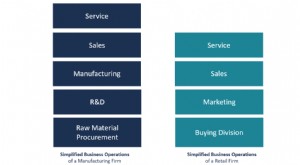 Business Operations: Definition, Activities & Optimization
Business operations refer to activities that businesses engage in on a daily basis to increase the value of the enterprise and earn a profit. The activities can be optimized to generate sufficient rev...
-
 Company Recovery Strategies: Preventing Business Shutdowns
Company recovery strategies are the strategies undertaken to preserve a company and prevent its shutdown. The key objective of company recovery strategies is to quickly identify and address the source...