
Understanding Debt Covenants: A Comprehensive Guide
Debt covenants are restrictions that lendersLender of Last ResortA lender of last resort is the provider of liquidity to financial institutions that are experiencing financial difficulties. In most developing and developed countries, the lender of last resort is the country’s central bank. The responsibility of the central bank is to prevent bank runs or panics from spreading to other banks due to a lack of liquidity. (creditors, debt holdersBond IssuersThere are different types of bond issuers. These bond issuers create bonds to borrow funds from bondholders, to be repaid at maturity., investors) put on lending agreements to limit the actions of the borrower (debtor). In other words, debt covenants are agreements between a company and its lenders that the company will operate within certain rules set by the lenders. They are also called banking covenants or financial covenants.

The Purpose of Debt Covenants
Debt covenants are not used to place a burden on the borrower. Rather, they are used to align the interests of the principal and agent, as well as solve agency problems between the management (borrower) and debt holders (lenders).
Debt covenant implications for the lender and the borrower include the following:
Lender
Debt restrictions protect the lender by prohibiting certain actions by the borrowers. Debt covenants restrict borrowers from taking actions that can result in a significant adverse impact or increased risk for the lender.
Borrower
Debt restrictions benefit the borrower by reducing the cost of borrowing. For example, if lenders are able to impose restrictions, lenders will be willing to impose a lower interest rate for the debt to compensate for abiding by the restrictions.
Reasons Why Debt Covenants are Used
Note that in the scenarios below, it is in the best interest of both parties to set debt covenants. Without such agreements, lenders may be reluctant to lend money to a company.
Scenario 1
Lender A lends $1 million to a company. Based on the risk profile of the company, the lender lends at an annual interest rateEffective Annual Interest RateThe Effective Annual Interest Rate (EAR) is the interest rate that is adjusted for compounding over a given period. Simply put, the effective of 7%. If there are no covenants, the company can immediately borrow $10 million from another lender (Lender B).
In this scenario, Lender A would set a debt restriction. They’ve calculated an interest rate of 7% based on the risk profile of the company. If the company turns around and borrows more money from additional lenders, the loan will be a riskier proposition. Therefore, there will be a higher possibility of the company defaulting on its loan repayment to Lender A.
Scenario 2
Lender A lends $10 million to a company. In the following days, the company declares a liquidating dividend to all shareholders.
In this scenario, Lender A will set a dividend restriction. Without the restriction, the company can pay out all of its earnings or liquidate its assets and pay a liquidating dividend to all shareholders. Therefore, the lender would be out of his or her money if the company were to liquidate the company and pay out a liquidating dividend.
List of Debt Covenants
Below is a list of the top 10 most common metrics lenders use as debt covenants for borrowers:
- Debt / EBITDADebt/EBITDA RatioThe net debt to earnings before interest, taxes, depreciation, and amortization (EBITDA) ratio measures financial leverage and a company’s ability to pay off its debt. Essentially, the net debt to EBITDA ratio (debt/EBITDA) gives an indication as to how long a company would need to operate at its current level to pay off all its debt.
- Debt / (EBITDA – Capital Expenditures)
- Interest Coverage (EBITDA or EBIT / Interest)Interest Coverage RatioInterest Coverage Ratio (ICR) is a financial ratio that is used to determine the ability of a company to pay the interest on its outstanding debt.
- Fixed Charge Coverage (EBITDA / (Total Debt Service + Capital Expenditures + Taxes)Fixed-Charge Coverage Ratio (FCCR)The Fixed-Charge Coverage Ratio (FCCR) is a measure of a company’s ability to meet fixed-charge obligations such as interest and lease expenses.
- Debt / EquityDebt Equity Ratio TemplateThis debt equity ratio template shows you how to calculate D/E ratio given the amounts of short-term and long-term debt and shareholder's equity. The Debt to Equity ratio (also called the “debt-equity ratio”, “risk ratio” or “gearing”), is a leverage ratio that calculates the weight of total debt and financial liabilit
- Debt / AssetsDebt to Assets RatioThe Debt to Assets Ratio is a leverage ratio that helps quantify the degree to which a company's operations are funded by debt. In many cases, a high leverage ratio is also indicative of a higher degree of financial risk. This is because a company that is heavily leveraged faces a higher chance of defaulting on its loans.
- Total Assets
- Tangible Net Worth
- Dividend Payout RatioDividend Payout RatioDividend Payout Ratio is the amount of dividends paid to shareholders in relation to the total amount of net income generated by a company. Formula, example
- Limitation on Mergers and Acquisitions
Positive vs Negative Covenants
Debt covenants are defined as positive covenants or negative covenants.
Positive debt covenants are covenants that state what the borrower must do. For example:
- Achieve a certain threshold in certain financial ratios
- Ensure facilities and factories are in good working condition
- Perform regular maintenance of capital assets
- Provide yearly audited financial statements
- Ensure accounting practices are in accordance with GAAP
Negative debt covenants are covenants that state what the borrower cannot do. For example:
- Pay cash dividends over a certain amount or predetermined threshold
- Sell certain assets
- Borrow more debt
- Issue debt more senior than the current debt
- Enter into certain types of agreements or leases
- Partake in certain M&A
Example
Let us consider a simple example. A lender enters into a debt agreement with a company. The debt agreement could specify the following debt covenants:
- The company must maintain an interest coverage ratio of 3.70 based on cash flow from operations
- The company cannot pay annual cash dividends exceeding 60% of net earnings
- The company cannot borrow debt that is senior to this debt
Violation of Debt Covenants
When a debt covenant is violated, depending on the severity, the lender can do several things:
- Demand penalty payment
- Increase the predetermined interest rate
- Increase the amount of collateral
- Demand full immediate repayment of the loan
- Terminate the debt agreement
Related Reading
CFI is a global provider of financial modeling courses and also offers financial analyst certificationBecome a Certified Financial Modeling & Valuation Analyst (FMVA)®CFI's Financial Modeling and Valuation Analyst (FMVA)® certification will help you gain the confidence you need in your finance career. Enroll today! training. To advance your career as an analyst, these CFI resources will be helpful:
- Debt ScheduleDebt ScheduleA debt schedule lays out all of the debt a business has in a schedule based on its maturity and interest rate. In financial modeling, interest expense flows
- Cost of DebtCost of DebtThe cost of debt is the return that a company provides to its debtholders and creditors. Cost of debt is used in WACC calculations for valuation analysis.
- Debt CapacityDebt CapacityDebt capacity refers to the total amount of debt a business can incur and repay according to the terms of the debt agreement.
- Capital StructureCapital StructureCapital structure refers to the amount of debt and/or equity employed by a firm to fund its operations and finance its assets. A firm's capital structure
-

Activity Ratios: A Comprehensive Guide to Operational Efficiency
Activity ratios are financial metrics used to gauge how efficient a company’s operations are. The term can include several ratios that can apply to how efficiently a company is employing its cap
-
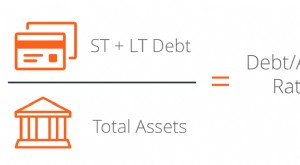
Debt-to-Asset Ratio: Definition, Calculation & Significance
The Debt to Asset Ratio, also known as the debt ratio, is a leverage ratioLeverage RatiosA leverage ratio indicates the level of debt incurred by a business entity against several other accounts in it
finance
- Authorized Shares: Understanding a Company's Issuance Limit
- Cash Reserves: Definition, Benefits & Short-Term Needs
- Understanding Company Bylaws: A Comprehensive Guide
- Understanding Debt Issuance Fees: Costs of Bond Sales
- Debt/Equity Swap: Understanding Financial Restructuring
- Understanding Earnings: A Guide to Financial Profitability
- Financial Covenants: Definition, Types & Importance
- Recapitalization: Definition, Types & Benefits | [Your Company Name]
- Understanding Short-Term Debt: Definition & Key Characteristics
-
 Understanding Debt Cancellation Fees: What You Need to Know
Debt cancellation fees can be used to pay off the debt in case of cancellation for many reasons. Debt cancellation fees are fees paid by borrowers as an insurance against their cancellation o...
-
 Understanding Debt Covenants: A Comprehensive Guide
Debt covenants are restrictions that lendersLender of Last ResortA lender of last resort is the provider of liquidity to financial institutions that are experiencing financial difficulties. In most de...