
Exit Strategy: A Comprehensive Guide for Business Owners
An exit strategy is a plan for a partner or owner to transition out of ownership of a company. It is accomplished through a merger and acquisition (M&A) with another company, through an initial public offering (IPO) to investors, through a transfer to a successor (e.g., family member), through liquidation, or through a management buyoutManagement Buyout (MBO)A management buyout (MBO) is a corporate finance transaction where the management team of an operating company acquires the business by borrowing money to by employees.

Exit strategies are often used when the owner wants to cash out their ownership in a company.
BankruptcyBankruptcyBankruptcy is the legal status of a human or a non-human entity (a firm or a government agency) that is unable to repay its outstanding debts is another example of an exit strategy that is often considered in a liquidity crisis or other financial struggles for a company; however, it is usually less preferable and offers a less profitable outcome for business owners.
Exit strategies can also be used to prepare for the end of a contract. It can be due to poor performance, changes in company strategy or hierarchy, or the end of an existing contract. Such strategies can be after achieving a pre-established goal or to mitigate loss, either way, taking their remaining value out of the company.
Summary
- An exit strategy is used to aid in the transition out of ownership of a company.
- There are many different exit strategies, all of which work more effectively for specific companies depending on their size, structure, performance, and future goals.
- Liquidation is often the last resort for struggling companies, while gradual liquidation is more often a choice to move slowly towards retirement for a small business owner.
Liquidation as an Exit Strategy
Liquidation entails the closing of a business through the sale of all its assets. The strategy is often used when a business cannot be sold through any of the other methods, usually due to dependence on a specific employee/owner of the company or overall poor strategy/performance.
Liquidation as an exit strategy will often generate low returns, and any value of current clients will not be recognized in the sale of the company. Business owners should consider restructuring for the purchase of the whole company, rather than a liquidation to optimize returns.
Gradual Liquidation as an Exit Strategy
Gradual liquidation as an exit strategy is similar to regular liquidation, but it occurs over an extended period. It is most common for owners who want to wind down their business.
The systematic exit is accomplished by taking profits out of the company through large salaries, bonuses, or dividend payments, rather than reinvesting into the company.
Simultaneously, the operations of the business will slow down until it is too small to operate. Often, small business owners who want to reduce their workload slowly towards retirement will choose the gradual liquidation strategy.
Transfer to a Successor as an Exit Strategy
Transferring a company to a successor will usually keep the businesses within the owner’s family. It allows for the same or similar vision of the company to be continued and can keep the previous owner involved if that is their wish.
Some transitions go less smoothly based on the drive and knowledge of the individual inheriting the corporation.
Sale to a Business, the Open Market, or Through an IPO
A business sale to another organization requires unique positioning to make it an appealing acquisition to the other company. Corporations that are looking to acquire a new business segment will be looking for synergies between the brands or operations, a chance to reduce competition, or as a move to increase their market shareMarket ShareMarket share refers to the portion or percentage of a market earned by a company or an organization. In other words, a company’s market share.
Selling to the open market is another exit strategy and is often used when a company is highly sought after, and the demand for it can drive prices up – higher than that of a sale to a business.
Finally, an IPO (initial public offering) can provide an exit for private company owners who are looking for large profits and want to see their business continue to grow in the future through equity financing.
Trading Exit Strategy
Trading exit strategies are used when dealing with securities and portfolio management. Although similar in theory, exit strategies and trading exit strategies are very different.
Trading exit strategies are used to prevent risk and maximize profits. Traders who fail to establish a strong exit strategy often lose out on potential growth or end up with a loss.
Some methods often include “take-profit” and “stop-loss” tactics, both of which turn to market orders to sell when a specific price is reached. They are only two of the many complex trading strategies used in securities markets.
More Resources
CFI is the official provider of the global Commercial Banking & Credit Analyst (CBCA)™ Program Page - CBCAGet CFI's CBCA™ certification and become a Commercial Banking & Credit Analyst. Enroll and advance your career with our certification programs and courses.certification program, designed to help anyone become a world-class financial analyst. To keep advancing your career, the additional CFI resources below will be useful:
- Merger vs. AcquisitionMerger vs. AcquisitionThere are key differences between a merger vs. acquisition in terms of initiation, procedure, and outcome. A merger occurs when individual
- Passive OwnershipPassive OwnershipPassive ownership refers to the stage in business when the business owner is not involved in the day-to-day running of the business.
- Liquidation ValueLiquidation ValueLiquidation value is an estimation of the final value which will be received by the holder of financial instruments when an asset is sold or liquidated.
- Initial Public Offering (IPO)Initial Public Offering (IPO)An Initial Public Offering (IPO) is the first sale of stocks issued by a company to the public. Prior to an IPO, a company is considered a private company, usually with a small number of investors (founders, friends, family, and business investors such as venture capitalists or angel investors). Learn what an IPO is
-

OIBDA Explained: Understanding Operating Income Before Depreciation & Amortization
OIBDA is an abbreviation for Operating Income Before Depreciation and Amortization. It is a non-GAAP measure of the financial performance of a company during a specific period of time while excluding
-

Understanding Vouchers: A Guide to Accounts Payable Documents
A voucher is an internal document within a company that is issued by the accounts payable Accounts PayableAccounts payable is a liability incurred when an organization receives goods or services from
Business strategy
- Acquirer Definition: Understanding Corporate Acquisitions
- Understanding Clawbacks: Protecting Stakeholders from Failed Performance
- Understanding Financial Gearing: Debt & Leverage Explained
- Assemble-to-Order (ATO): Definition, Benefits & Implementation
- Holding Companies: Definition, Purpose & How They Work
- Kaizen: Understanding Continuous Improvement for Business
- Outsourcing: A Comprehensive Guide to Benefits & Strategy
- Ramp-Up: Definition, Benefits & How to Achieve It
- Streamlining Processes: Definition, Benefits & Techniques
-
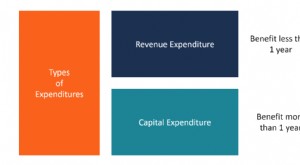 Understanding Expenditures: Definition and Types
An expenditure represents a payment with either cash or credit to purchase goods or services. An expenditure is recorded at a single point in time (the time of purchase), compared to an expenseAccrued...
-
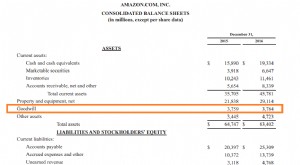 Goodwill in Accounting: Definition & Value
In accounting, goodwill is an intangible assetIntangible AssetsAccording to the IFRS, intangible assets are identifiable, non-monetary assets without physical substance. Like all assets, intangible as...