
Debt-to-Asset Ratio: Definition, Calculation & Significance
The Debt to Asset Ratio, also known as the debt ratio, is a leverage ratioLeverage RatiosA leverage ratio indicates the level of debt incurred by a business entity against several other accounts in its balance sheet, income statement, or cash flow statement. Excel template that indicates the percentage of assetsTypes of AssetsCommon types of assets include current, non-current, physical, intangible, operating, and non-operating. Correctly identifying and that are being financed with debt. The higher the ratio, the greater the degree of leverage and financial riskSystemic RiskSystemic risk can be defined as the risk associated with the collapse or failure of a company, industry, financial institution or an entire economy. It is the risk of a major failure of a financial system, whereby a crisis occurs when providers of capital lose trust in the users of capital.
The debt to asset ratio is commonly used by creditors to determine the amount of debt in a company, the ability to repay its debt, and whether additional loans will be extended to the company. On the other hand, investors use the ratio to make sure the company is solvent, is able to meet current and future obligations, and can generate a returnInternal Rate of Return (IRR)The Internal Rate of Return (IRR) is the discount rate that makes the net present value (NPV) of a project zero. In other words, it is the expected compound annual rate of return that will be earned on a project or investment. on their investment.
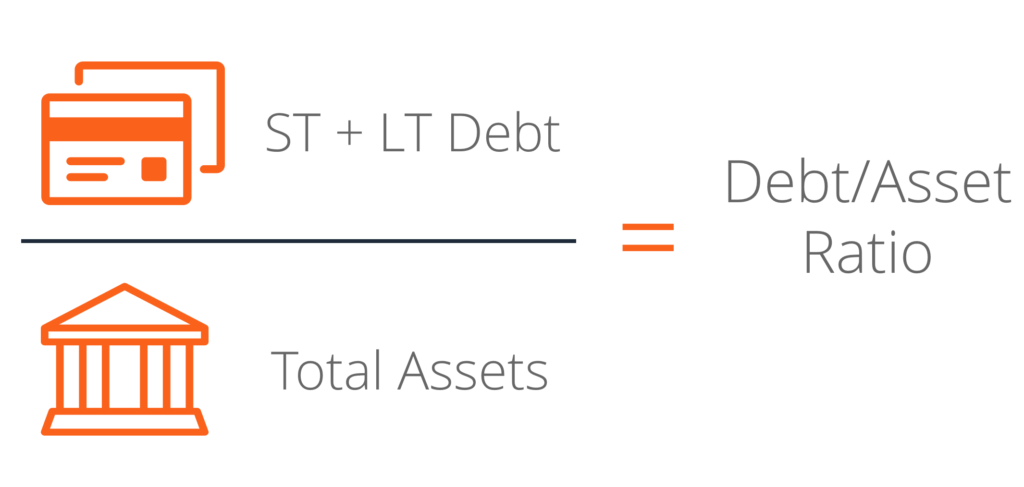
Debt to Asset Ratio Formula
The formula for the debt to asset ratio is as follows:
Debt/Asset = (Short-term Debt + Long-term Debt) / Total Assets
Where:
- Total Assets may include all current and non-current assets on the company’s balance sheet, or may only include certain assets such as Property, Plant & Equipment (PP&E)PP&E (Property, Plant and Equipment)PP&E (Property, Plant, and Equipment) is one of the core non-current assets found on the balance sheet. PP&E is impacted by Capex,, at the analyst’s discretion.
Example
Consider the balance sheet below:
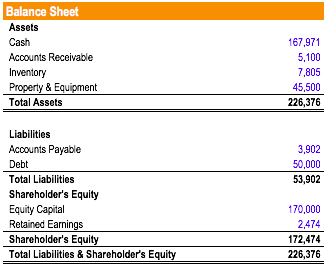
From the balance sheet above, we can determine that the total assets are $226,365 and that the total debt is $50,000. Therefore, the debt to asset ratio is calculated as follows:
Debt to Asset Ratio = $50,000 / $226,376 = 0.2208 = 22%
Therefore, the figure indicates that 22% of the company’s assets are funded via debt.
Interpretation of Debt to Asset Ratio
The debt to asset ratio is commonly used by analysts, investors, and creditors to determine the overall risk of a company. Companies with a higher ratio are more leveraged and, hence, riskier to invest in and provide loans to. If the ratio steadily increases, it could indicate a default at some point in the future.
- A ratio equal to one (=1) means that the company owns the same amount of liabilities as its assets. It indicates that the company is highly leveraged.
- A ratio greater than one (>1) means the company owns more liabilities than it does assets. It indicates that the company is extremely leveraged and highly risky to invest in or lend to.
- A ratio of less than one (<1) means the company owns more assets than liabilities and can meet its obligations by selling its assets if needed. The lower the debt to asset ratio, the less risky the company.
Let us examine the debt to asset ratio of five hypothetical companies:
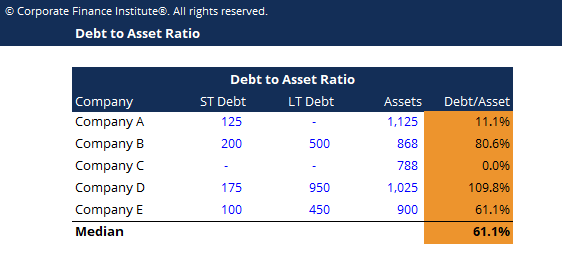
Company D shows a significantly higher degree of leverage compared to the other companies. Therefore, Company D would see a lower degree of financial flexibility and would face significant default risk if interest rates were to rise. If the economy were to undergo a recession, Company D would more than likely be unable to stay afloat.
On the flip side, if the economy and the companies performed very well, Company D could expect to have the highest equity returns, due to its leverage.
Company C would have the lowest risk and lowest expected return (all else being equal).
Key Takeaways
The debt to asset ratio is very important in determining the financial risk of a company. A ratio greater than 1 indicates that a significant portion of assets is funded with debt and that the company has a higher default risk. Therefore, the lower the ratio, the safer the company. As with any other ratios, this ratio should be evaluated over a period of time to access whether the company’s financial risk is improving or deteriorating.
Download the Free Template
Enter your name and email in the form below and download the free template now!
Other Resources
CFI is the official provider of the global Financial Modeling & Valuation Analyst (FMVA)™Become a Certified Financial Modeling & Valuation Analyst (FMVA)®CFI's Financial Modeling and Valuation Analyst (FMVA)® certification will help you gain the confidence you need in your finance career. Enroll today! certification program, designed to help anyone become a world-class financial analyst. To keep advancing your career, the additional CFI resources below will be useful:
- Debt CapacityDebt CapacityDebt capacity refers to the total amount of debt a business can incur and repay according to the terms of the debt agreement.
- Cost of DebtCost of DebtThe cost of debt is the return that a company provides to its debtholders and creditors. Cost of debt is used in WACC calculations for valuation analysis.
- Financial LeverageFinancial LeverageFinancial leverage refers to the amount of borrowed money used to purchase an asset with the expectation that the income from the new asset will exceed the cost of borrowing.
- Capital StructureCapital StructureCapital structure refers to the amount of debt and/or equity employed by a firm to fund its operations and finance its assets. A firm's capital structure
-
Current Ratio: Definition, Calculation & Financial Health
The current ratio, also known as the working capitalNet Working CapitalNet Working Capital (NWC) is the difference between a companys current assets (net of cash) and current liabilities (net of debt)
-

Equity Ratio: Understanding Financial Leverage & Risk
The equity ratio is a financial metric that measures the amount of leverage used by a company. It uses investments in assets and the amount of equity to determine how well a company manages its debts
finance
- Acid-Test Ratio: Understanding Your Company's Short-Term Liquidity
- Asset Coverage Ratio: Understanding Financial Solvency
- Asset Turnover Ratio: Definition & Calculation - Financial Analysis
- Cash Flow to Debt Ratio: Understanding and Calculation
- Debt Service Coverage Ratio (DSCR): Definition & Calculation
- Debt-to-Assets Ratio: Definition, Calculation & Risk Assessment
- Debt-to-Equity Ratio: Definition, Calculation & Importance
- Net Debt to EBITDA Ratio: Understanding Financial Leverage
- Defensive Interval Ratio (DIR): Understanding Company Liquidity
-
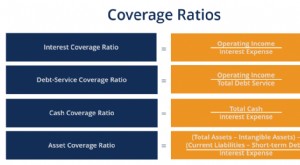 Coverage Ratio: Understanding Your Company's Debt Repayment Ability
A Coverage Ratio is any one of a group of financial ratios used to measure a company’s ability to pay its financial obligationsDebt CapacityDebt capacity refers to the total amount of debt a bus...
-
 Receivables Turnover Ratio: Definition, Calculation & Importance
Receivables turnover ratio is a financial metric that is used to gauge the effectiveness of a company to offer credit and collect the money that it is owed. This ratio is calculated by taking th...