
Direct Listing Explained: Going Public Without an IPO
A direct listing is a process by which a company can go public by selling existing shares instead of offering new ones. Companies that choose to go public using the direct listing method usually have different goals than those that use an initial public offering (IPO)Initial Public Offering (IPO)An Initial Public Offering (IPO) is the first sale of stocks issued by a company to the public. Prior to an IPO, a company is considered a private company, usually with a small number of investors (founders, friends, family, and business investors such as venture capitalists or angel investors). Learn what an IPO is.

Quick Summary Points
- A direct listing is a process for a company to become publicPrivate vs Public CompanyThe main difference between a private vs public company is that the shares of a public company are traded on a stock exchange, while a private company's shares are not. without going through the initial public offering process.
- The process makes existing stockCommon StockCommon stock is a type of security that represents ownership of equity in a company. There are other terms – such as common share, ordinary share, or voting share – that are equivalent to common stock. owned by employees and/or investors available for the public to buy and does not require underwriters or a lock-up period.
- Direct listing increases liquidityLiquidityIn financial markets, liquidity refers to how quickly an investment can be sold without negatively impacting its price. The more liquid an investment is, the more quickly it can be sold (and vice versa), and the easier it is to sell it for fair value. All else being equal, more liquid assets trade at a premium and illiquid assets trade at a discount. for existing shareholders and is usually cheaper than an IPO.
Direct Listing vs. Initial Public Offerings (IPO)
The major difference between a direct listing and an IPO is that one sells existing stocksCommon StockCommon stock is a type of security that represents ownership of equity in a company. There are other terms – such as common share, ordinary share, or voting share – that are equivalent to common stock. while the other issues new stock shares. In a direct listing, employees and investors sell their existing stocks to the public. In an IPO, a company sells part of the company by issuing new stocks. The goal of companies that become public through a direct listing is not focused on raising additional capitalCapitalCapital is anything that increases one’s ability to generate value. It can be used to increase value across a wide range of categories, such as financial, social, physical, intellectual, etc. In business and economics, the two most common types of capital are financial and human., which is why new shares are not necessary.
The second difference is that in a direct listing there are no underwriters. Underwriters work for investment banksMiddle Market Investment BanksMiddle market investment banks help mid-market firms raise equity, debt, and complete M&A. Here is a list of the top mid-market banks serving mid-size businesses having annual revenues from $10M up to $500M and 100 to 2000 employees. to help sell stocks of a company that is going public. They make large purchases which adds value to companies as those shares are taken off their hands. However, the shares are typically sold at a discount to their true value.
The process of using underwriters and selling at a discount increases the time and cost for a company that is issuing new shares. The practice of investment banks buying stocks and then selling the stock themselves is not as common now. Instead, the investment banks will use their network to help market the stocks and drive sales.
Lastly, the direct listing process also does not have the “lock-up” period that applies to IPOs. In traditional IPOs, though not always required, companies have lock-up periods in which existing shareholders are not allowed to sell their shares in the public market. It prevents an overly large supplyLaw of SupplyThe law of supply is a basic principle in economics that asserts that, assuming all else being constant, an increase in the price of goods in the market that would decrease the price of the stock.
In direct listings, existing shareholders can sell their shares right when the company goes public. Since no new shares are issued, transactions will only occur if existing shareholders sell their shares.
Benefits and Drawbacks of a Direct Listing
There are several benefits of a direct listing that attract companies to the process. First, by going public the company provides liquidityLiquidityIn financial markets, liquidity refers to how quickly an investment can be sold without negatively impacting its price. The more liquid an investment is, the more quickly it can be sold (and vice versa), and the easier it is to sell it for fair value. All else being equal, more liquid assets trade at a premium and illiquid assets trade at a discount. for existing shareholders by allowing them to freely sell their shares in the public market. Secondly, the cost of the process is much lower than the cost of an IPO. Direct listing helps companies avoid hefty fees paid to investment banks. It also helps them avoid the indirect cost of selling the stocks at a discount.
Since direct listing does not use investment banks to underwrite the stocks, there is often more initial volatilityVolatilityVolatility is a measure of the rate of fluctuations in the price of a security over time. It indicates the level of risk associated with the price changes of a security. Investors and traders calculate the volatility of a security to assess past variations in the prices. The availability of stock depends on current employees and investors. If on the day of the listing, no employees or investors want to sell their shares, then no transactions will occur. The stock price is purely dependent on market demandSupply and DemandThe laws of supply and demand are microeconomic concepts that state that in efficient markets, the quantity supplied of a good and quantity.
Unlike an IPO in which the share price is negotiated beforehand, in a direct listing the price of the stock depends solely on supply and demand. This increases volatility, as the range in which the stock is traded is less predictable.
Why Do Companies Choose Direct Listing?
Companies that use direct listing have different goals than those that choose an IPO. In an IPO, companies are trying to raise capitalCapitalCapital is anything that increases one’s ability to generate value. It can be used to increase value across a wide range of categories, such as financial, social, physical, intellectual, etc. In business and economics, the two most common types of capital are financial and human. for expansion or funding. On the other hand, companies that use a direct listing are not necessarily seeking capital. Instead, they are looking for the other benefits of being a public company, such as increased liquidity for existing shareholders.
Companies that want to go public through this process should also fit a certain profile. Since no underwriters are selling the stocks, the company itself has to be attractive enough for the marketFinancial MarketsFinancial markets, from the name itself, are a type of marketplace that provides an avenue for the sale and purchase of assets such as bonds, stocks, foreign exchange, and derivatives. Often, they are called by different names, including "Wall Street" and "capital market," but all of them still mean one and the same thing.. The rough outline of companies that should use this method includes those that: (1) are consumer-facing with a strong brand identity; (2) have easy to understand business models; (3) are not in need of substantial additional capital.
Two notable companies that have gone public through direct listings are Spotify and Slack. Both companies already had strong reputations before going public. They were widely used, and it was easy to understand how the company makes money. These two things combined increase the number of people who are interested in investing in the company. It is because investors are more inclined to invest in companies that they have heard of before and understand.
Additional Resources
CFI offers the Financial Modeling & Valuation Analyst (FMVA)™Become a Certified Financial Modeling & Valuation Analyst (FMVA)®CFI's Financial Modeling and Valuation Analyst (FMVA)® certification will help you gain the confidence you need in your finance career. Enroll today! certification program for those looking to take their careers to the next level. To keep learning and advancing your career, we recommend these additional CFI resources:
- Joint-Stock Company Joint-Stock CompanyA joint-stock company is a business that is owned by its investors. The shareholders buy and sell shares and own a portion of the company. The percentage of
- Poison PillPoison PillThe Poison Pill is a structural maneuver designed to thwart attempted takeovers, where the target company seeks to make itself less desirable to potential acquirers. This can be accomplished by selling cheaper shares to existing shareholders, thereby diluting the equity an acquirer receives
- Equity SyndicateEquity SyndicateAn equity syndicate refers to a group of investors who come together to determine the price and sell new IPOs to the public. The syndicate takes various considerations such as risk and the financial status of the company into account when deciding on the price of the floated IPO.
- Double GearingDouble GearingDouble gearing refers to the practice of borrowing money against an asset, with the money being used to buy shares of stock. Then, more money is borrowed against the shares to establish a margin loan that can be used to purchase even more shares. In short, double gearing is a form of leveraged investing.
-
Understanding Company Bylaws: A Comprehensive Guide
Company bylaws are the rules that govern how a company is run and one of the first items to be established by the board of directorsBoard of DirectorsA board of directors is a panel of people elected
-
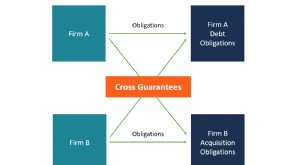
Cross Guarantee: Definition, Purpose & Examples
A cross guarantee refers to an arrangement between two or more related companies to provide a guarantee to each other’s obligations. Such a guarantee is commonly made among companies trading und
finance
- Acquirer Definition: Understanding Corporate Acquisitions
- Understanding Clawbacks: Protecting Stakeholders from Failed Performance
- Direct Deposit: Definition, Benefits & How It Works
- Understanding Financial Gearing: Debt & Leverage Explained
- Leverage in Finance: Strategies, Types & Risks
- Private vs. Public Company: Key Differences Explained
- Understanding Public Companies: A Comprehensive Guide
- Direct Offerings: A Guide to Selling Securities Directly to Investors
- Dual Listing Explained: What It Is & Why Companies Do It
-
 Capital Employed: Definition, Calculation & Importance
Capital employed refers to the amount of capital investment a business uses to operate and provides an indication of how a company is investing its money. Although capital employed can be defined in d...
-
 Understanding Common Stock: Ownership and Basics
Common stock is a type of security that represents ownership of equity in a companyCorporationA corporation is a legal entity created by individuals, stockholders, or shareholders, with the purpose of...