
Understanding Interest Income: A Comprehensive Guide
Interest income is the amount paid to an entity for lending its money or letting another entity use its funds. On a larger scale, interest income is the amount earned by an investor’s money that he places in an investment or project. A very simple and basic way of computing it is by multiplying the principal amount by the interest rateInterest RateAn interest rate refers to the amount charged by a lender to a borrower for any form of debt given, generally expressed as a percentage of the principal. applied, considering the number of months or years the money is lent.

Where is the interest income presented?
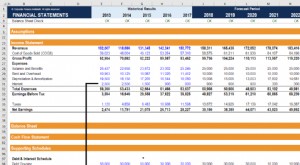
Interest income is usually taxable income and is presented in the income statementIncome StatementThe Income Statement is one of a company's core financial statements that shows their profit and loss over a period of time. The profit or for the simple reason that it is an income account. Usually, the two categories in the income statement, namely “Income from Operations” and “Other Income” are listed separately. In such an instance, the presentation of interest income will largely depend on the nature of the business’ primary operations.
If, for example, the income from interest is a major source of funds for the company, then it falls under “Income from Operations.” If it is not a primary revenue source, then it is classified as “Income from Investments” or “Other Income.”
Example of interest income
A very simple example of interest income that happens every day is when an individual deposits money into a savings account and decides to leave it untouched for several months or years. The money won’t just sit idly in his account, because the bank will use it to lend money to borrowers. The bank will earn interest by lending money out, but will also pay interest to holders of deposit accounts.
At the end of every month, the account statement will reflect the interest that the bank pays for borrowing the account holder’s money. It is important to note that banks use what is called “fractional bankingFractional BankingFractional Banking is a banking system that requires banks to hold only a portion of the money deposited with them as reserves. The reserves are held as balances in the bank’s account at the central bank or as currency in the bank.,” which means that only a part of customer deposit accounts can be used by the bank as lending funds. The bank must retain a certain level – known as the reserve – of deposit account funds. It cannot legally loan out all the funds that customers have deposited with it.
Interest income vs. Interest expense
The main difference between interest income and interest expense is outlined below:
- Interest income is money earned by an individual or company for lending their funds, either by putting them into a deposit account in a bank or by purchasing certificates of depositsCallable Certificate of DepositA Callable Certificate of Deposit is an FDIC-insured time deposit with a bank or other financial institutions. Callable CDs can be redeemed by the issuer before their actual maturity date, within a specified time frame and call price..
- Interest expense, on the other hand, is the opposite of interest income. It is the cost of borrowing money from financial institutions, banks, bond investors, or other lenders. Interest expense is incurred in order to help a company fund its operations, such as the purchase of additional machinery, plant, and property, or the acquisition of competitors or other companies.
In some cases, businesses report the interest expense and interest income separately, while others combine them and label them as “Interest Income – Net” or as “Interest Expense – Net.”
Interest income vs. Dividend income
Interest income is not the same as dividend income. The former is an amount earned for letting another person or an organization use one’s funds, while the latter is an amount that comes from the company’s profits and that is paid to the organization’s equity shareholders and preferred shareholdersPreferred SharesPreferred shares (preferred stock, preference shares) are the class of stock ownership in a corporation that has a priority claim on the company’s assets over common stock shares. The shares are more senior than common stock but are more junior relative to debt, such as bonds..
How to compute interest income
Simple interest can be computed in very simple steps. Let’s look at the process below:
- Take the annual interest rate and convert the percentage figure to a decimal figure by simply dividing it by 100. For example, an interest rate of 2% divided by 100 is 0.02.
- Use the decimal figure and multiply it by the number of years that the money is borrowed. For example, we can multiply 0.02 by 3 years and get 0.06.
- Multiply that figure by the amount in the account to complete the calculation. Let’s say the principal amount borrowed is $5,000; multiplying the figure by 0.06 will give us $300. Thus, $300 is the interest earned for the money lent for a period of 3 years.
Final word
Interest income is one of the many sources of income for businesses and individuals. Simply putting some money in the bank is a good way to start earning interest, although the interest rate for a standard savings account is not very high.
More resources
CFI is the official provider of the Financial Modeling and Valuation Analyst (FMVA)™Become a Certified Financial Modeling & Valuation Analyst (FMVA)®CFI's Financial Modeling and Valuation Analyst (FMVA)® certification will help you gain the confidence you need in your finance career. Enroll today! certification program, designed to transform anyone into a world-class financial analyst.
To keep learning and developing your knowledge of financial analysis, we highly recommend the additional CFI resources below:
- Annual Percentage Rate (APR)Annual Percentage Rate (APR)The Annual Percentage Rate (APR) is the yearly rate of interest that an individual must pay on a loan, or that they receive on a deposit account. Ultimately, APR is a simple percentage term used to express the numerical amount paid by an individual or entity yearly for the privilege of borrowing money.
- Effective Annual Interest Rate CalculatorEffective Annual Interest Rate CalculatorThis effective annual interest rate calculator helps you calculate the EAR given the nominal interest rate and number of compounding periods. The Effective Annual Rate (EAR) is the rate of interest actually earned on an investment or paid on a loan as a result of compounding the interest over a given period of time. It
- Expected ReturnExpected ReturnThe expected return on an investment is the expected value of the probability distribution of possible returns it can provide to investors. The return on the investment is an unknown variable that has different values associated with different probabilities.
- Federal Deposit Insurance Corporation (FDIC)Federal Deposit Insurance Corporation (FDIC)The Federal Deposit Insurance Corporation (FDIC) is a government institution that provides deposit insurance against bank failure. The body was created
-
Understanding Interest Expense: A Key Financial Metric
Interest expense is one of the core expenses found in the income statementIncome StatementThe Income Statement is one of a companys core financial statements that shows their profit and loss over a pe
-

Interest Payable: Definition, Calculation & Importance
Interest Payable is a liability account, shown on a company’s balance sheet,Balance SheetThe balance sheet is one of the three fundamental financial statements. The financial statements are key
finance
- Understanding Add-On Interest: How It Works & Loan Payments
- Understanding Discretionary Income: Definition & Examples
- EBITDA Explained: Understanding Earnings Before Interest, Taxes, Depreciation & Amortization
- Understanding Income: Definition, Types & Uses
- Understanding Income Properties: A Guide to Real Estate Investment
- Understanding Income Tax: A Comprehensive Guide for Individuals & Businesses
- Understanding Interest: Costs & Rewards of Borrowing and Lending
- Understanding Interest Rates: A Comprehensive Guide
- Net Interest Income (NII): Definition & Calculation
-
 Accrued Interest Explained: Accounting & Financial Definition
Accrued interest refers to interest generated on an outstanding debt during a period of time, but the payment has not yet been made or received by the borrower or lender. SummaryUnder accru...
-
 Income Smoothing: Definition, Methods & Implications
Income smoothing is a term used to refer to the different strategies and approaches used by accountants and financial analystsFinancial Analysts - What Do They Do to monitor or control the impact of h...