
Understanding Taxable Income: Definition & Calculation
Taxable income refers to any individual’s or business’ compensation that is used to determine tax liability. The total income amount or gross income is used as the basis to calculate how much the individual or organizationTypes of OrganizationsThis article on the different types of organizations explores the various categories that organizational structures can fall into. Organizational structures owes the government for the specific tax period.

One important thing to remember about taxable income is that it includes not just one’s salaryRemunerationRemuneration is any type of compensation or payment that an individual or employee receives as payment for their services or the work that they do for an organization or company. It includes whatever base salary an employee receives, along with other types of payment that accrue during the course of their work, which but also compensation in other forms, such as tips, bonuses, allowances, commissions, and capital gains.
Types of Taxable Income
Every taxpayer knows that failure to file a report for one’s income tax can lead to serious consequences. So, to be sure about paying taxes, here’s a list of the types of income:
1. Employee compensation and benefits
These are the most common types of taxable income and include wages and salaries, as well as fringe benefits.
2. Investment and business income
For people who are self-employed, they are also subject to tax liability, specifically through their business’ income. For example, net rental income and partnership income qualify as taxable income.
3. Miscellaneous taxable income
This includes income that doesn’t fit into the other types. It includes things such as death benefits, life insuranceCommercial Insurance BrokerA commercial insurance broker is an individual tasked with acting as an intermediary between insurance providers and customers., and canceled debts. Alimony, items involved in barter trading, and income from one’s hobby are also miscellaneous taxable income.
Taxable vs. Non-Taxable Income
Taxable income includes all types of compensation, whether they are in the form of cash or services, as well as property. Unless a particular income is expressly exempted by law from tax liability, every income is taxable and should be reported in the income tax return. Examples include:
- Salary
- Wages
- Interest received from banks
- Stock optionsEmployee Stock Ownership Plan (ESOP)An Employee Stock Ownership Plan (ESOP) refers to an employee benefit plan that gives the employees an ownership stake in the company. The employer allocates a percentage of the company’s shares to each eligible employee at no upfront cost. The distribution of shares may be based on the employee’s pay scale, terms of
- Dividends
- Unemployment compensation
- Notes received
- Rents from personal property
Non-taxable income, on the other hand, refers to income that is received but that is not subject to taxation. However, even if such forms of compensation cannot be taxed, they still need to be reflected in the tax return. Examples of non-taxable income are:
- Gifts
- Inheritance
- Cash rebates from items bought
- Child support payments
- Welfare benefits
- Meals and lodging
How to Compute Taxable Income
Every tax season drives workers to calculate their income to determine how much tax they are supposed to pay. Though some people can do it by themselves, many seek the help of accountants. Below are simple steps to try to determine one’s adjusted gross income, which is the amount one’s tax liability is calculated on.
- Determine total income. Individuals should put together all compensation received.
- Compute unearned income. Unearned income refers to income that is obtained without having to work for compensation, such as dividends, alimony, unemployment compensation, and real estate income.
- Choose filing status. There are four filing statuses: single, married filing jointly, married filing separately, and head of household.
- Reduce the income. Form 1040 contains a list of common deductions from gross income.
- Compute for adjusted gross income. After summing up all the deductions in the previous step, that figure will be deducted from the total, or gross, income to come up with the “adjusted gross income.” This is the amount of income upon which tax is actually levied.
Additional Resources
CFI is the official provider of the global Financial Modeling & Valuation Analyst (FMVA)™Become a Certified Financial Modeling & Valuation Analyst (FMVA)®CFI's Financial Modeling and Valuation Analyst (FMVA)® certification will help you gain the confidence you need in your finance career. Enroll today! certification program, designed to help anyone become a world-class financial analyst. To keep advancing your career, the additional CFI resources below will be useful:
- Accounting for Income TaxesAccounting For Income TaxesIncome taxes and their accounting is a key area of corporate finance. There are several objectives in accounting for income taxes and optimizing a company's valuation.
- How to Use the IRS.gov WebsiteHow to Use the IRS.gov WebsiteIRS.gov is the official website of the Internal Revenue Service (IRS), the United States’ tax collection agency. The website is used by businesses and
- Progressive TaxProgressive TaxA progressive tax is a tax rate that increases as the taxable value goes up. It is usually segmented into tax brackets that progress to
- Tax ShieldTax ShieldA Tax Shield is an allowable deduction from taxable income that results in a reduction of taxes owed. The value of these shields depends on the effective tax rate for the corporation or individual. Common expenses that are deductible include depreciation, amortization, mortgage payments and interest expense
-

Understanding Flow-Through Entities: Tax Advantages & Types
A flow-through entity – also known as a “pass-through entity” or “fiscally-transparent entity” – is a legal business entity where its profits flow directly to the i
-

Understanding Income Tax Payable: A Guide for Businesses
Income tax payable is a term given to a business organization’s tax liability to the government where it operates. The amount of liability will be based on its profitability during a given perio
finance
- Understanding Discretionary Income: Definition & Examples
- EBITDA Explained: Understanding Earnings Before Interest, Taxes, Depreciation & Amortization
- Understanding Income: Definition, Types & Uses
- Understanding Income Properties: A Guide to Real Estate Investment
- Understanding Income Tax: A Comprehensive Guide for Individuals & Businesses
- Understanding Interest Income: A Comprehensive Guide
- Understanding Accounting Income: A Key Financial Metric
- Understanding Fixed Income: A Comprehensive Guide
- Net Income Explained: A Comprehensive Guide for Businesses & Individuals
-
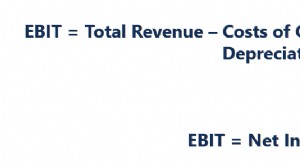 EBIT Explained: Understanding Earnings Before Interest & Taxes
EBIT stands for Earnings Before Interest and Taxes and is one of the last subtotals in the income statementIncome StatementThe Income Statement is one of a companys core financial statements...
-
 Understanding Federal Income Tax: A Comprehensive Guide
In many countries, taxes are imposed at the federal, state/provincial, and local level. The income tax that one pays at the federal level is determined by applying a predetermined rate to the earnings...