
Interbank Market: A Comprehensive Overview of Foreign Exchange Trading
As the name suggests, the interbank market is a market where foreign currency is traded between large privately held banks. The interbank market is what people refer to when talking about the currency market. It is built of large currency trades above $1 million, e.g., CAD/USD or USD/JPY. However, the transactions are often much larger, upwards of $100 million and beyond, and occur in just seconds.
Each trade comes with a previously agreed-upon amount and rate for both parties. Some of the exchanges taking place are banks working on behalf of their clients. Many of the other transactions are proprietary, meaning the trades are for the banks’ own accounts. It helps regulate the bank’s interest rate and exchange rate risks.
The interbank market follows a floating rate systemFloating Exchange RateA floating exchange rate is an exchange rate system where a country’s currency price is determined by the foreign exchange market, depending, meaning the exchange rate “floats” or adjusts on its own time based on the supply and demand of currency trades. It is also an unregulated and decentralized system, meaning there is no specific location where these transactions occur, unlike trading securities that have exchanges like the New York Stock Exchange (NYSE).
Settlements and Trade Agreements
Trades in the interbank market are often referred to as taking place in the spot marketSpot MarketA spot market is a financial market where financial instruments and commodities are traded for instantaneous delivery. Delivery refers to the or cash market. For the most part, the currency transactions settle in two business days; one of the major exceptions is the US dollar to Canadian dollar transactions that settle in one business day.
As a result of the delay in settlement, financial institutions need to acquire credit with their trade partners to facilitate the trades. The settlement delays increase the risk of the transaction, which are then countered by netting agreements between the banks.
When the currencies are traded, there are two different prices: the bid price and the ask price. The bid price is the value you would pay to buy the currency. The ask price is the value you like to receive if you are selling the currency. The practice is extremely similar to the way securities are traded on the market.
The difference between the bid and ask price is called the “bid to ask spread.” The spread is the transaction costTransaction CostsTransaction costs are costs incurred that don’t accrue to any participant of the transaction. They are sunk costs resulting from economic trade in a market. In economics, the theory of transaction costs is based on the assumption that people are influenced by competitive self-interest., minus any commissions or broker fees associated with the trade.
Market makers set the bid-ask spread. The market makers consist of the largest banks in the world. The banks constantly trade currency between each other for themselves or on behalf of their customers. The trades form the fundamental base for the currency exchange rates/market. As a result of the banks’ competitiveness, the market ensures a fair and close spread.
Regulation of the Interbank Market
As was previously stated, the interbank market is unregulated and decentralized. With that in mind, there is no specific location or exchange that the currency is traded on; instead, it is composed of thousands of interbank exchanges of currency at agreed-upon prices and quantities. The prices come from market makersMarket MakerMarket maker refers to a firm or an individual that engages in two-sided markets of a given security. It means that it provides bids and asks in tandem with, usually the largest banks in the world.
Central banks in many countries release spot-close prices that reflect the previously stated market makers’ prices at the end of each day. In some countries, there are national or local banking regulations in which currency traders must follow.
For example, many national authorities or central banks regulate foreign currency options; however, only a small part of the trades takes place on exchanges such as the Chicago Mercantile Exchange or the International Securities Exchange.
The interbank market is an essential aspect of the foreign exchange market. It is where the majority of large-scale currency transactions take place and is predominantly used for trades among bankers and their large clients.
The interbank market consist of four main components:
- The spot market, which entails transactions made for the currency price at the exact time of the trade.
- The forward market, which is an agreement to exchange currency at an agreed-upon future date and price.
- A swap trade, which is a combination of both spot and forward. The banker buys the currency at the spot market current price and then sells the equivalent amount in the forward market at a future date and price.
- Some banks also participate in the SWIFT (Society for Worldwide Interbank Financial Telecommunications) market. SWIFT enables institutions to send and receive information regarding financial transactions in a safe, proven, and reliable way.
Summary
In summary, the interbank market is made up of large-scale currency transactions between banks around the world. The transactions can be proprietary, taking place on behalf of the bank’s accounts or on behalf of the bank’s customers.
The interbank market is the predominant influence on the exchange rates around the world in the short term. Most transactions take two business days to settle, with a few exceptions. As a result of the settlement delay, a credit between the companies/banks is established to help bring the trades to fruition.
The interbank market is non-regulated, with minor exceptions on the national and local levels in some places.
Related Readings
CFI offers the Capital Markets & Securities Analyst (CMSA)®Program Page - CMSAEnroll in CFI's CMSA® program and become a certified Capital Markets &Securities Analyst. Advance your career with our certification programs and courses. certification program for those looking to take their careers to the next level. To keep learning and developing your knowledge base, please explore the additional relevant resources below:
- Foreign Exchange RiskForeign Exchange RiskForeign exchange risk, also known as exchange rate risk, is the risk of financial impact due to exchange rate fluctuations. In simpler terms,
- New York Mercantile Exchange (NYMEX)New York Mercantile Exchange (NYMEX)The New York Mercantile Exchange (NYMEX) is a commodity futures exchange located in Manhattan, New York City. It is owned by CME Group, one of the largest
- Spot Exchange RateSpot Exchange RateThe spot exchange rate is the current amount one currency will trade for another currency at a specific point in time.
- USD/CAD Currency CrossUSD/CAD Currency CrossThe USD/CAD currency pair represents the quoted rate for exchanging US to CAD, or, how many Canadian dollars one receives per US dollar. For example, a USD/CAD rate of 1.25 means 1 US dollar is equivalent to 1.25 Canadian dollars. The USD/CAD exchange rate is affected by economic and political forces on both
-
Interbank Rate Explained: Understanding Foreign Exchange Rates
The interbank rate or interbank exchange rate is a financial concept used to express foreign exchange rates, which are paid by banks when they conduct currency trading with other banks. Interbank, or
-
Nasdaq Capital Market: A Guide to Small-Cap Investing
The Nasdaq Capital Market is one of the three tiers within the Nasdaq Composite Index. The Capital Market tier is an equity market for companies with the smallest levels of market capitalizationMarket
finance
- Understanding Stock Market Proxies: A Comprehensive Guide
- Understanding Stock Market Volume: A Comprehensive Guide
- Afghan Afghani (AFN): Currency Information & Overview
- Understanding the Beta Coefficient: A Guide for Investors
- Understanding the Secondary Market: A Guide for Investors
- Understanding the Call Market: Trading Hours & Price Determination
- Understanding the Money Market: Short-Term Debt & Lending
- NASDAQ Explained: A Comprehensive Guide to the Stock Market Exchange
- Understanding the FOREX Currency Market: A Beginner's Guide
-
 Hindenburg Omen: Predicting Stock Market Crashes - A Comprehensive Guide
Hindenburg Omen, derived from Germany’s Hindenburg airship crash on May 6, 1937, is a technical indicator that foreshadows an increased probability of a looming stock market crashStock Market Cr...
-
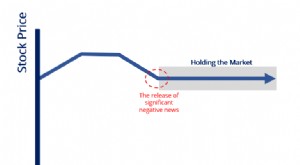 Understanding Market Support: What is 'Holding the Market'?
Holding the market refers to a market participant (or participants) that places or maintains buy orders for a security whose price is expected to fall rapidly – or is in the process of – t...