
Kuwaiti Dinar (KWD): History, Value & Key Facts
Kuwaiti Dinar is the legal tender of the State of Kuwait, an oil-rich nation in the Middle East that is surrounded by Iraq and Saudi Arabia. The dinar is divided into 1,000 “fils.”
Kuwait’s population comprises 70% expatriates. Of the country’s roughly 4.5 million residents, only a little over one million are native Kuwaitis, while close to two million are expatriates hailing from different Asian countries. Another population “quirk” of Kuwait is that in the age group from 30 to 65, men outnumber women nearly two to one.
In November 2020, rating website fxssi.com listed the Kuwaiti dinar as the most valuable currency worldwide not only because of its stability but also for the fact that it traded at a rate of 3.27 USD to 1 dinar.
Summary
- The Kuwaiti dinar is the legal tender of the State of Kuwait.
- It is considered the most valuable currency in the world, trading at around 3.27 USD to 1 dinar.
- Kuwaiti dinar was introduced in 1960, the same year that the Kuwaiti Currency Board was created.
Brief History of Kuwait and the Kuwaiti Dinar
Kuwaiti dinar was introduced in 1960, the same year that the Kuwaiti Currency Board was created. When the State of Kuwait became independent in 1961, ceasing to be a British Protectorate, the dinar replaced the Gulf rupee, which was the official currency used in Kuwait and other British Protectorates located in the Arabian Peninsula.
Kuwait became a British Protectorate in 1899 when the Ottoman Empire threatened its sovereignty. The British East India Company previously established a presence in Kuwait more than a hundred years earlier, recognizing its strategic position relative to major shipping lanes connecting key ports in Africa, India, and along the Red Sea.
Kuwait’s economy boomed in the years following World War II as it became one of the world’s premier suppliers of oil. Although it aims to diversify its economy beyond the oil industry, oil still provides 80% of the country’s tax revenues and accounts for one-third of its GDPGDP FormulaGross Domestic Product (GDP) is the monetary value, in local currency, of all final economic goods and services produced in a country during a.
As of 2020, Kuwait is the fifth richest nation worldwide in terms of per capita income, which is approximately USD 80,000.
Kuwaiti society and culture are substantially more open than those of most of its Arab neighbors, and it offers relatively greater press and civil liberties. It is largely due to Kuwait’s remarkably diverse population, with residents hailing from all four corners of the globe. Kuwait boasts the largest opera house in the Middle East and is host to several music festivals each year.
Most Kuwaitis are Sunni Muslims, but it is the only Muslim country in the Middle East that offers citizenship to Christians.
When Iraq invaded Kuwait in 1990, it stole millions of Kuwaiti dinars. Therefore, when Kuwait was liberated, it demonetizedDemonetizationDemonetization is an economic process in which a country’s currency unit is no longer legal tender. A currency unit is what we would commonly the previous issue of its banknotes and created a new issue.
Kuwaiti Banknotes and Coins
The Central Bank of Kuwait replaced the Kuwaiti Currency Board in 1969 as the monetary authority responsible for overseeing the production and regulation of the Kuwaiti dinar. The currency is extremely stable, with its value only fluctuating within a relatively small range.
While the dinar is considered the world’s most valuable currency, it is not widely traded in the foreign exchangeForeign ExchangeForeign exchange (Forex or FX) is the conversion of one currency into another at a specific rate known as the foreign exchange rate. The conversion rates for almost all currencies are constantly floating as they are driven by the market forces of supply and demand. market. Since 2007, the dinar’s been pegged to a basket of currencies that is determined by the central bank.
The dinar coins’ appearance remains essentially unchanged since their first minting in 1961. The obverse side of all Kuwaiti dinar coins features a representation of a ship, inspired by the country’s rich history as a shipbuilding center in the Persian Gulf region.
Coins are minted in denominations of 5, 10, 20, 50, and 100 fils. There was originally a 1 fil coin, but those, while still in circulation, have not been minted since 1988.
Contrary to practices of many other countries in the Middle East, Kuwait mints coins with a value of 0.02 of its currency rather than the more commonplace values of 0.025 or 0.25.
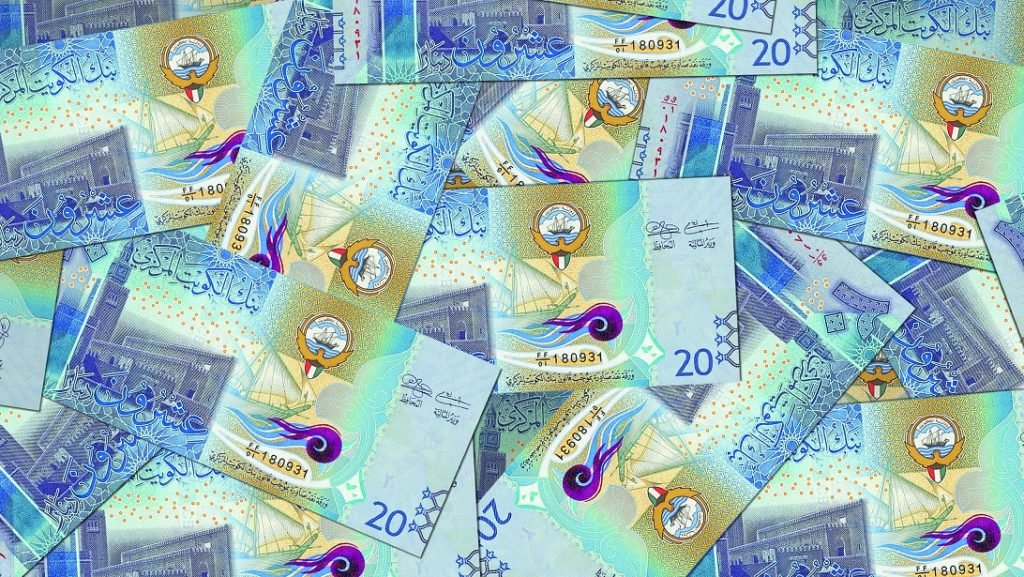
Kuwaiti dinar banknotes are printed in denominations of ¼ dinar, ½ dinar, 1 dinar, 5 dinars, 10 dinars, and 20 dinars. A notable feature is that bills are textured to make them easily identifiable by people whose vision is impaired.
The central bank produced commemorative 1-dinar polymer notes in 1993 and 2001. Both commemorative issues celebrate Kuwait’s liberation following the Iraqi invasion of 1990. However, the commemorative banknotes are merely decorative and not considered legal tender in Kuwait.
Learn More
CFI offers the Commercial Banking & Credit Analyst (CBCA)™Program Page - CBCAGet CFI's CBCA™ certification and become a Commercial Banking & Credit Analyst. Enroll and advance your career with our certification programs and courses. certification program for those looking to take their careers to the next level. To keep learning and advancing your career, the following resources will be helpful:
- Middle East and North Africa (MENA)Middle East and North Africa (MENA)MENA is an abbreviation that stands for the Middle East and North Africa. The Middle East and North Africa is a region comprising of a
- Top Banks in KuwaitTop Banks in KuwaitCurrently, there are 11 local banks in Kuwait. The Kuwait Central Bank supervises the banks in the country and maintains the stability of the Kuwaiti Dinar
- Tender OfferTender OfferA tender offer is a proposal that an investor makes to the shareholders of a publicly traded company. The offer is to tender, or sell, their shares for a specific price at a predetermined time. In some cases, the tender offer may be made by more than one person, such as a group of investors or another business. Tender offers are a commonly used means of acquisition
- National CurrencyNational CurrencyA national currency is a currency issued by the monetary authority or central bank of a country. It is the medium through which the goods or services are
-
Acid-Test Ratio: Understanding Your Company's Short-Term Liquidity
The Acid-Test Ratio, also known as the quick ratioQuick RatioThe Quick Ratio, also known as the Acid-test, measures the ability of a business to pay its short-term liabilities with assets readily conv
-

Nifty 50: History, Significance & Key Stocks - A Comprehensive Guide
The Nifty 50 refers to the fifty most popular large-cap stocks that traded at high valuations in the 1960s and 1970s. They included household names such as Xerox (XRX), IBM, Polaroid and Coca-Cola (
finance
- Current Ratio: Definition, Calculation & Financial Health
- Understanding Forward Rates: A Comprehensive Guide
- Hope Credit: Understanding Your Post-Secondary Education Tax Credit
- Iraqi Dinar (IQD): Understanding Iraq's National Currency
- Libra Cryptocurrency: A Comprehensive Overview
- Modigliani-Miller Theorem: Understanding Capital Structure & Firm Value
- Understanding NCREIF: Real Estate Investment Performance Data
- Operating Ratio: Definition, Calculation & Importance
- Understanding the Overnight Interest Rate: A Comprehensive Guide
-
 Dow 30 Explained: Understanding the Dow Jones Industrial Average
The Dow 30, or Dow Jones Industrial Average, is a stock index that tracks the performance of the 30 biggest companies listed on the stock indices in the United States. Despite being used by analysts t...
-
![Rule of 72: Calculate Investment Doubling Time | [Your Brand Name]](https://www.etffin.com/article/uploadfiles/202110/2021100815281678_S.png) Rule of 72: Calculate Investment Doubling Time | [Your Brand Name]
Rule of 72: Calculate Investment Doubling Time | [Your Brand Name]In finance, the Rule of 72 is a formula that estimates the amount of time it takes for an investment to double in value, earning a fixed annual rate of returnRate of ReturnThe Rate of Return (ROR) is ...