
Iraqi Dinar (IQD): Understanding Iraq's National Currency
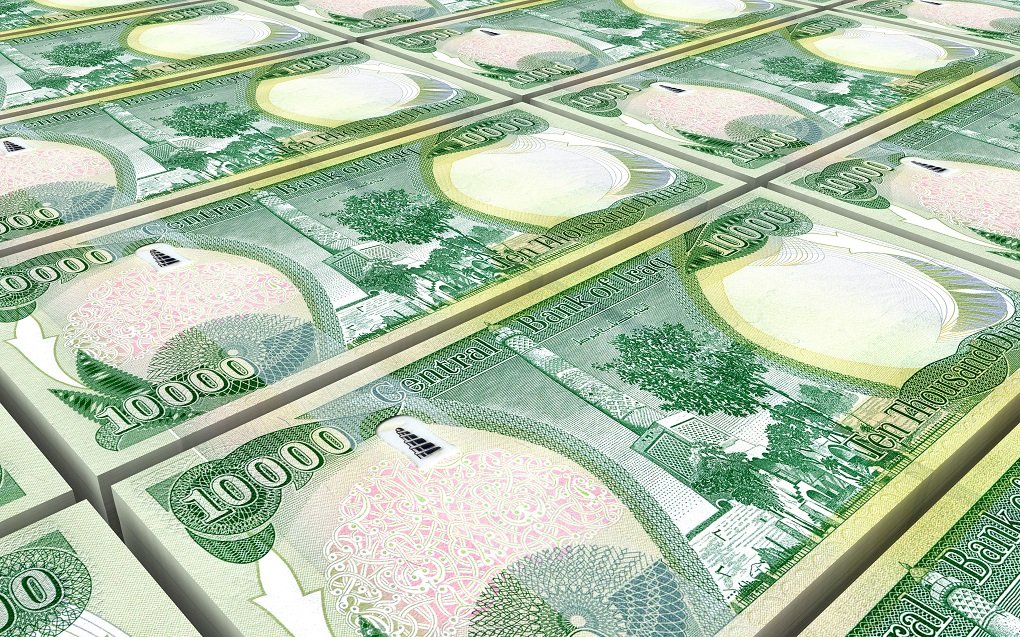
The Iraqi dinar refers to Iraq’s national currency and is represented by ISO code IQD. Iraq’s Central Bank issues the Iraqi dinar, which earlier consisted of 1000 fils. However, fils are no longer used because inflationInflationInflation is an economic concept that refers to increases in the price level of goods over a set period of time. The rise in the price level signifies that the currency in a given economy loses purchasing power (i.e., less can be bought with the same amount of money). has rendered them obsolete, and now dinars have become the smallest currency unit in use.
Summary
- The Iraqi Dinar refers to Iraq’s national currency and is represented by ISO code IQD.
- The Iraqi dinar carries less value outside the country since the country’s prime export – crude oil – is priced in USD.
- Legitimate forex exchange in the USD/IQD currency pair is practically non-existent.
History of the Iraqi Dinar
The Iraqi dinar was put into circulation in 1932 and replaced the Indian rupee, which was the national currency since the British occupation in World War I. The Iraqi dinar remained tied to the British pound until 1959, after which it was pegged to the United States dollar at a rate of 1 IQD = 2.80 USD, without a change in value.
Iraqi dinar did not follow the devaluationDevaluationDevaluation is a downward adjustment to the country’s value of money relative to a foreign currency or standard. Many countries that operate of the US currency in 1971 and 1973 and increased to 3.38 USD before the value of the IQD reduced to 3.22 USD due to a 5% devaluation. The rate continued until the Gulf War, though the black-market rate was about six times higher in late 1989.
Following the 1991 Gulf War, subject to UN sanctions, the formerly used Swiss printing method became unavailable. Hence, new and lower quality notes were made, while the previously created notes came to be known as the Swiss dinar and continued to be used in Iraq’s Kurdistan Region. The sanctions enforced by the global community and the United States, together with excessive printing by the government, rapidly devalued the new dinar notes.
At the end of 1995, 1 USD was priced at 3,000 IQD. New notes were released again in 2003; however, at that time, they were of higher quality so that the whole country could use a single currency. While the old Iraqi dinars were exchanged with new Iraqi dinar notes on a one-to-one basis, the Swiss notes were replaced at a rate of 150 new notes for one Swiss note.
The Iraqi Dinar and Scams
The Iraqi dinar carries very less value outside the country since the prime export of the country – crude oil – is priced in USD. Even so, several schemes try to get people to buy dinars in expectation of future price growth. Multiple institutions and publications alert investors not to invest in IQD scams.
Usually, brokers selling Iraqi dinar in cash charge a 25% to 30% premium over the official rate. Entities who buy the currency risk major losses immediately after buying it. Selling IQD is also challenging since there is practically no demand outside Iraq. Brokers usually bid 30% under the formal exchange rate if anyone wants to sell Iraqi dinars to them. The transaction costsTransaction CostsTransaction costs are costs incurred that don’t accrue to any participant of the transaction. They are sunk costs resulting from economic trade in a market. In economics, the theory of transaction costs is based on the assumption that people are influenced by competitive self-interest. could be decreased from 60% to 40% of the invested capital if there is no change in the exchange rate.
Legitimate forex exchange in the USD/IQD currency pair is practically non-existent. Major banks do not offer trade-in Iraqi dinars. IQD is only available for purchase or sale by selected brokers or money exchangers, who may or may not be legally authorized. As mentioned, the brokers or money exchangers typically charge a fee of 30% or more over and above the authorized exchange rate.
Purchasing and selling IQD could lead to a loss of 50% without any movement in the exchange rate. In 2012, Iraq was preparing to redenominate IQD, but not to revalue it. Without revaluation, the value of the Iraqi dinar is unlikely to increase.
More Resources
CFI is the official provider of the global Commercial Banking & Credit Analyst (CBCA)™Program Page - CBCAGet CFI's CBCA™ certification and become a Commercial Banking & Credit Analyst. Enroll and advance your career with our certification programs and courses. certification program, designed to help anyone become a world-class financial analyst. To keep advancing your career, the additional resources below will be useful:
- Currency PairCurrency PairA currency pair is a quotation of two different currencies, where one is quoted against the other. The first listed currency within a currency
- Fixed vs. Pegged Exchange RatesFixed vs. Pegged Exchange RatesForeign currency exchange rates measure one currency's strength relative to another. The strength of a currency depends on a number of factors such as its inflation rate, prevailing interest rates in its home country, or the stability of the government, to name a few.
- Kuwaiti Dinar (KWD)Kuwaiti Dinar (KWD)Kuwaiti Dinar is the legal tender of the State of Kuwait, an oil-rich nation in the Middle East that is surrounded by Iraq and Saudi Arabia.
- United States Dollar (USD)United States Dollar (USD)The United States Dollar refers to the national currency of the U.S and is represented by the ISO code USD and is often abbreviated as US$.
-
![Rule of 72: Calculate Investment Doubling Time | [Your Brand Name]](https://www.etffin.com/article/uploadfiles/202110/2021100815281678_S.png)
Rule of 72: Calculate Investment Doubling Time | [Your Brand Name]
In finance, the Rule of 72 is a formula that estimates the amount of time it takes for an investment to double in value, earning a fixed annual rate of returnRate of ReturnThe Rate of Return (ROR) is
-

Nifty 50: History, Significance & Key Stocks - A Comprehensive Guide
The Nifty 50 refers to the fifty most popular large-cap stocks that traded at high valuations in the 1960s and 1970s. They included household names such as Xerox (XRX), IBM, Polaroid and Coca-Cola (
finance
- Current Ratio: Definition, Calculation & Financial Health
- Understanding Forward Rates: A Comprehensive Guide
- Hope Credit: Understanding Your Post-Secondary Education Tax Credit
- Iraqi Dinar (IQD): Understanding Iraq's National Currency
- Kuwaiti Dinar (KWD): History, Value & Key Facts
- Libra Cryptocurrency: A Comprehensive Overview
- Modigliani-Miller Theorem: Understanding Capital Structure & Firm Value
- Understanding NCREIF: Real Estate Investment Performance Data
- Operating Ratio: Definition, Calculation & Importance
-
 Understanding the Yield Curve: Definition & Significance
The Yield Curve is a graphicalTypes of GraphsTop 10 types of graphs for data presentation you must use - examples, tips, formatting, how to use them for effective communication and in presentations. r...
-
 Dow 30 Explained: Understanding the Dow Jones Industrial Average
The Dow 30, or Dow Jones Industrial Average, is a stock index that tracks the performance of the 30 biggest companies listed on the stock indices in the United States. Despite being used by analysts t...