
Understanding Market Value of Debt: Beyond Book Value
The Market Value of Debt refers to the market price investors would be willing to buy a company’s debt for, which differs from the book value on the balance sheet. A company’s debt doesn’t always come in the form of publicly traded bonds, which have a specified market value. Instead, many companies own debt that can be classified as non-traded, such as bank loans.
Because this debt is reported at book value or accounting value in the financial statements, it is the analysts’ responsibility to calculate the market value, which will be of major importance when calculating the company’s total Enterprise ValueEnterprise Value (EV)Enterprise Value, or Firm Value, is the entire value of a firm equal to its equity value, plus net debt, plus any minority interest.

Formula for Market Value of Debt
To estimate the Market Value of Debt, an analyst can think of the Total DebtCost of DebtThe cost of debt is the return that a company provides to its debtholders and creditors. Cost of debt is used in WACC calculations for valuation analysis. on the books as a single coupon bond, with the coupon being equal to the interest expenses on all debt and the maturity as the weighted average maturity of the debt.
The bond pricing formula to calculate market value of debt is:
C[(1 – (1/((1 + Kd)^t)))/Kd] + [FV/((1 + Kd)^t)]
Where C is the interest expense (in dollars)
Kd is the current cost of Debt (in percentages)
T is the weighted average maturity (in years)
FV represents the total debt
Example Calculation
C[(1 – (1/((1 + Kd)^t)))/Kd] + [FV/((1 + Kd)^t)]
Where C is the interest expense = $25,000
Kd is the current cost of Debt = (.038) 3.8%
t is the weighted average maturity = 8.94 years
FV represents the total debt = $540,000
Substituting:
25,000[(1 – (1/((1 + .038)^8.94)))/.038] + [540,000/((1 + .038)^8.94)] = $573,427.15
Therefore, our calculated MV of Debt is $573,441.15, which can be later used to calculate the Enterprise Value by adding the Cash and Cash Equivalents to our calculated MV of Debt. This value can then be compared with the market cap and used for the calculation of financial ratios to complete the analyst’s toolbox.
Download the Free Template
Enter your name and email in the form below and download the free template now!
Factors Influencing Market Value of Debt
The market value of debt and other fixed-income securities is influenced by many factors. It’s important to have a solid understanding of what these factors are, and what impact they have on the value of debt, directionally speaking.
Factors influencing the market value of debt:
- Interest rates – the market price of debt has an inverse relationship to interest rates (as rates go up, prices go down)
- Company performance – the more ability a company has to service its debt (generating more cash flowValuationFree valuation guides to learn the most important concepts at your own pace. These articles will teach you business valuation best practices and how to value a company using comparable company analysis, discounted cash flow (DCF) modeling, and precedent transactions, as used in investment banking, equity research,) the higher the value of its debt will be
- Value of assets – if the value of the assetsIB Manual – Balance Sheet AssetsBalance sheet assets are listed as accounts or items that are ordered by liquidity. Liquidity is the ease with which a firm can convert an asset into cash. The most liquid asset is cash (the first item on the balance sheet), followed by short-term deposits and accounts receivable. This guide covers all balance sheet assets, examples that are used as collateral on the debt significantly decline, the market value of debt is likely to decline, too
- Covenants – lenders set covenantsDebt CovenantsDebt covenants are restrictions that lenders (creditors, debt holders, investors) put on lending agreements to limit the actions of the borrower (debtor). the borrowing company must meet, and if they are breached, then the value of debt would be negatively impacted
When evaluating the market price of debt, it’s important to take all of the above factors into consideration.
Related Reading
CFI is the global provider of the Financial Modeling & Valuation Analyst (FMVA)Become a Certified Financial Modeling & Valuation Analyst (FMVA)®CFI's Financial Modeling and Valuation Analyst (FMVA)® certification will help you gain the confidence you need in your finance career. Enroll today! certification. To continue learning and advancing your career as a financial analyst, these additional CFI resources will be helpful:
- Debt ScheduleDebt ScheduleA debt schedule lays out all of the debt a business has in a schedule based on its maturity and interest rate. In financial modeling, interest expense flows
- Cash EquivalentsCash EquivalentsCash and cash equivalents are the most liquid of all assets on the balance sheet. Cash equivalents include money market securities, banker's acceptances
- Enterprise Value vs Equity ValueEnterprise Value vs Equity ValueEnterprise value vs equity value. This guide explains the difference between the enterprise value (firm value) and the equity value of a business. See an example of how to calculate each and download the calculator. Enterprise value = equity value + debt - cash. Learn the meaning and how each is used in valuation
- Balance SheetBalance SheetThe balance sheet is one of the three fundamental financial statements. The financial statements are key to both financial modeling and accounting.
-

Eurodollars: Understanding Foreign Currency Time Deposits
A Eurodollar refers to a time deposit account that is denominated in U.S. dollars and held in foreign banks. They were originally restricted to the European region, hence the name “eurodollar.&r
-

Face Value Explained: Definition, Examples & Importance
The value mentioned on an instrument like a coin, stamp, or bill is called the face value of that instrument. For example, a $100 bill comes with a face value of $100. In calculus, the face value of 3
finance
- Understanding Nominal Debt: Definition, Impact & Real Value
- Understanding Market Capitalization: A Comprehensive Guide
- Understanding Capital: Types, Categories & Value Creation
- Understanding Debt: Types, Obligations & Financial Implications
- Understanding Market Capitalization: A Comprehensive Guide
- Market Value vs. Investment Value: Understanding the Key Differences
- Value Traps: Identifying & Avoiding Investment Pitfalls
- Understanding Fair Market Value: A Comprehensive Guide
- Market Value vs. Book Value: Understanding the Difference
-
 Understanding Financial Denomination: A Comprehensive Guide
A denomination is a classification for the face value of a financial instrument. It includes financial instruments, such as bondsBondsBonds are fixed-income securities that are issued by corporations ...
-
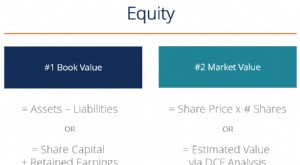 Understanding Equity: A Comprehensive Guide for Investors
In finance and accounting, equity is the value attributable to the owners of a business. The book value of equity is calculated as the difference between assetsTypes of AssetsCommon types of assets in...