
Model Audit: Ensuring Accuracy and Reliability in Financial Models
A model audit is an important task in financial auditing that helps ensure that spreadsheet errors are eliminated. Also called a model review, it is commonly requested by banking organizationsTop Banks in the USAAccording to the US Federal Deposit Insurance Corporation, there were 6,799 FDIC-insured commercial banks in the USA as of February 2014. in order to make sure that the assumptions contained within their models are accurate, reassuring lenders and investors that the models can be relied upon.

Scope of a Model Audit
A model audit is done in order to make sure that spreadsheet errorsError Bars in ExcelError bars in Excel are graphical representations of data variability. The bars usually represent standard deviation and standard error. are corrected. Thus, it needs to be specific with its scope and purpose to ensure that the relevant tasks are completely and correctly carried out. The audit’s scope includes the following:
- The audit should successfully review the logic used in the model under scrutiny.
- An audit should check for the model’s consistency in terms of transactions and documentation.
- The audit should make sure that the model is consistent and parallel with GAAPGAAPGAAP, Generally Accepted Accounting Principles, is a recognized set of rules and procedures that govern corporate accounting and financial and taxation rules.
- The audit should check for how sensitive the model is.
Purpose of a Model Audit
The audit should be able to yield accurate results and the auditor needs to provide an assurance to the party seeking the audit that such results will be obtained. To achieve the audit’s objectives, the auditor offers an amount of liability that guarantees a level of reliance, which may be equal to multiples of the fee. Should there be any mistake in the audit as a result of the auditor’s negligence, the company who requested for the audit can sue the auditor.
Basically, the audit aims to ensure that the financial modelTypes of Financial ModelsThe most common types of financial models include: 3 statement model, DCF model, M&A model, LBO model, budget model. Discover the top 10 types used by a business is accurate and that the assumptions contained within it are effective. It confirms or denies that the financial model does what it is expected to do and that any errors are minimal and will not cause any derail or delay of the business’ projects.
Categories
There are basically two broad categories – the high-level review and the formal model audit.
1. High-level review
A high-level review provides added confidence to clients about the financial model that they are using. Aside from just correcting errors on a spreadsheet, a special feature of the model audit is that it is keener and more sensitive to spotting errors without checking every single detail of the model in question. It makes the process less time-consuming, while still maintaining a very high accuracy of results, and it includes a check of the model’s logic.
2. Formal model audit
A formal audit is what stakeholders and investors may require even after the completion of an audit and submission of a report saying that the model is good enough to use. Often, they require an audit that is formal and most comprehensive, and the formal audit satisfies this requirement.
After rigorous checking, a report is submitted, which contains a detailed list of the errors in the model so that the business can solve the issues before its investors take action.
Cost and Duration of a Model Audit
The audit is completed usually within one to five weeks, depending on how extensive the review is.
The fee depends on the following factors:
- Scope of the review
- Complexity of the model checked
- Volume and complexity of the documentation to be reviewed
- The seniority of the staff who does the work
How to Conduct a Model Audit
In order to perform the audit, it is important to recognize that a model is produced by using MS Excel spreadsheets and, therefore, contains data, figures, and formulas. The auditors usually conduct a bottom-up review or a cell-by-cell check of every formula. They can also do a “top-down” analysis of the model.
Additional Resources
CFI offers the Financial Modeling & Valuation Analyst (FMVA)™Become a Certified Financial Modeling & Valuation Analyst (FMVA)®CFI's Financial Modeling and Valuation Analyst (FMVA)® certification will help you gain the confidence you need in your finance career. Enroll today! certification program for those looking to take their careers to the next level. To keep learning and advancing your career, the following CFI resources will be helpful:
- Financial Modeling Best PracticesFinancial Modeling Best PracticesThis article is to provide readers information on financial modeling best practices and an easy to follow, step-by-step guide to building a financial model.
- Forensic Audit GuideForensic Audit GuideA forensic audit is a detailed audit of a company's records to be used in a court of law in a legal proceeding. Accountants, lawyers, and
- Types of Due DiligenceTypes of Due DiligenceOne of the most important and lengthy processes in an M&A deal is Due Diligence. The process of due diligence is something which the buyer conducts to confirm the accuracy of the seller's claims. A potential M&A deal involves several types of due diligence.
- List of Financial Modeling Courses
-

Heston Model: Understanding Volatility in Financial Options
The Heston model is a stochastic model used to evaluate the volatility of an underlying asset. Like other stochastic models, the Heston model assumes that the volatility of an asset follows a random p
-

Hax's Delta Model: A Strategic Framework for Business Success
Hax’s Delta Model is a strategic framework with a pro-consumer approach toward the implementation of effective management and corporate business strategies in an organization. The Delta Model wa
finance
- Internal Audits: Ensuring Efficiency & Compliance - A Comprehensive Guide
- Understanding Look-Ahead Bias: Causes, Effects & Examples
- Backtesting: A Comprehensive Guide to Strategy Validation
- Short Rate Models: Understanding Interest Rate Dynamics
- Understanding Financial Audits: A Comprehensive Guide
- Audit Committees: Role, Responsibilities & Importance
- Audit Risk Model: Definition, Purpose & Application
- Audit Sampling: A Comprehensive Guide for Auditors
- Understanding Audit Evidence: A Comprehensive Guide
-
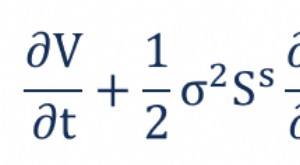 Black-Scholes Model: Understanding Stock Option Pricing
The Black-Scholes-Merton (BSM) model is a pricing model for financial instruments. It is used for the valuation of stock options. The BSM model is used to determine the fair prices of stock options ba...
-
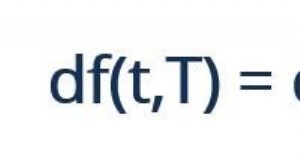 Understanding the Heath-Jarrow-Morton (HJM) Interest Rate Model
The Heath-Jarrow-Morton Model – also known as the HJM Model – is a framework to represent forward interest rates using an existing term structure of interest rates. The model was created b...