
Understanding Provisions: A Guide to Financial Liabilities
Provisions represent funds put aside by a company to cover anticipated losses in the future. In other words, provision is a liability of uncertain timing and amount. Provisions are listed on a company’s balance sheetBalance SheetThe balance sheet is one of the three fundamental financial statements. The financial statements are key to both financial modeling and accounting. under the liabilities section.

Summary
- A provision stands for liability of uncertain time and amount.
- Provisions include warranties, income tax liabilities, future litigation fees, etc.
- They appear on a company’s balance sheet and are recognized according to certain criteria of the IFRS.
Example of a Provision
An example of a provision is a product warranty or an income tax liabilityIncome Tax PayableIncome tax payable is a term given to a business organization’s tax liability to the government where it operates. The amount of liability will be based on its profitability during a given period and the applicable tax rates. Tax payable is not considered a long-term liability, but rather a current liability,.
Consider a manufacturer that offers a warranty to a customer for one of its products. The product warranty is a term in a contract, specifying the conditions under which the manufacturer will compensate for any good that is defective without any additional cost to the buyer.
That said, it falls under the definition of provision because the warranty is a possible future liability of uncertain time and amount.
How to Recognize Provisions?
Businesses cannot simply record a provision whenever they see fit. The following criteria must be met in order to recognize a provision from the perspective of the International Financial Reporting Standards (IFRS)IFRS StandardsIFRS standards are International Financial Reporting Standards (IFRS) that consist of a set of accounting rules that determine how transactions and other accounting events are required to be reported in financial statements. They are designed to maintain credibility and transparency in the financial world:
- An entity has a current obligation arising from past events;
- It is probable that an outflow of funds will occur during the settlement of the obligation;
- A company can make a reliable estimate of the amount of the obligation; and
- The entity will accept a particular responsibility, and other parties expect the entity to commit to its responsibilities.
Provisions are not recognized for operational costs, which are expenses that need to be incurred by an entity to operate in the future.
How to Record Provisions?
The recording of provisions occurs when a company files an expense in the income statement and, consequently, records a liability on the balance sheet. Typically, provisions are recorded as bad debt, sales allowances, or inventory obsolescence. They appear on the company’s balance sheet under the current liabilitiesCurrent LiabilitiesCurrent liabilities are financial obligations of a business entity that are due and payable within a year. A company shows these on the section of the liabilities account.
What is a Loan Loss Provision?
A loan loss provision is defined as an expense set aside by a company as an allowance for any unpaid debt meaning loan repayments that are due and are not paid for by a borrower.
The loan loss provision covers a number of factors in regards to potential loan losses, such as bad debtBad Debt Expense Journal EntryFirst, let’s determine what the term bad debt means. Sometimes, at the end of the fiscal period, when a company goes to prepare its financial statements, it needs to determine what portion of its receivables is collectible. The portion that a company believes is uncollectible is what is called “bad debt expense.” The (loans), defaults of the customers, and any loan terms being renegotiated with a borrower that will provide a lender with lower than previously estimated debt repayment amounts.
How Does a Loan Loss Provision Work?
Lending institutions, such as banks, generate a substantial portion of revenue from the interest paid by borrowers. Lenders initiate loans to a variety of clients. They include:
- Individuals
- Small businesses
- Large corporations, etc.
Since the 2008 Global Financial Crisis, lending regulations for banks were restricted in order to attract higher credit quality borrowers with high capital liquidity. Despite such regulatory improvements, banks still need to take into account loan defaults and the expenses for loan origination.
Loan loss provisions serve as a standardized accounting adjustment made to a bank’s loan loss reserves appearing in the lender’s financial statements. They incorporate any change in potential loss projections from the bank’s lending products due to client defaults.
Additional Resources
CFI is the official provider of the global Financial Modeling & Valuation Analyst (FMVA)™Become a Certified Financial Modeling & Valuation Analyst (FMVA)®CFI's Financial Modeling and Valuation Analyst (FMVA)® certification will help you gain the confidence you need in your finance career. Enroll today! certification program, designed to help anyone become a world-class financial analyst. To keep advancing your career, the additional resources below will be useful:
- Allowance for Doubtful AccountsAllowance for Doubtful AccountsThe allowance for doubtful accounts is a contra-asset account that is associated with accounts receivable and serves to reflect the true value of accounts receivable. The amount represents the value of accounts receivable that a company does not expect to receive payment for.
- Credit RatingCredit RatingA credit rating is an opinion of a particular credit agency regarding the ability and willingness an entity (government, business, or individual) to fulfill its financial obligations in completeness and within the established due dates. A credit rating also signifies the likelihood a debtor will default.
- Original Equipment Manufacturer (OEM)Original Equipment Manufacturer (OEM)An Original Equipment Manufacturer or OEM is a company that manufactures and sells products or parts of a product that their buyer, another company
- Sale and Purchase AgreementSale and Purchase AgreementThe Sale and Purchase Agreement (SPA) represents the outcome of key commercial and pricing negotiations. In essence, it sets out the agreed elements of the deal, includes a number of important protections to all the parties involved and provides the legal framework to complete the sale of a property.
-

Understanding Affiliated Companies: Definition & Key Differences
Affiliated companies are companies that are related through ownership, either with one owning the other as a minority shareholder or with multiple companies being owned by a third party. An
-
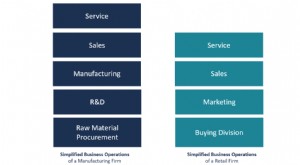
Business Operations: Definition, Activities & Optimization
Business operations refer to activities that businesses engage in on a daily basis to increase the value of the enterprise and earn a profit. The activities can be optimized to generate sufficient rev
finance
- Activity Ratios: A Comprehensive Guide to Operational Efficiency
- Authorized Shares: Understanding a Company's Issuance Limit
- Cash Reserves: Definition, Benefits & Short-Term Needs
- Understanding Company Bylaws: A Comprehensive Guide
- Understanding Debt Covenants: A Comprehensive Guide
- Understanding Earnings: A Guide to Financial Profitability
- Understanding Public Companies: A Comprehensive Guide
- Understanding Redundant Assets: Definition & Impact on Business
- Understanding Voting Shares: Your Right to Participate in Company Decisions
-
 Understanding Normalized Earnings: A Guide for Investors
Normalized earnings refer to adjustments made to financial statements to eliminate one-off effects that may impact the net income. A fundamental premise of normalizing earnings is to help financial an...
-
 Understanding Earnings Surprises: What Are They?
“Unexpected earnings” is the term used in accounting to address the difference between a company’s actual earnings for a period and the earnings they were expected to generate. It is...