
Return on Net Assets (RONA): Definition & Significance
The return on net assets (RONA) ratio, a measure of financial performance, is an alternative metric to the traditional return on assets ratio. RONA measures how well a company’s fixed assets and net working capital perform in terms of generating net income. Return on net assets is commonly used for capital-intensive companies and is an important ratio looked at by investors and analysts to determine how effective and efficient a company is at generating a profitable return on its net assets.
Formula
The formula for calculating RONA is as follows:

Where:
- Net income is a company’s income minus the cost of goods soldCost of Goods Sold (COGS)Cost of Goods Sold (COGS) measures the “direct cost” incurred in the production of any goods or services. It includes material cost, direct, expenses, and taxes for the accounting period.
- Fixed assets are assets purchased for long-term business use. Examples of fixed assets include property, plant, and equipmentPP&E (Property, Plant and Equipment)PP&E (Property, Plant, and Equipment) is one of the core non-current assets found on the balance sheet. PP&E is impacted by Capex,.
- Net working capital is the difference between the company’s current assets and current liabilities.
Example of Return on Net Assets
Tim is an equity research analystEquity Research AnalystAn equity research analyst provides research coverage of public companies and distributes that research to clients. We cover analyst salary, job description, industry entry points, and possible career paths. conducting an analysis of ABC Company. He would like to determine the company’s most recent RONA ratio to understand how efficient the company’s use of its fixed assets and net working capital is. Presented below is financial information pertaining to the company.
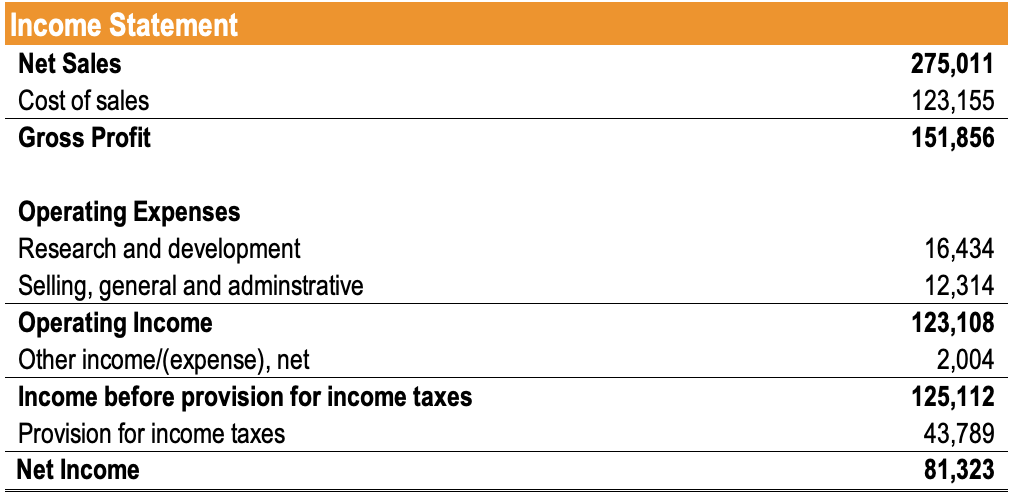
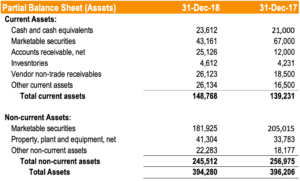
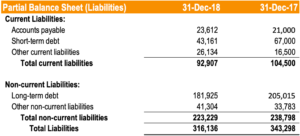
Through the income statement, Tim determines the company’s net income to be $81,323. On the company’s balance sheet, he determines that only property, plant, and equipment ($41,304) comprise the company’s fixed assets. In addition, Tim calculates Net Working Capital to be $148,768 – $92,907 = $55,861. Therefore, the RONA calculation is as follows:

Understanding Return on Net Assets
Return on net assets is used to assess the financial performance of a company in relation to its fixed assets and net working capital. Similar to the return on assets ratio, a higher RONA indicates a higher level of profitability.
There is no “ideal” return on net assets ratio number, but a higher ratio is preferable. It is important to compare the RONA of a company to peer companies. For example, a company with a RONA of 40% may look good in isolation, but that figure may actually appear poor when compared to an industry benchmark of 70%.
On a trended basis, an increasing RONA is desirable, as it is an indicator of improving profitability and financial efficiency. One important thing to note is the potential for management to distort its RONA. For example, a company may acquire fixed assets to sit on the books to deflate its RONA and then subsequently sell the fixed assets in later periods to increase their RONA. Therefore, it is important to understand the nature of the company’s fixed assets when calculating RONA.
Key Takeaways
Return on net assets is a variation of the traditional return on assets ratio that uses fixed assets and net working capital in its calculation as opposed to total assets. The RONA ratio is used to determine the efficiency and effectiveness of a company’s use of its assets. A higher RONA is desirable as it implies higher profitability. Lastly, as with any financial metric, it should be not interpreted by itself – it should be compared to peer companies or used on a trended basis.
Additional Resources
CFI offers the Financial Modeling & Valuation Analyst (FMVA)™Become a Certified Financial Modeling & Valuation Analyst (FMVA)®CFI's Financial Modeling and Valuation Analyst (FMVA)® certification will help you gain the confidence you need in your finance career. Enroll today! certification program for those looking to take their careers to the next level. To keep learning and advancing your career, the following CFI resources will be helpful:
- Analysis of Financial StatementsAnalysis of Financial StatementsHow to perform Analysis of Financial Statements. This guide will teach you to perform financial statement analysis of the income statement,
- Return on Assets and ROA FormulaReturn on Assets & ROA FormulaROA Formula. Return on Assets (ROA) is a type of return on investment (ROI) metric that measures the profitability of a business in relation to its total assets.
- Return on Capital Employed (ROCE)Return on Capital Employed (ROCE)Return on Capital Employed (ROCE), a profitability ratio, measures how efficiently a company is using its capital to generate profits. The return on capital
- Types of AssetsTypes of AssetsCommon types of assets include current, non-current, physical, intangible, operating, and non-operating. Correctly identifying and
-
Continuous Compounding Return: Definition & Calculation
Continuously compounded return is what happens when the interest earned on an investment is calculated and reinvested back into the account for an infinite number of periods. The interest is calculate
-

Direct Security Explained: Types & How It Works
Direct security is typically collateralCollateralCollateral is an asset or property that an individual or entity offers to a lender as security for a loan. It is used as a way to obtain a loan, acting
finance
- Understanding Alpha: A Guide to Investment Performance
- Cash-on-Cash Return: Definition, Calculation & Importance
- Understanding Net Foreign Assets (NFA): A Comprehensive Guide
- Net Liquid Assets: Definition, Calculation & Importance
- Operating Return on Assets (OROA): Definition & Calculation
- ROA Calculation: Understand Return on Assets & Formula
- Understanding Unrestricted Net Assets for Nonprofits
- Return on Net Assets (RONA): Definition & Analysis
- Net Worth: Definition, Calculation & Importance | [Your Brand]
-
 Asset Turnover Ratio: Definition & Importance
Asset turnover is a financial ratio that measures the value of revenueRevenue StreamsRevenue Streams are the various sources from which a business earns money from the sale of goods or provision of se...
-
 Understanding CAPM: A Comprehensive Guide to Capital Asset Pricing
The Capital Asset Pricing Model (CAPM) is a model that describes the relationship between the expected returnExpected ReturnThe expected return on an investment is the expected value of the proba...