
Corporate Spin-Offs: Definition, Strategy & Examples
A corporate spin-off is an operational strategy used by a company to create a new business subsidiarySubsidiaryA subsidiary (sub) is a business entity or corporation that is fully owned or partially controlled by another company, termed as the parent, or holding, company. Ownership is determined by the percentage of shares held by the parent company, and that ownership stake must be at least 51%. from its parent company. A spin-off occurs when a parent corporation separates part of its business operations into a second publicly traded entity and distributes shares of the new entity to its current shareholders.
The new entity takes assets, employees, or existing product lines and technologies from the parent in exchange for a predetermined amount of cash. The spun entity may take on debt to provide a distribution to the parent in exchange for those assets or loss of cash flow.

Reasons for a Spin-off
A spin-off may be a method for the parent to reduce agency costsAgency CostsAgency costs are internal costs incurred due to the competing interests of shareholders (principals) and the management team (agents). Expenses associated and create tax shieldsInterest Tax ShieldsThe term "interest tax shield" refers to the reduced income taxes brought about by deductions to taxable income from a company's interest expense. or to enter a new industry while retaining a close relationship with the spun-off company. It is a way of reorganizing a company’s administrative structure in order to improve its profitability.
When a company plans to consolidate or streamline its workflow, it can spin off a less productive division to form a new independent company. In other words, a company creates a new business entity out of its existing divisions, subsidiaries, or sub-units.
The new individual company is expected to be more profitable and worth more alone than it would be as a part of the larger business entity.
When a spin-off occurs, the shareholders of the parent corporation are not required to surrender any of their parent corporation stockStockWhat is a stock? An individual who owns stock in a company is called a shareholder and is eligible to claim part of the company’s residual assets and earnings (should the company ever be dissolved). The terms "stock", "shares", and "equity" are used interchangeably. in exchange for the subsidiary’s stock.
What is a Split-off?
A corporate split-off is the process whereby a parent corporation organizes a subsidiary corporation to which it transfers part of its assets in exchange for all of the subsidiary’s capital stock, which is subsequently transferred to the shareholders of the parent corporation in exchange for a portion of their parent stock.
In other words, it is a transfer of corporate assets to a subsidiary involving the surrender of a part of the stock owned by the corporation’s shareholders in exchange for controlling stock of the subsidiary.
A split-off is a way of restructuring the capital structure of a company. Shareholders of a split-off are given the option to relinquish their shares of stock in the parent company in order to receive shares of the subsidiary company. The split-off is also a tax-efficient way for the parent company to redeem its shares of stock.
Spin-off vs. Split-off
A split-off differs from a spin-off in that the shareholders in a split-off must relinquish their shares of stock in the parent corporation in order to receive shares of the subsidiary corporation, whereas the shareholders in a spin-off do not need to do so.
Additional Resources
CFI is the official provider of the global Financial Modeling & Valuation Analyst (FMVA)®Become a Certified Financial Modeling & Valuation Analyst (FMVA)®CFI's Financial Modeling and Valuation Analyst (FMVA)® certification will help you gain the confidence you need in your finance career. Enroll today! certification program, designed to help anyone become a world-class financial analyst. To keep advancing your career, the additional CFI resources below will be useful:
- DivestituresDivestitureA divestiture (or divestment) is the disposal of company's assets or a business unit through a sale, exchange, closure, or bankruptcy. A partial or full disposal can happen, depending on the reason why management opted to sell or liquidate its business’ resources. Examples of divestitures include selling intellectual
- Mergers & Acquisitions ProcessMergers Acquisitions M&A ProcessThis guide takes you through all the steps in the M&A process. Learn how mergers and acquisitions and deals are completed. In this guide, we'll outline the acquisition process from start to finish, the various types of acquirers (strategic vs. financial buys), the importance of synergies, and transaction costs
- What Do Investment Bankers DoWhat Do Investment Bankers Do?What do Investment Bankers do? Investment bankers can work 100 hours a week performing research, financial modeling & building presentations. Although it features some of the most coveted and financially rewarding positions in the banking industry, investment banking is also one of the most challenging and difficult career paths, Guide to IB
- Financial Modeling ResourcesFinancial ModelingFree financial modeling resources and guides to learn the most important concepts at your own pace. These articles will teach you financial modeling best practices with hundreds of examples, templates, guides, articles, and more. Learn what financial modeling is, how to build a model, Excel skills, tips and tricks
-

Understanding Acquisition Cost: Definitions & Applications
Acquisition cost is the cost of purchasing an asset. It is generally used in three different contexts in business, which include the following:Mergers and acquisitionsFixed assetsCustomer acquisition&
-

Streamlining Processes: Definition, Benefits & Techniques
Streamlining refers to the improvement of the efficiency of a certain process within an organization. It can be done by automationExcel vs Automation in Financial ModelingBefore we discuss Excel vs au
finance
- Understanding Parent Companies: Definition, Control & Subsidiaries
- Acquirer Definition: Understanding Corporate Acquisitions
- Understanding Clawbacks: Protecting Stakeholders from Failed Performance
- Understanding Financial Gearing: Debt & Leverage Explained
- Leverage in Finance: Strategies, Types & Risks
- Parent Company Explained: Definition, Control & Examples
- Understanding Stocks: A Beginner's Guide to Share Ownership
- Understanding Subsidiaries: Definition, Ownership & Key Attributes
- Understanding Net-Net: A Financial Health Indicator
-
 Outsourcing: A Comprehensive Guide to Benefits & Strategy
Outsourcing is a strategic decisionCorporate StrategyCorporate Strategy focuses on how to manage resources, risk and return across a firm, as opposed to looking at competitive advantages in business s...
-
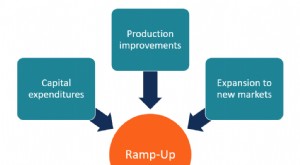 Ramp-Up: Definition, Benefits & How to Achieve It
In business, ramp-up is a term that describes a significant increase in the output of a company’s products or services. Essentially, ramp-up implies bringing the company’s capacity utiliza...