
Investment Company Definition: Understanding IRS Requirements & Types
The IRS has an investment company definition that is straightforward. According to the IRS, an investment company is any company with greater than 50% of its assets as investments. This definition, however, is quite general. There are subcategories of investment companies that are more specific.
Passive Investment Companies
Companies that have most of their assets in passive investments are known as passive investment companies or PICs. These companies earn their income and make their profits largely from one or more of the following methods: dividend payments, capital gains or interest.
Direct Investment Companies
These companies are in contrast to direct investment companies, or DICs. These companies make their income by selling a product or service. They invest money directly into buildings are goods and largely avoid dealing with investment vehicles.
Foreign Investment Companies
The IRS recognizes foreign investment companies as well. There are both passive and direct foreign investment companies, with largely the same definition and operation as the domestic investment companies. The difference is simply the ownership of the company being located in a country outside the U.S.
This definition of an investment company can be for companies that are both foreign and domestic. Foreign investment companies are defined in essentially the same way with the addition of foreign ownership, but the IRS treats these companies significantly differently on tax returns of individual investors. For that reason, familiarizing yourself with specific types of investment companies beyond the basic definition of an investment company is a good idea.
-
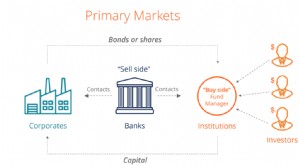
Understanding the Primary Market: A Comprehensive Guide
The primary market is the financial market where new securitiesPublic SecuritiesPublic securities, or marketable securities, are investments that are openly or easily traded in a market. The securitie
-

Understanding the Stock Market: A Beginner's Guide
The stock market refers to public markets that exist for issuing, buying, and selling stocks that trade on a stock exchange or over-the-counter. StocksStockWhat is a stock? An individual who owns stoc
Fund information
- Acid-Test Ratio: Understanding Your Company's Short-Term Liquidity
- Understanding the Earnings Multiplier (P/E Ratio): A Comprehensive Guide
- Modigliani-Miller Theorem: Understanding Capital Structure & Firm Value
- Understanding Private Companies: Ownership, Structure, and Types
- AIM Explained: Investing in High-Growth Companies on the London Stock Exchange
- Investment Explained: A Comprehensive Guide to Growing Your Wealth
- Cost Method Explained: Accounting & Investment Strategies
- Understanding Associate Companies: Definition & Ownership
- Mortgage Investment Companies: Navigating Financial Challenges
-
 Understanding Lock-Up Periods After an IPO: A Comprehensive Guide
A lock-up period, also called a locked-up, lock-in or lock-out period, refers to the predetermined time frame in which corporate insiders, investors, and employees are not allowed to sell or redeem th...
-
 NASDAQ-100 Index: Definition, Components & Historical Data
The NASDAQ-100 Index is a stock market index that includes 100 of the largest, most actively traded, non-financial companies that are listed on the Nasdaq Stock Market. A stock market index helps inve...