
NASDAQ-100 Index: Definition, Components & Historical Data
The NASDAQ-100 Index is a stock market index that includes 100 of the largest, most actively traded, non-financial companies that are listed on the Nasdaq Stock Market. A stock market index helps investors compare current and past price levels in order to calculate the overall market’s performance.
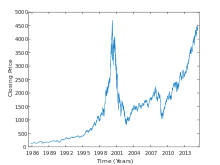
The NASDAQ-100 Index includes many industries, such as technology, retail, industrial, telecommunication, healthcare, transportation, and media. The top companies included are all from the technology sector and include Microsoft Corp, Apple Inc., and Amazon.com Inc. Because of the fact, the NASDAQ-100 Index is somewhat known as a technology index.
History of the Nasdaq 100 Index
The National Associate of Securities Dealers (NASD) started the NASDAQ-100 Index in 1985, along with NASDAQ Financial-100, which focuses on solely financial companies, which is why the NASDAQ-100 Index does not include any financial companies.
Companies must meet the standards set by Nasdaq in order to be part of the index. More specifically, it requires that companies are listed exclusively on a Nasdaq exchange, in addition to considering a company’s market capitalization and liquidityLiquidityIn financial markets, liquidity refers to how quickly an investment can be sold without negatively impacting its price. The more liquid an investment is, the more quickly it can be sold (and vice versa), and the easier it is to sell it for fair value. All else being equal, more liquid assets trade at a premium and illiquid assets trade at a discount..
Also, Nasdaq imposes some more specific requirements, such as achieving an average daily volume of 200,000 shares and being listed on the market for at least three months. Interestingly, it was limited to 100 originally; however, today, it consists of 107 equity securities issued by 100 companies.
How the Index Works
The NASDAQ-100 Index is a modified capitalization-weighted indexCapitalization-Weighted IndexThe Capitalization-Weighted Index (cap-weighted index, CWI) is a type of stock market index in which each component of the index is weighted relative to its total market capitalization. In a capitalization-weighted index, companies with larger market capitalization exert a greater impact on the index value.. It means that stocks are weighted according to the total market value of their outstanding shares. As a company’s stock price changes, its stock index’s value changes as well.
Interestingly, the index is not rebalanced often. However, when it is time for a rebalancing, Nasdaq will review the companies included, re-rank eligible companies, and make adjustments. For example, in 2017, Wynn Resorts, Ltd. replaced TripAdvisor, Inc.
When they decide to review, Nasdaq will look at share prices and publicly announced share totals. Once they’ve been ranked, companies ranked 101st to 125th will only stay if they were in the top 100 in the previous year. However, if they are not able to move back into the top 100 that year, they will be dropped. If they are ranked over 125, they will be dropped regardless.
Importance of the NASDAQ-100 Index
The NASDAQ-100 Index is important because it plays a large role in the local and global economyEconomic IndicatorsAn economic indicator is a metric used to assess, measure, and evaluate the overall state of health of the macroeconomy. Economic indicators. It advises society and investors of the top companies outside of the financial sector. For companies, it is an extremely well-known, well-trusted exchange for them to list their shares on.
If they were to be listed on the index, it could strongly affect their financial success. Also, the index is known for including companies that are at the forefront of innovation in all included industries. More generally, Nasdaq, as a whole, provides a lot of employment opportunities.
Example
In 2017, Company X was an extremely well-known technology sector company that specializes in social media, specifically in making fun captions that users can post on their respective profile pages. Because of their successes, they were able to join the NASDAQ-100 Index in that year.
However, in 2018, consumers started to really become interested in upcoming social media companies that incorporated photos and videos into their applications, such as Company Z. As Company X became less popular, it fell to the 103rd position on the NASDAQ-100 Index. Still, it was able to maintain its position on the index due to its position in the previous year.
In 2019, however, Company X ranked 126th and fell off the index. On the other hand, Company Z ranked 88th in the same year and thus, replaced Company X on the NASDAQ-100 Index.
Additional Resources
CFI is the official provider of the global Commercial Banking & Credit Analyst (CBCA)™Program Page - CBCAGet CFI's CBCA™ certification and become a Commercial Banking & Credit Analyst. Enroll and advance your career with our certification programs and courses. certification program, designed to help anyone become a world-class financial analyst. To keep advancing your career, the additional CFI resources below will be useful:
- Dow Jones Industrial Average (DJIA)Dow Jones Industrial Average (DJIA)The Dow Jones Industrial Average (DJIA), also referred to as "Dow Jones” or "the Dow", is one of the most widely-recognized stock market indices.
- FTSE IndicesFTSE IndicesFTSE indices refer to several major UK stock market indexes. Indices provide market analysts and investors with a gauge for monitoring the overall equity market. Specifically, the FTSE (Financial Times Stock Exchange) indices represent stocks traded on the London Stock Exchange (LSE). They reflect the performance of UK stock shares
- Nikkei IndexNikkei IndexThe Nikkei Index, or Nikkei 225, is the most recognized Japanese stock market index. It comprises Japan's top 225 companies listed on the Tokyo Exchange.
- SPDR S&P 500 ETFSPDR S&P 500 ETF (SPY)The Standard and Poor Depositary Receipts (SPDR) S&P 500 ETF is an exchange-traded fund that tracks the S&P 500 stock market index.
-
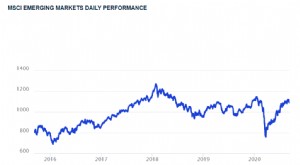
MSCI Emerging Markets Index: Definition & Key Facts
The MSCI Emerging Markets Index is used to measure the stock market performance within emerging countries. Established in the 1960s, It is one of many indexes created by Morgan Stanley Capital Interna
-
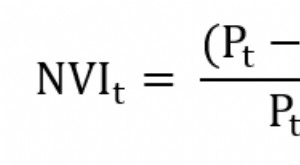
Negative Volume Index (NVI): A Comprehensive Guide
The Negative Volume Index (NVI) is a technical indicator used to identify trends in a market. It is a cumulative indicator, which means that all changes to the indicator accumulate. Put another way, t
invest
- Advance-Decline Line: Understanding Market Sentiment & Trends
- Arms Index (TRIN): Understanding Short-Term Market Sentiment
- DAX Index: Your Guide to Germany's Top 30 Companies
- EAFE Index: Understanding Developed Market Performance
- KBW Bank Index: Tracking US Banking Sector Performance
- Nikkei Index: Understanding Japan's Top Stock Market Indicator
- Price-Weighted Index Explained: How It Works & Examples
- Understanding the S&P 500: Top Holdings & Long-Term Performance
- Understanding the S&P/TSX Composite Index: A Comprehensive Guide
-
 Hang Seng Index (HSI): A Comprehensive Guide to Hong Kong's Stock Market
The Hang Seng Index (HSI) is a stock market index in Hong Kong. It records and monitors the daily changes in stock prices of the 50 largest Hong Kong stock market companies. As the companies represent...
-
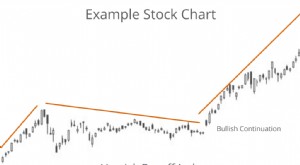 Herrick Payoff Index: Understanding Derivative Market Trends
The Herrick Payoff Index is a forward-looking technical analysis tool used to identify trends in derivative markets. Using price, volume, and open interest, the index provides an overview of money flo...