
AIM Explained: Investing in High-Growth Companies on the London Stock Exchange
The Alternative Investment Market (AIM) was launched on June 19, 1995 as a sub-exchange market of the London Stock Exchange (LSE). The market was designed to help small, high-growth companies that are keen on raising capitalEquity Capital Market (ECM)The equity capital market is a subset of the capital market, where financial institutions and companies interact to trade financial instruments for expansion. It has less onerous regulatory requirements, such as no set requirements for market capitalization or the number of shares issued, things that might hinder small companies from participating in the London Stock Exchange.
At the launch date, the Alternative Investment Market had only ten companies, valued at a total of £88.2 million. Since then, the number of AIM-traded stocks has grown to represent over 3,600 companies from around the world that take advantage of the opportunity to raise equity capital.
Here is a link to the Alternative Investment Market AIM -> http://www.londonstockexchange.com/aim

Types of Companies Listed on the Alternative Investment Market
The Alternative Investment Market attracts small companies from various market sectors that are looking to raise capital – usually somewhere between £1m and £50m – through an Initial Public Offering (IPO)IPO ProcessThe IPO Process is where a private company issues new and/or existing securities to the public for the first time. The 5 steps discussed in detail. However, some AIM-listed companies have registered huge amounts of capital raised beyond this range, up to as much as £100m. The companies listed on the AIM come from 37 different market sectors and from over 25 countries across the globe. Companies operating in the market sectors of Healthcare, Finance, Oil and Gas, Technology, Industrials, and Consumer Services are the most frequently represented in the AIM.
The Sarbanes-Oxley Act of 2002, which substantially increased regulatory requirements for all publicly traded companies in the U.S., spurred dozens of U.S.-based companies to seek a listing on the more welcoming AIM in London.
Most companies listed on the AIM use the opportunity as a stepping stone to getting listed on the primary exchange, the London Stock Exchange. Investors are attracted to trading the alternative market due to significant tax benefits and the belief that it’s the right place for “the next big thing.” According to a study conducted by TD Direct Investing, the majority of AIM investors are relatively young investors in the 30- to 44-year-old age bracket.
Investing in companies listed on the AIM offers excellent potential returns on investment, but investors need to be keenly aware of the fact that most of the stocks trading on the AIM exchange are considered to be high-risk investments and commonly experience high levels of volatility associated with the market.
AIM Nominated Advisers
Companies that have made the decision to get listed on the AIM are first required to identify and appoint a “nomad” to help them get to the market. Nomad stands for “Nominated Advisor.” Nomads are experienced in guiding new companies in the flotation process and have a thorough understanding of the needs of companies seeking admission into the market. They provide a guarantee to the shareholdersShareholder PrimacyShareholder primacy is a shareholder-centric form of corporate governance that focuses on maximizing the value of shareholders before considering that the company’s operations are reasonable during the initial share flotation process (the IPO) and during subsequent periods.
For a firm to become a nomad on the AIM, they must meet the eligibility criteria outlined in the AIM Rules and also complete the appropriate application documents. The AIM’s regulation team reviews the firm’s application and holds discussions with the firm in detail. Prior to the approval of a nomad, the firm and its executives will be subject to a gazetting period.
Other advisors included in the admission process include law firms, accountantsAccountingAccounting is a term that describes the process of consolidating financial information to make it clear and understandable for all, brokers, and public relations and investor relations firms. The advisors are required to be a firm, or company, rather than an individual. The AIM Rules for Nominated Advisors guides nomads on their ongoing responsibilities and on review and disciplinary procedures in the event that they are accused of acting improperly in their role as nomads.
After the appointment of advisors, a company seeking to be listed on the AIM is required to prepare an admission document that includes important information about the company. The admission document comprises the list of company directors, annual financial statements, information on business activities the company is engaged in, and the company’s overall business plan or strategy.
Tax Benefits of Investing in AIM
Although many people view AIM stocks as a high-risk investment, the tax benefitsTax ShieldA Tax Shield is an allowable deduction from taxable income that results in a reduction of taxes owed. The value of these shields depends on the effective tax rate for the corporation or individual. Common expenses that are deductible include depreciation, amortization, mortgage payments and interest expense that come with AIM investments make them very appealing to a lot of investors. The Alternative Investment Market offers investors various ways of taking advantage of government-sponsored tax relief such as the Capital Gains Tax Relief, the Business Property Relief, and other forms of loss relief on shares invested in through Venture Capital Trusts (VCT) or that qualify for the Enterprise Investment Scheme (EIS).
Business Property Relief (BPR)
Investors in many companies listed on the exchange qualify for the Business Property Relief that grants up to 100% Inheritance Tax Relief on the transfer of value of stock shares. A transfer of value occurs when a family member dies or when shares are transferred as a lifetime gift within the last seven years of the life of the person gifting them. The qualifying BPR investment must have been held for at least two years before the time of death to qualify.
The full BPR relief is only applicable to investments in small, unquoted companies, and the investors must have invested in the shares directly. In special circumstances, wealth managers may create discretionary portfolios of established and growing companies for Inheritance Tax Relief purposes.
Enterprise Investment Scheme (EIS)
Some companies on the AIM may qualify to offer shares through an enterprise investment scheme (EIS). In the event that a company is failing and its shares are becoming worthless, investing in a qualifying company can grant investors capital gains tax relief and loss relief.
EIS investments offer a 30% up-front income tax relief and can provide up to 100% Inheritance Tax Relief, provided that the funds remain invested at the time of the shareholder’s death. For a firm to qualify for these tax reliefs, it must abide by all of the rather complex and detailed requirements for an EIS for a minimum of three years.
Venture Capital Trusts (VCTs)
Venture Capital Trusts invest in young companies and offer income tax and capital gains tax breaks similar to those offered through an EIS. A VCT offers 30% income tax relief and tax-free dividends as long as the shares are held for the minimum five-year holding periodCurrency RiskCurrency risk, or exchange rate risk, refers to the exposure faced by investors or companies that operate across different countries, in regard to unpredictable gains or losses due to changes in the value of one currency in relation to another currency.. However, VCTs do not provide the Inheritance Tax Relief that an EIS does.
Risks of Investing in the Alternative Investment Market
Since companies listed on the Alternative Investment Market are typically small, early-stage businesses, they are faced with various risks common to such companies, such as low liquidity in trading their stock, increased risk of an unproven business model encountering problems, and a higher risk of experiencing cash flow problems.
While many companies listed on the AIM have managed to prosper and eventually cross over to the London Stock Exchange, others do not survive. There are noticeably higher rates of companies trading on the AIM being delisted, as compared to the delisting rate for the LSE.
For investors with the necessary risk tolerance, however, investing in AIM stocks offers the rare opportunity to get in on the ground floor – at a cheap stock price – with a small company that is just getting started, and then reap the massive rewards when it becomes a success and its stock price increases tenfold or more.
More Resources
CFI offers the Capital Markets & Securities Analyst (CMSA)®Program Page - CMSAEnroll in CFI's CMSA® program and become a certified Capital Markets &Securities Analyst. Advance your career with our certification programs and courses. certification program for those looking to take their careers to the next level. To keep learning and advancing your career, the following resources will be helpful:
- CryptocurrencyCryptocurrencyCryptocurrency is a form of digital currency that is based on blockchain networking. Cryptocurrency like Bitcoin and Ethereum are becoming widely accepted.
- BitcoinBitcoinBitcoin is the forerunner of the cryptocurrency market. Operating on blockchain technology, Bitcoin is set to disrupt the currency market. Invented in 2008
- Investment MethodsInvestment MethodsThis guide and overview of investment methods outlines they main ways investors try to make money and manage risk in capital markets. An investment is any asset or instrument purchased with the intention of selling it for a price higher than the purchase price at some future point in time (capital gains), or with the hope that the asset will directly bring in income (such as rental income or dividends).
- Investing: A Beginner’s GuideInvesting: A Beginner's GuideCFI's Investing for Beginners guide will teach you the basics of investing and how to get started. Learn about different strategies and techniques for trading
-

Advance/Decline Ratio (ADR): A Comprehensive Guide
The advance decline ratio (ADR) is a technical indicatorTechnical Analysis - A Beginners GuideTechnical analysis is a form of investment valuation that analyses past prices to predict future price act
-

Understanding the 11 Major Stock Market Sectors | S&P GICS
The stock market is big. The world’s major stock exchanges offer shares for anywhere between 2,000 and 8,000 different businesses at any given time. With so many businesses and companies in the Wal
invest
- Understanding the Call Market: Trading Hours & Price Determination
- Farmland Investing: A Sustainable Alternative Asset Class
- Hindenburg Omen: Predicting Stock Market Crashes - A Comprehensive Guide
- Understanding Market Support: What is 'Holding the Market'?
- Understanding the Money Market: Short-Term Debt & Lending
- NASDAQ Explained: A Comprehensive Guide to the Stock Market Exchange
- Timberland Investment: A Guide to Growing Wealth with Trees
- Understanding Financial Investment Companies: Roles & How They Work
- Investment Company Definition: Understanding IRS Requirements & Types
-
 Alternative Investments: A Comprehensive Guide to Tangible & Financial Assets
An alternative investment is an investment in assets different from cash, stocks, and bonds. Alternative investments can be investments in tangible assetsTangible AssetsTangible assets are assets with...
-
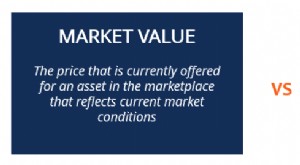 Market Value vs. Investment Value: Understanding the Key Differences
In finance, you frequently encounter the concepts of market value vs investment value. The two terms may seem synonymous, however, there are some critical differences between them. In this article, we...