
Bond Tender Offers: Definition, Process & Corporate Finance
A bond tender offer, also known as a debt tender offer, is a term used in corporate finance to denote the process of a company retiring its debt. It is done by making an offer to the company’s existing bondholders to repurchase a specified number of bonds at a particular price and a specified time.

Companies use such offers to restructure or refinance their current capital structureCapital StructureCapital structure refers to the amount of debt and/or equity employed by a firm to fund its operations and finance its assets. A firm's capital structure. Capital structure primarily includes the debt to equity ratio or leverage of a company.
A highly levered company is one with a large amount of debt relative to its equity share capital and vice versa. Once the buyback is offered to all the shareholders of the publicly traded company, the bonds that are given up by the shareholders are retired and canceled.
Summary
- A bond tender offer is a process used by companies to retire their existing debt and change their capital structure.
- Bond tenders decrease a company’s existing liabilities and cost of capital without necessarily pressurizing the liquidity situation of the company.
- Tender offers can represent the threat of a hostile takeover of a company by external actors, such as private equity firms.
What is a Bond?
A bond is a unit of debt that is offered by a company to its debt holders in exchange for funds at a fixed rate of interest. It is a fixed income instrument that comes with a maturity date.
If the principal amount is not paid back by the maturity date, the debtor risks default. The interest rate payable on bonds, called the coupon rate, is pegged to the free market via Treasury interest rates. Both share an inverse correlation, which means that as interest rates rise, bond prices fall.
Advantages of Bond Tender Offers
Bond tender offers provide the following advantages:
1. Decreasing the cost of capital
The interest payments or coupon payments made to the bondholders represent a cost to the debtor company. For companies with a highly leveraged capital structure, it is favorable to eliminate or decrease the cost by repurchasing debt.
Debt repurchases are extremely important in cases when central banksFederal Reserve (The Fed)The Federal Reserve is the central bank of the United States and is the financial authority behind the world’s largest free market economy. turn dovish and market interest rates fall. The coupon rate increases and imposes a larger liability on the issuer of the bond. A company is also less likely to become bankrupt as a result of fewer payment obligations.
2. Retiring existing bonds at less than face value
On the open market, many debt securities trade below their face value, thus making the repurchasing of a debt attractive to a company. In the case of a bond tender offer, the company offers to buy its bonds above their market value.
However, the company’s offer price is still lower than the face value of the bonds. The transactions are generally non-negotiable with the offeree since only a limited amount of bond purchases are permissible by financial markets regulators.
3. Does not affect the company’s liquidity
Any company can either repurchase bonds in exchange for either cash or issue a new security to the bondholders. Thus, companies with access to capital can use their retained earningsRetained EarningsThe Retained Earnings formula represents all accumulated net income netted by all dividends paid to shareholders. Retained Earnings are part to make an offer. Companies without access to capital can exchange outstanding securities for freshly issued debt.
Disadvantages of Bond Tender Offers
1. Threat of hostile takeovers
According to the US Securities and Exchange Commission (SEC)Securities and Exchange Commission (SEC)The US Securities and Exchange Commission, or SEC, is an independent agency of the US federal government that is responsible for implementing federal securities laws and proposing securities rules. It is also in charge of maintaining the securities industry and stock and options exchanges, tender offers for the buyback of any security can be made without the consent of the members of a company’s board of directors. Such offers can represent the threat of a hostile takeover. It is because the shares purchased by means of a tender offer become the property of the buyer.
Related Readings
CFI is the official provider of the global Commercial Banking & Credit Analyst (CBCA)®Program Page - CBCAGet CFI's CBCA™ certification and become a Commercial Banking & Credit Analyst. Enroll and advance your career with our certification programs and courses. certification program, designed to help anyone become a world-class financial analyst. To keep advancing your career, the additional resources below will be useful:
- Coupon RateCoupon RateA coupon rate is the amount of annual interest income paid to a bondholder, based on the face value of the bond.
- Private vs. Public CompanyPrivate vs Public CompanyThe main difference between a private vs public company is that the shares of a public company are traded on a stock exchange, while a private company's shares are not.
- Share RepurchaseShare RepurchaseA share repurchase refers to when the management of a public company decides to buy back company shares that were previously sold to the public. A company may decide to repurchase its sharesto send a market signal that its stock price is likely to increase, to inflate financial metrics denominated by the number of shares outstanding (e.g., earnings per share or EPS), or simply because it wants to increase its own equity stake in the company.
- Weighted Average Shares OutstandingWeighted Average Shares OutstandingWeighted average shares outstanding refers to the number of shares of a company calculated after adjusting for changes in the share capital over a reporting period. The number of weighted average shares outstanding is used in calculating metrics such as Earnings per Share (EPS) on a company's financial statements
-
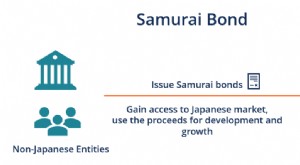
Samurai Bonds: A Guide to Understanding Yen-Denominated Corporate Debt
A samurai bond is a corporate bond issued by foreign companies in the Japanese market and is required to abide by the Japanese regulations. It is a yen-denominated bond that attracts investors from Ja
-

Treasury Bonds: A Comprehensive Guide to U.S. Government Debt
A Treasury bond (or T-Bond) is a long-term government debt security issued by the U.S. Treasury Department with a fixed rate of return. Maturity periods range from 20 to 30 years. T-bond holders recei
invest
- Understanding Debt Covenants: A Comprehensive Guide
- Debt/Equity Swap: Understanding Financial Restructuring
- Financial Leverage Explained: Using Debt for Growth
- Understanding Junior Tranche Debt: Definition & Implications
- Recapitalization: Definition, Types & Benefits | [Your Company Name]
- Understanding Short-Term Debt: Definition & Key Characteristics
- Bond Tender Offers: Definition, Process & Corporate Finance
- Debt Funds & Bond Funds: A Comprehensive Guide
- Joint Bonds: Understanding Joint and Several Liability
-
 Understanding Net-Net: A Financial Health Indicator
Net-net is a term used for a company with a market capitalization that is less than the difference between the company’s current assets and total liabilities. The equation does not consider long...
-
 Understanding Noncallable Securities: A Comprehensive Guide
Noncallable, also called non-redeemable, refers to the type of securities that cannot be called (redeemed) by their issuer(s) before their maturities unless penalties are paid to security holders. Two...