
Joint Bonds: Understanding Joint and Several Liability
A joint bond, also known as a joint-and-several bond, is a type of bond that involves an issuer and at least two guarantorsGuarantorA guarantor is a third party that pays for a debt if the borrower misses their payments. They are usually a form of insurance for the lender.. The purpose of including multiple guarantors in a bond agreement is for one of the guarantors to guarantee payment in the case that the other guarantor is unable to pay or becomes insolvent.
Therefore, the obligation of payment is a responsibility that is shared between the guarantors because all the guarantors in the bond agreement are equally liable for the debt. As a result, a joint bond does not come with as high of a risk for investors since the responsibility of payment is shared among several guarantors.

Joint bonds can be used by small subsidiary businesses that are owned by a larger parent company, and they want to issue bonds as a way to raise capital. However, if the smaller subsidiary business wants to issue bonds, they may not be in a strong financial position to do so.
Therefore, its parent company can be involved in a bond partnership that allows the parent company and its smaller subsidiary business to act as the guarantors in a bond partnership. Doing so means that the parent company can help its subsidiary company with payment if it is unable to meet its financial obligations.
Significance of a Joint Bond
Joint bonds are beneficial for small subsidiary companies if they lack the financial capability to pay their bondholders with interest and principal. In joint bond ownership, the subsidiarySubsidiaryA subsidiary (sub) is a business entity or corporation that is fully owned or partially controlled by another company, termed as the parent, or holding, company. Ownership is determined by the percentage of shares held by the parent company, and that ownership stake must be at least 51%. company’s larger parent company can step in to assist its subsidiary company and become a second guarantor to the bond issue in order to raise capital.
The practice is especially advantageous for subsidiary companies because they can leverage the financial resources of their parent company to make interest and principal payments to bondholders, which helps the subsidiary company minimize the chances of default.
Without the help of a parent company, investors may be reluctant to purchase bonds from a small company that does not have the financial ability to pay interest and principalPrincipalPrincipal in bonds is their par value. It is the initial investment paid for a security or bond and does not include interest derived.. An additional guarantor of a parent company provides more stability and a sense of safety for investors because the risk of default is reduced.
Purchasing Property with a Joint Bond
Besides being used by a parent company and its smaller subsidiary business, joint bonds can also be used by unmarried couples, siblings, or friends who want to purchase property together.
Unmarried couples, siblings, or a pair of friends may prefer to be in joint bond ownership when purchasing a property to share the responsibility of payment, especially if one of the partners lacks the financial capability to purchase the property by themselves.
The bank will assess the financial capability of the partnership, not individually for each member in the partnership. By agreeing to joint bond ownership, both partners are jointly liable for taxes, bond repayments, legal fees, as well as other administrative expenses when purchasing the property.
It means that each partner is responsible for the bond repayment even if one partner defaults. After the loan is paid in full, both guarantors in the bond ownership will become the official owners of the property.
Important Considerations
The default of payment will affect the credit history of each partner involved in the joint bond. Additionally, in the case that one of the partners does not want to be a part of the bond partnership anymore, a new joint bond application has to be submitted and processed again.
Therefore, before you consider entering into a joint bond agreement to purchase property with an unmarried partner, sibling, or friend, it is recommended to seek legal and financial expertise first.
Related Readings
CFI is the official provider of the Capital Markets & Securities Analyst (CMSA)®Program Page - CMSAEnroll in CFI's CMSA® program and become a certified Capital Markets &Securities Analyst. Advance your career with our certification programs and courses. certification program, designed to transform anyone into a world-class financial analyst.
To keep learning and developing your knowledge of financial analysis, we highly recommend the additional resources below:
- High-Yield Bond SpreadHigh-Yield Bond SpreadA high-yield bond spread, also known as a credit spread, is the difference in yields between multiple high-yield bonds, expressed in basis
- Bond PricingBond PricingBond pricing is the science of calculating a bond's issue price based on the coupon, par value, yield and term to maturity. Bond pricing allows investors
- Active Bond Portfolio ManagementActive Bond Portfolio ManagementA bond portfolio can be managed in several ways; however, the primary methods are active, passive, or a hybrid of the two. Active bond portfolio management,
- Credit RatingCredit RatingA credit rating is an opinion of a particular credit agency regarding the ability and willingness an entity (government, business, or individual) to fulfill its financial obligations in completeness and within the established due dates. A credit rating also signifies the likelihood a debtor will default.
-
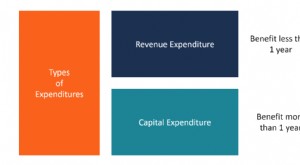
Understanding Expenditures: Definition and Types
An expenditure represents a payment with either cash or credit to purchase goods or services. An expenditure is recorded at a single point in time (the time of purchase), compared to an expenseAccrued
-

Goodwill in Accounting: Definition & Value
In accounting, goodwill is an intangible assetIntangible AssetsAccording to the IFRS, intangible assets are identifiable, non-monetary assets without physical substance. Like all assets, intangible as
invest
- Bond Tender Offers: Definition, Process & Corporate Finance
- Coupon Bonds: Understanding Fixed Income & Interest Payments
- Discount Bonds: Understanding Pricing & Secondary Markets
- Understanding Net-Net: A Financial Health Indicator
- Understanding Noncallable Securities: A Comprehensive Guide
- Samurai Bonds: A Guide to Understanding Yen-Denominated Corporate Debt
- Treasury Bonds: A Comprehensive Guide to U.S. Government Debt
- Zero-Coupon Bonds: Definition, How They Work & Examples
- Understanding Bonds: A Comprehensive Guide for Investors
-
 Understanding Stocks: A Beginner's Guide to Share Ownership
When a person owns stock in a company, the individual is called a shareholder and is eligible to claim part of the company’s residual assets and earnings (should the company ever have to dissolv...
-
 EBITA Explained: Understanding Earnings Before Interest, Taxes, and Amortization
EBITA is an acronym that refers to the earnings of a company before interest, tax, and amortization expenses are deducted. Investors use EBITA as an indicator to measure the profitability and efficien...