
Calendar Spread: Definition, Strategy & Example | [Your Brand]
A calendar spread is a trading technique that involves the buying of a derivative of an asset in one month and selling a derivative of the same asset in another month. It is most commonly done in the case of futures contractsFutures ContractA futures contract is an agreement to buy or sell an underlying asset at a later date for a predetermined price. It’s also known as a derivative because future contracts derive their value from an underlying asset. Investors may purchase the right to buy or sell the underlying asset at a later date for a predetermined price. in commodity markets, especially for grains such as wheat, corn, rice, etc. Futures trading is a very volatile activity, as most prices are affected due to multiple external macroeconomic conditions that cannot be controlled.
![Calendar Spread: Definition, Strategy & Example | [Your Brand]](https://www.etffin.com/Article/UploadFiles/202110/2021100815214644.jpeg)
In most cases, the currency of a country is tied to the value of commodities it exports. In spread tradingSpread TradingSpread trading – also known as relative value trading – is a method of trading that involves an investor simultaneously buying one security and selling a, the market prices of the commodities exert little effect on the profit made by investors. It is because there are two different legs of the trade, buying a contract and selling another one.
Therefore, profitability lies in the relationship between the two spreads. An investor may make money in one leg of the deal and lose money in the other. A successful spread is one where the profit from one leg outweighs the loss from the other, hence turning an overall profit for the investor.
Summary
- A calendar spread is a trading technique that involves the buying of a derivative of an asset in one month and selling a derivative of the same asset in another month.
- Futures trading is a very volatile activity, as most prices are affected due to multiple external macroeconomic conditions that cannot be controlled.
- A successful spread is one where the profit from one leg outweighs the loss from the other, hence turning an overall profit for the investor.
Cost of Carry
The difference between the futures contracts of the same commodity withiin a two-month period is known as the cost of carry. It includes the cost of holding the commodity for the time period between the two months in question. Literally, it is the cost of “carrying” the commodity for a specified period of time. It includes financial costs such as interest on loans taken, insurance, storage costs, and the opportunity costOpportunity CostOpportunity cost is one of the key concepts in the study of economics and is prevalent throughout various decision-making processes. The associated with choosing one position over another.
The price difference between two contract positions is monitored in future spread charts. It helps investors in handling the margins of trading in a particular grain. Monitoring future spreads is also useful to predict the future price directions of commodities as the positions can give hints of future scarcity or surplus (due to bumper crops).
Contango and Backwardation
Trading in spreads allows investors to reduce the risk involved, as trades are mostly affected only by supply and demandSupply and DemandThe laws of supply and demand are microeconomic concepts that state that in efficient markets, the quantity supplied of a good and quantity factors. In months when supply is sufficient to fulfill demand, deferred contracts are more expensive than nearby months. Such a situation, when the price as per the futures contract (future’s price) is higher than the sport price or real market value of the good on the delivery date, is known as contango or forwardation.
Conversely, when the commodity is traded at a price lower than its spot price, the market is said to be in backwardation. Nearby months are the months in which the futures contract is set to expire or the month in which the delivery date lies. Deferred months are the later part of the same. The two different types of spread positions are as follows:
- Bull spread: When a trader buys the nearby month and sells the deferred month.
- Bear spread: When a trader sells the nearby month and buys the deferred month. It happens in cases of anticipated market volatility. Price swings are always higher in nearby months and tend to get stabilized around deferred months.
Other Types of Spreads
In grain markets, there are three major types of spreads:
- Intra-market spreads/Calendar spreads: Buying a futures contract for a certain grain in one month and selling another contract for the same grain in a different month.
- Inter-market spreads: Buying and selling futures contracts of related grains simultaneously. For example, corn and soybean are related commodities, and the ratio of their prices is taken into account while deciding to trade.
- Commodity-product spreads: Buying and selling futures for raw commodities and processed commodities (using the same raw commodity), respectively. For example, if soybean is the commodity, soy milk is the product.
More Resources
CFI offers the Capital Markets & Securities Analyst (CMSA)®Program Page - CMSAEnroll in CFI's CMSA® program and become a certified Capital Markets &Securities Analyst. Advance your career with our certification programs and courses. certification program for those looking to take their careers to the next level. To keep learning and advancing your career, the following resources will be helpful:
- Contango vs BackwardationContango vs BackwardationContango vs backwardation are terms used to describe the shape of the futures curve for commodity markets. The futures curve has two dimensions, plotting time across the horizontal axis and delivery price of the commodity across the vertical axis.
- Derivatives MarketDerivatives MarketThe derivatives market refers to the financial market for financial instruments such as futures contracts or options.
- Spot PriceSpot PriceThe spot price is the current market price of a security, currency, or commodity available to be bought/sold for immediate settlement. In other words, it is the price at which the sellers and buyers value an asset right now.
- VolatilityVolatilityVolatility is a measure of the rate of fluctuations in the price of a security over time. It indicates the level of risk associated with the price changes of a security. Investors and traders calculate the volatility of a security to assess past variations in the prices
-
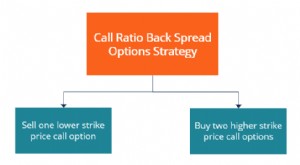
Call Ratio Back Spread: A Bullish Options Strategy Explained
A call ratio back spread is a bullish options trading strategy that involves both buying and selling call options. The strategy is designed to maximally profit from a significant upward movement in th
-

Annuities Explained: Secure Retirement Income & Types
An annuity is a type of insurance product that provides you financial coverage after you retire so that you do not outlive your retirement savings. When you purchase an annuity from an in
invest
- Calendar Spreads: Understanding Options & Futures Strategies
- Box Spread Options Strategy: Definition & How It Works
- Bull Call Spread: Strategy, Benefits & How It Works
- Bull Put Spread: Strategy, Mechanics & Risk
- Understanding Horizontal Spreads in Options Trading
- Spread Trading: A Comprehensive Guide to Relative Value Trading
- Understanding Forex Spreads: A Comprehensive Guide for Traders
- Understanding Option Spreads: A Risk Management Strategy
- Understanding Market Spread in Cryptocurrency Trading
-
 Bear Put Spread: Definition, Strategy & Risk Management
In a bear put spread, the basic idea is to purchase a high strike priceStrike PriceThe strike price is the price at which the holder of the option can exercise the option to buy or sell an underlying ...
-
 Calendar Spreads: A Guide to Profit from Time Spreads
A calendar spread is used for taking advantage of the difference in different delivery month prices as opposed to speculating on the future price. In other words, the difference in the two deliv...