
What is a Collateralized Debt Obligation (CDO)?
A Collateralized Debt Obligation (CDO) is a synthetic investment product that represents different loans bundled together and sold by the lenderTop Banks in the USAAccording to the US Federal Deposit Insurance Corporation, there were 6,799 FDIC-insured commercial banks in the USA as of February 2014. in the market. The holder of the collateralized debt obligation can, in theory, collect the borrowed amount from the original borrower at the end of the loan period. A collateralized debt obligation is a type of derivative security because its price (at least notionally) depends on the price of some other asset.

Structure of a Collateralized Debt Obligation
Historically, the underlying assets in collateralized debt obligations included corporate bondsBondsBonds are fixed-income securities that are issued by corporations and governments to raise capital. The bond issuer borrows capital from the bondholder and makes fixed payments to them at a fixed (or variable) interest rate for a specified period., sovereign bonds, and bank loans. A CDO gathers income from a collection of collateralized debt instruments and allocates the collected income to a prioritized set of CDO securities.
Similar to equity (preferred stockPreferred SharesPreferred shares (preferred stock, preference shares) are the class of stock ownership in a corporation that has a priority claim on the company’s assets over common stock shares. The shares are more senior than common stock but are more junior relative to debt, such as bonds. and common stockCommon StockCommon stock is a type of security that represents ownership of equity in a company. There are other terms – such as common share, ordinary share, or voting share – that are equivalent to common stock.), a senior CDO security is paid before a mezzanine CDO. The first CDOs comprised cash flow CDOs, i.e., not subject to active management by a fund manager. However, by the mid-2000s during the lead up to the 2008 recession, marked-to-market CDOs made up the majority of CDOs. A fund manager actively managed the CDOs.
Advantages of Collateralized Debt Obligations
- Collateralized debt obligations allow banks to reduce the amount of risk they hold on their balance sheet. The majority of banks are required to hold a certain proportion of their assets in reserve. This incentivizes the securitization and sale of assets, as holding assets in reserves is costly for the banks.
- Collateralized debt obligations allow banks to transform a relatively illiquid security (a single bond or loan) into a relatively liquid security.
The Housing Bubble and Collateralized Debt Obligations
Historically, houses were seen to be fundamentally different from other assets such as bonds and shares of companies. Therefore, the housing market was analyzed in a different way compared to the market for other investment instruments. Transactions in the housing market are usually high-value transactions involving individuals, and the relative frequency of such transactions is low compared to a bond or share, which may change hands multiple times during a day’s trading.
In 2003, Alan Greenspan, then the chairman of the Federal ReserveFederal Reserve (The Fed)The Federal Reserve is the central bank of the United States and is the financial authority behind the world’s largest free market economy., cut the target federal funds rate to 1% from a high of 6.5% in 2001. The move incentivized banks to increase lending to take advantage of the easy credit available. Banks also provided housing loans to borrowers who would not usually qualify for mortgage loans in the past.
Mortgage-Backed Collateralized Debt Obligation
A mortgage-backed CDO owns parts of many individual mortgage bonds. On average, a mortgage-backed CDO owns parts of hundreds of individual mortgage bonds. The mortgage bonds, in turn, contained thousands of individual mortgages. Thus, a mortgage-backed CDO is seen to reduce the risk of a small-scale housing crisis by diversifying across many mortgage bonds.
A mortgage-backed CDO was considered a very safe investment instrument prior to the 2008 financial crisis. However, such CDOs were particularly susceptible to a systemic collapse of the global housing market. In 2007-2008, house prices fell across the world.
Related Reading
Thank you for reading CFI’s explanation of a collateralized debt obligation. CFI offers the Financial Modeling & Valuation Analyst (FMVA)™Become a Certified Financial Modeling & Valuation Analyst (FMVA)®CFI's Financial Modeling and Valuation Analyst (FMVA)® certification will help you gain the confidence you need in your finance career. Enroll today! certification program for those looking to take their careers to the next level. To keep learning and advancing your career, the following resources will be helpful:
- Debt Capital MarketsDebt Capital Markets (DCM)Debt Capital Markets (DCM) groups are responsible for providing advice directly to corporate issuers on the raising of debt for acquisitions, refinancing of existing debt, or restructuring of existing debt. These teams operate in a rapidly moving environment and work closely with an advisory partner
- Fannie MaeFannie MaeThe Federal National Mortgage Association, typically known as Fannie Mae, is a United States government-sponsored entity that was established to expand the secondary mortgage market by making mortgages available to low and middle-income borrowers. It does not provide mortgages to borrowers, but purchases and guarantees mortgages
- ForeclosureForeclosureWhen a homeowner stops paying on a loan used to purchase a home, the home is deemed to be in foreclosure. What it ultimately means is that the ownership of
- Volcker RuleVolcker RuleThe Volcker Rule refers to Sec 619 of the Dodd-Frank Act, which prohibits banks from engaging in proprietary trading, or from using their depositors’ funds to invest in risky investment instruments. The rule also prohibits banks from owning or investing in hedge funds or private equity funds.
-

Debt Funds & Bond Funds: A Comprehensive Guide
A debt fund or a bond fund is a pool of investments, usually a mutual fund or an exchange-traded fund, that invests in fixed-income securities. The fixed-income securities include government bonds, co
-

General Obligation Bonds (GO Bonds): A Comprehensive Guide
A general obligation (GO) bond is a type of municipal bond in which the bond repayments (interest and principalPrincipal PaymentA principal payment is a payment toward the original amount of a loan th
invest
- Understanding Personal Debt: Definition, Types & Impact
- Understanding Delinquent Debt: Causes, Consequences, and Solutions
- Understanding Capital: Types, Categories & Value Creation
- Understanding Debt: Types, Obligations & Financial Implications
- Understanding Debt Capacity: A Guide for Businesses
- Debt Consolidation: Simplify Payments & Lower Interest Rates
- Margin Debt Explained: Understanding Brokerage Loans for Investing
- Collateralized Loan Obligation (CLO): Definition & How It Works
- Understanding Collateralized Debt Obligations (CDOs): A Comprehensive Guide
-
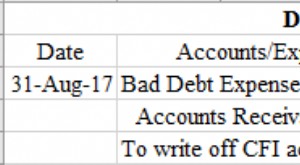 Understanding Bad Debt: Definition and Financial Statement Impact
First, let’s determine what the term bad debt means. Sometimes, at the end of the fiscal periodFiscal Year (FY)A fiscal year (FY) is a 12-month or 52-week period of time used by governments and ...
-
 Understanding Debt: Types, Impact & How to Manage It
Debt is an uncomfortable subject. Discussing our personal finances is somewhat taboo and acknowledging our debt can induce anxiety. According to Debt.org, American debt hit a record high of $13.2 tril...