
Understanding Forward Points: A Guide for Investors
Forward points are basis points that are added or subtracted to the spot rate, which is the market price quote of a commodityCommoditiesCommodities are another class of assets just like stocks and bonds. Most commodities are products that come from the earth that possess. If an investor was interested in purchasing a particular commodity, he or she would purchase it at the price it is quoted at the time of purchase. If an investor wishes to purchase it in the future, he or she would purchase it at the forward rate which is the spot rate plus or minus the forward points.

Forward currency contracts tend to be quoted in forward points which are estimated with predominant interest rates of the two currencies and with the consideration of the contract length.
Also, forward points are added to or subtracted from the present spot rate of a commodity or a pair of currencies to derive an estimate for a forward rate on a specified future date. The addition of forward points to a spot rate is known as a forward premium the subtraction of forward points to a spot rate is known as a forward discount.
When it comes to currency trading, the currency with a higher yield tends to have negative points, whereas the currency with a lower yield tends to have positive points.
The concept behind the phenomenon is that lower-yielding currencies are more expensive than they would be in a forward marketForward MarketA forward market is a marketplace that offers financial instruments that are priced in advance for future delivery. It tends to be referenced, and higher-yielding currencies are likely to be less expensive in a forward market. In instances where this may not be the case, an arbitrage opportunity exists.
Summary
- Forward points are basis points that are added or subtracted to the spot rate which is the price quote of a commodity.
- A forward point is equivalent to 1/10,000 of a spot rate.
- Generally, forward points tend to mirror or reflect interest rate disparities between currency pairs. The points can either be positive or negative, in conjunction with lower or higher interest rates.
Using Forward Points to Compute the Forward Rate
A forward point is equivalent to 1/10,000 of a spot rate.
For example, a forward contract is believed to include 170 forward points. It is written as 170/10,000 and is added to the spot price to estimate the forward rate. The fraction 170/10,000 equates to 0.017 units.
Hence, the forward rate will be computed by adding the 0.017 units to the current spot rate. If the situation is reversed and the 170 forward points are to be subtracted from the spot rate, the future rate will be 0.017 units fewer than the spot rate.
Forward Points, Interest Rates, and Forward Rates
Generally, forward points tend to mirror or reflect interest rateInterest RateAn interest rate refers to the amount charged by a lender to a borrower for any form of debt given, generally expressed as a percentage of the principal. disparities between currency pairs. The points can either be positive or negative, in conjunction with lower or higher interest rates.
The adjustment of a spot rate through the addition or subtraction of forward points is done to represent and account for the interest rate differentials between currency pairs. In essence, the currency with a higher yield will be discounted and the currency with a lower yield may have a premium.
Example
The U.S. dollar and the Namibian dollar are currently quoted at USD/NAD = 12.47, with annual interest rates of 4.25% and 7.00%, respectively.
The forward rate can be determined as follows:

The forward points can be determined by subtracting the spot rate from the forward rate:

The points, 0.33, are known as pips, and 0.33 is equivalent to 33 pips.
Pros and Cons of Forward Contracts
The pros of entering into forward contracts include – but may not be limited to – zero or very limited upfront costs and/or the ability to fix or “lock-in” the exchange rate for a predetermined future date.
The cons of entering into forward contracts include – but may not be limited to – the risk of a counterparty not being able to meet the financial obligations outlined in the forward contract once the predetermined date is reached and/or the opportunity costs associated with potential benefits that may result from exchange rate fluctuations.
In general, forward exchange contracts are widely used as a relatively straightforward and flexible hedging method for individuals and businesses who are involved or may be susceptible to foreign exchange exposure and fluctuations.
More Resources
CFI is the official provider of the Commercial Banking & Credit Analyst (CBCA)™Program Page - CBCAGet CFI's CBCA™ certification and become a Commercial Banking & Credit Analyst. Enroll and advance your career with our certification programs and courses. certification program, designed to transform anyone into a world-class financial analyst.
In order to help you become a world-class financial analyst and advance your career to your fullest potential, these additional resources will be very helpful:
- Interest RateInterest RateAn interest rate refers to the amount charged by a lender to a borrower for any form of debt given, generally expressed as a percentage of the principal.
- Forward ContractForward ContractA forward contract, often shortened to just "forward", is an agreement to buy or sell an asset at a specific price on a specified date in the future
- Spot PriceSpot PriceThe spot price is the current market price of a security, currency, or commodity available to be bought/sold for immediate settlement. In other words, it is the price at which the sellers and buyers value an asset right now.
- Key CurrencyKey CurrencyKey currency is a currency that does not fluctuate too broadly, helps in setting exchange rates, and supports global transactions. The term
-
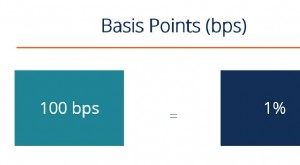
Basis Points (BPS): Understanding Interest Rate Measurement
In finance, Basis Points (BPS) are a unit of measurement equal to 1/100th of 1 percent. BPS are used for measuring interest rates, the yield of a fixed-income securityFixed Income Bond Term
-

Understanding Burn Rate: A Key Metric for Startup Success
Burn rate is a term that is used when talking about the amount of money that a new company uses to pay for overhead before a profit is realized. These companies are typically associated with ven
invest
- Understanding Forward Rates: A Comprehensive Guide
- Understanding Forward Commitments: A Comprehensive Guide
- Forward Premium Explained: Understanding Currency Expectations
- Understanding Forward Rates Models: Analysis & Prediction
- Interest Rate Derivatives (IRDs): A Comprehensive Guide
- Understanding Interest Rate Options: A Comprehensive Guide
- Non-Deliverable Forward (NDF): Definition & How It Works
- Pivot Points: A Day Trader's Guide to Support & Resistance
- Understanding Basis Points: A Simple Guide
-
 Understanding Forward Prices: Definition & How They Work
Forward price refers to the predetermined and agreed upon price of an underlying asset in a forward contract. It is also known as the forward rate. A forward contract refers to an agreement...
-
 Understanding LIBOR: What It Is and How It Works
LIBOR, which is an acronym of London Interbank Offer Rate, refers to the interest rateInterest RateAn interest rate refers to the amount charged by a lender to a borrower for any form of debt given, g...