
Understanding Burn Rate: A Key Metric for Startup Success
"Burn rate" is a term that is used when talking about the amount of money that a new company uses to pay for overhead before a profit is realized. These companies are typically associated with venture capital and this is a statistic that is used to gauge the viability and the early success of a new business.
In most cases, the burn rate is quoted as a monthly figure. For example, if a company has a burn rate of $100,000, this means that they are spending $100,000 per month on overhead without seeing any profit.
If you are a venture capitalist, you will be very concerned about the burn rate of companies that you invest in. Ideally, you would like to see a company that has a very low burn rate potential. The higher the burn rate of the company, the more money you will have to come up with as a venture capitalist in order to allow the business to succeed.
If a company has a burn rate that continues to grow or stays the same, they will generally cut back on expenses by laying off employees. They can also eliminate costs by reducing the size of the business.
-
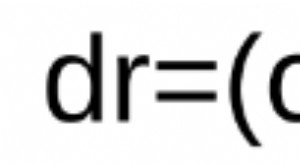
Short Rate Models: Understanding Interest Rate Dynamics
A short rate model is a mathematical model used in the evaluation of interest rate derivatives to illustrate the evolution of interest ratesInterest RateAn interest rate refers to the amount charged b
-

Interest Rate Caps: Understanding Protection for Adjustable-Rate Loans
An interest rate cap is a limit to the amount of interest that a lender can charge on an adjustable-rate loan. Adjustable-rate mortgages have an interest rate cap to provide a maximum payment am
invest
- Hurdle Rate: Definition, Calculation & Importance for Investors
- Understanding Interest Rates: A Comprehensive Guide
- Understanding Rate of Return: A Comprehensive Guide
- Annualized Rate of Return: Definition & Calculation
- Bermuda Swaptions: Definition, Function & Key Features
- Understanding Dividend Yield: A Comprehensive Guide
- Ex-Ante: Understanding Predictions in Finance
- Understanding LIBOR: What It Is and How It Works
- LIBOR Explained: Understanding the London Interbank Offered Rate
-
 Par Bonds Explained: Understanding Face Value and Market Interest Rates
A par bond refers to a bond that currently trades at its face value. The bond comes with a coupon rateCoupon RateA coupon rate is the amount of annual interest income paid to a bondholder, based on th...
-
 Put Swaption: Understanding Payer Swaptions and Rate Swaps
A put swaption, also referred to as a payer swaption, involves the buyer being given the opportunity to enter into a rate swap, acting as the floating-rate payer. The party selling the swaption is the...