
Non-Deliverable Forward (NDF): Definition & How It Works
A non-deliverable forward (NDF) is a straight futures or forward contract, where, much like a non-deliverable swap (NDS)Non-Deliverable Swap (NDS)A non-deliverable swap (NDS) is an exchange of different currencies, between a major currency and a minor currency, which is restricted.With most swaps,, the parties involved establish a settlement between the leading spot rate and the contracted NDF rate. The settlement is made when both parties agree on a notional amount. NDFs are settled in cash. The most commonly used currency for settlement is the U.S. dollar.
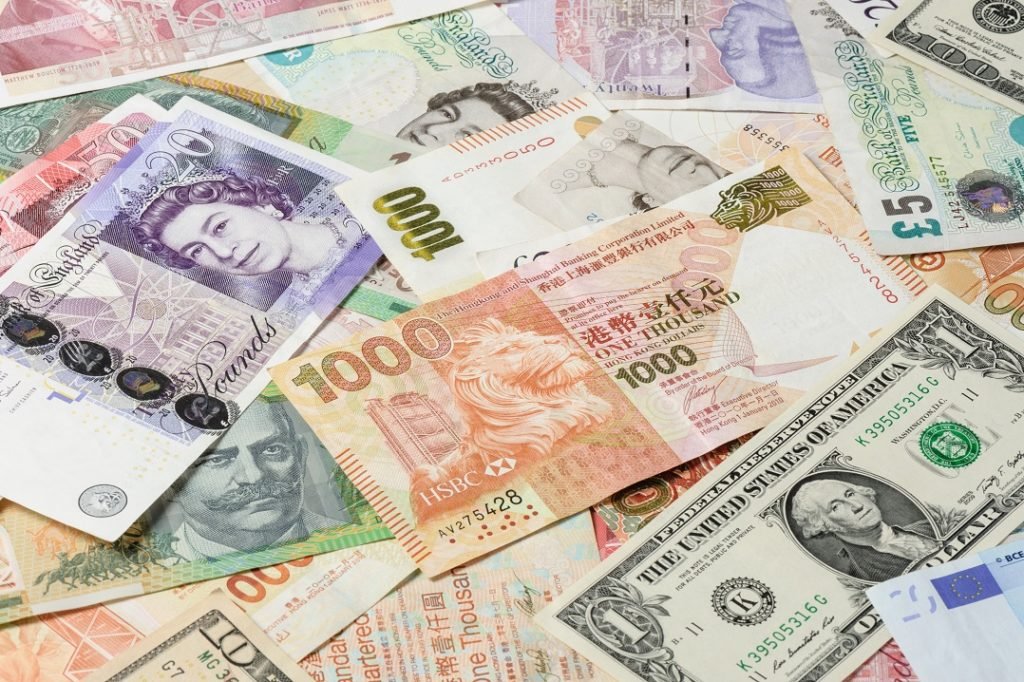
NDFs are also referred to as forward contracts for difference (FCDs). They are heavily used in countries where forward FX trading is banned. Ultimately, an NDF is used to manage volatilityVolatilityVolatility is a measure of the rate of fluctuations in the price of a security over time. It indicates the level of risk associated with the price changes of a security. Investors and traders calculate the volatility of a security to assess past variations in the prices with exchange rates.
Summary:
- A non-deliverable forward (NDF) is an FX exchange contract, where two parties agree to, on a date in the future, exchange currencies for the prevailing spot rate
- The difference between the NDF rate and the spot rate is the amount paid to the party who paid more of its own currency; the cash payment is most often made using U.S. dollars.
- NDFs are traded over-the-counter (OTC), allowing for flexible terms that end up satisfying both parties involved
The Non-Deliverable Forward Market
Because NDFs are traded privately, they are part of the over-the-counter (OTC)Over-the-Counter (OTC)Over-the-counter (OTC) is the trading of securities between two counter-parties executed outside of formal exchanges and without the supervision of an exchange regulator. OTC trading is done in over-the-counter markets (a decentralized place with no physical location), through dealer networks. market. The contract is drawn up and agreed upon by only the parties involved. It allows for more flexibility with terms, and because all terms must be agreed upon by both parties, the end result of an NDF is generally favorable to all.
There are a number of countries with a currency that must actively utilize NDFs. The list of countries includes:
- Egypt (Egyptian pound)
- Nigeria (Naira)
- South Korea (won)
- Taiwan (Taiwanese dollar)
- India (rupee)
- Venezuela (bolivar)
How a Non-Deliverable Forward Works
Non-deliverable forwards are used as a short-term way to settle currency exchanges between counterparties. A settlement date is agreed upon and put into the NDF contract. The imbalance between loss and profit when the exchange occurs is settled by a notional amount: a face value for the NDF that both parties agree upon.
There are several important features of an NDF, aside from the notional amount mentioned above. They include:
- Fixing date: An agreed upon date when the spot rate and NDF rate are compared, and a notional amount is then determined
- Date of settlement: The day that both parties agree to make the difference between the exchange rates due; one party pays the other party on this day, while the receiving party retrieves the difference of the rates in cash
- NDF rate: The rate that is agreed upon on the date of the transaction; it is the straight forward rate of the currencies involved in the exchange
- Spot rate: The most up-to-date rate for the NDF, as provided by the central bankFederal Reserve (The Fed)The Federal Reserve is the central bank of the United States and is the financial authority behind the world’s largest free market economy.
NDFs are settled with cash, meaning the notional amount is never physically exchanged. The only cash that actually switches hands is the difference between the prevailing spot rate and the rate agreed upon in the NDF contract.
More Resources
CFI is the official provider of the global Financial Modeling & Valuation Analyst (FMVA)™Become a Certified Financial Modeling & Valuation Analyst (FMVA)®CFI's Financial Modeling and Valuation Analyst (FMVA)® certification will help you gain the confidence you need in your finance career. Enroll today! certification program, designed to help anyone become a world-class financial analyst. To keep advancing your career, the additional resources below will be useful:
- Currency FuturesCurrency FuturesCurrency futures contracts are a type of futures contract to exchange a currency for another at a fixed exchange rate on a specific date in the future.
- Foreign Exchange Gain/LossForeign Exchange Gain/LossA foreign exchange gain/loss occurs when a company buys and/or sells goods and services in a foreign currency, and that currency fluctuates
- London International Futures & Options ExchangeLondon International Financial Futures and Options Exchange (LIFFE)The London International Financial Futures and Options Exchange (LIFFE) is a futures exchange located in London. Sir Brian Williamson established LIFFE on
- Swap Rate CurveSwap Rate CurveThe swap rate curve is a chart that depicts the relationship between swap rates and all available corresponding maturities.
-

Floating Rate Funds: Understanding & Investing in Variable Interest Rates
A floating rate fund is a type of mutual fund that invests in securities paying fluctuating interest rates. Floating rate funds primarily invest in debt instrumentsDebt InstrumentA debt instrument is
-
![Forward Markets Explained: Contracts for Future Delivery | [Your Brand]](https://www.etffin.com/article/uploadfiles/202110/2021100815234066_S.jpeg)
Forward Markets Explained: Contracts for Future Delivery | [Your Brand]
A forward market is a marketplace that offers financial instruments that are priced in advance for future delivery. It tends to be referenced as the foreign exchange market, but it can also apply to s
invest
- Forward Rates: Definition & Calculation - Investopedia
- Understanding Forward Rates: A Comprehensive Guide
- Understanding Dividend Yield: A Comprehensive Guide
- Ex-Ante: Understanding Predictions in Finance
- Understanding Forward Points: A Guide for Investors
- Forward Premium Explained: Understanding Currency Expectations
- Understanding Forward Prices: Definition & How They Work
- Understanding Forward Rates Models: Analysis & Prediction
- Understanding LIBOR: What It Is and How It Works
-
 Call Swaptions: Understanding Receiver Options for Tax Rate Swaps
A call swaption, also known as a receiver swaption, is an option that allows the holder to take part in a private tax rate swap. All swaptions are conducted over-the-counter (OTC)Over-the-Counter (OTC...
-
 Cross Rates Explained: Understanding Currency Valuation
A cross rate is a foreign exchange market quote between two currencies (not involving the U.S. dollar) that are then both valued against a third currency. If used as a base currency, the U.S. dollar i...