
KOSPI: Understanding South Korea's Stock Market Index
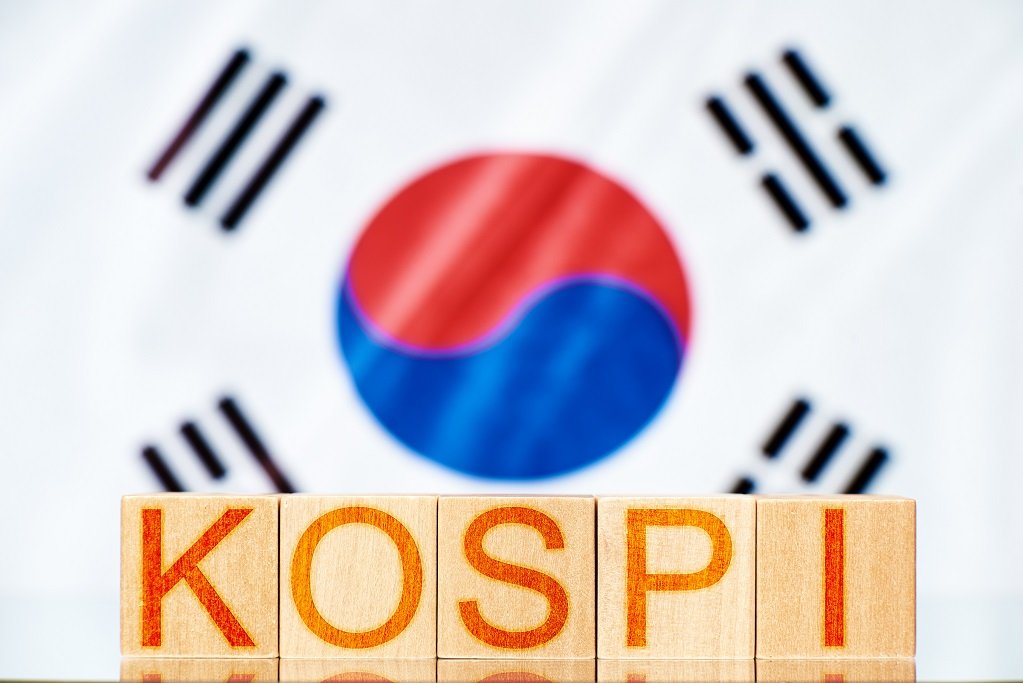
The Korean Composite Stock Price Index (KOSPI) is a group of indexes that track the stock exchange in South Korea. It was previously named the Korea Stock Exchange. Just as the NASDAQ Composite Index and the S&P 500 IndexS&P 500 IndexThe Standard and Poor’s 500 Index, abbreviated as S&P 500 index, is an index comprising the stocks of 500 publicly traded companies in the are representative stock market indexes in the United States, the KOSPI represents the stock market index in South Korea. It follows a wide variety of industries, and it also tracks bonds, options, and futures.
History of the KOSPI
The Korean Composite Stock Price Index was first introduced in 1983 to replace the Korean Composite Stock Price Index (KCSPI). At the beginning of 1983, it was trading at a value of 122.52 points. In November 2020, it has traded above 2300 points. Throughout the years, it experienced drastic changes in its value. The 2008 Global Financial Crisis2008-2009 Global Financial CrisisThe Global Financial Crisis of 2008-2009 refers to the massive financial crisis the world faced from 2008 to 2009. The financial crisis took its toll on individuals and institutions around the globe, with millions of American being deeply impacted. Financial institutions started to sink, many were absorbed by larger entities, and the US Government was forced to offer bailouts, the 9/11 terrorist attacks, and the COVID-19 pandemic all heavily impacted the value of the index.
Over the years, the KOSPI also expanded to include various indexes and derivative products. Some of the indexes include KOSPI 200, KODI Dividend Index, and KOGI Corporate Governance Index. There are also industry-specific indexes, such as banks, chemicals, and technology.
Market-Weighted Index
The KOSPI is an index made up of companies based on their market capitalizationMarket CapitalizationMarket Capitalization (Market Cap) is the most recent market value of a company’s outstanding shares. Market Cap is equal to the current share price multiplied by the number of shares outstanding. The investing community often uses the market capitalization value to rank companies, which means that it is a market-weighted index (or capitalization-weighted index). It means that any changes to the total market value of all the companies in the stock market index would reflect the same change in the value of the index.
For example, if the total market value of all the companies increased by 10%, then the value of the stock index would also increase by 10%. As a result, many Korean investors use the index as an indicator of how well the stock market in South Korea is performing overall.
Additionally, each stock weighs differently than other stocks depending on its market capitalization. Therefore, a company with a very large market capitalization will receive greater weight, so it will exert a greater effect on the value of the index.
Requirements for Listing
In order for a company to qualify to be part of the KOSPI, there are criteria that companies need to meet. A selection committee chooses a company in terms of requirements, such as its business history, capital size, financial performance, and corporate governance. There are also other considerations as well, which include:
- Companies must meet a certain level of sales for the three most recent fiscal years.
- The shareholders’ equity of the business must be at least 10 billion KRW, or the business must achieve a market capitalization of at least 20 billion KRW.
- Companies must also prove their suitability to be listed, such as demonstrating their corporate stability, meeting requirements for management methods, and proving compliance with accounting regulations.
KOSPI 200
Among all the indexes in South Korea, one of the most tracked indexes is KOSPI 200. It includes 200 of the largest companies in South Korea as measured by market capitalization, which makes up 70% of all the market value in the KOSPI.
The KOSPI is an important index because it is one of the most active indexes in the world, as it is also listed on futures and options markets. Since it consists of large-cap stocks, many investors look towards the KOSPI 200 index to gauge the overall performance of the stock market in South Korea.
How to Invest in the KOSPI
Investors cannot directly invest in the stock index itself. You may buy and sell stocks that are listed on the index, or you may invest in an exchange-traded fund (ETF) that tracks the performance of the index. Here are a few examples of ETFs:
- KOSPI 200 ETF (HKOR)
- Samsung KODEX KOSPI LargeCap ETF
- Kyobo Axa Power K100 ETF
Additional Readings
CFI is the official provider of the Capital Markets & Securities Analyst (CMSA)™Program Page - CMSAEnroll in CFI's CMSA® program and become a certified Capital Markets &Securities Analyst. Advance your career with our certification programs and courses. certification program, designed to transform anyone into a world-class financial analyst. Are you ready to begin investing? CFI offers many courses and educational materials for you to learn about finance, trading, and investing:
- Capitalization-Weighted IndexCapitalization-Weighted IndexThe Capitalization-Weighted Index (cap-weighted index, CWI) is a type of stock market index in which each component of the index is weighted relative to its total market capitalization. In a capitalization-weighted index, companies with larger market capitalization exert a greater impact on the index value.
- Market Value vs. Investment Value
- Stockholders EquityStockholders EquityStockholders Equity (also known as Shareholders Equity) is an account on a company's balance sheet that consists of share capital plus
- Investing in Stocks with Dividends vs. Stocks Without Dividends
-
Understanding Dead Cat bounces: A Stock Market Indicator
The dead cat bounce describes a financial phenomenon whereby a stock in a steady decline suddenly, and without a logical cause, gains value temporarily before continuing its downward trend. The term o
-

Understanding the EMBI: A Guide to Emerging Market Bond Performance
The Emerging Market Bond Index (EMBI) is a benchmark index that measures the bond performance of emerging countries and their respective corporate organizations. The EMBI was first published by
invest
- Understanding Adjusted Closing Price: A Comprehensive Guide
- DAX Index: Your Guide to Germany's Top 30 Companies
- Understanding Market Support: What is 'Holding the Market'?
- NASDAQ Composite: Understanding the US Stock Market Index
- NYSE Composite Index: Definition & What It Measures
- Understanding Quoted Prices: A Comprehensive Guide
- Understanding the S&P 500: A Comprehensive Guide
- Understanding the Stock Market: A Beginner's Guide
- Stock Market Indexes: A Comprehensive Guide to Understanding
-
 Reddit's Impact on the Stock Market: A Weekly Analysis
Paying attention to financial news always requires grasping a fast-moving and confusing vocabulary. Not only do you need top-notch monetary literacy, but you have to understand markets, history, polit...
-
 Understanding Stock Market Volume: A Comprehensive Guide
Financial market data After price, volume is one of the most commonly quoted data points related to the stock market. Reflecting the overall activity in a stock or market, volume is the busin...