
Understanding Call Prices: Callable Bonds & Preferred Stocks
A call price refers to the price that a preferred stock or bond issuer would pay to buyers if they chose to redeem the callable security before the maturity date. The price is set during the issuance of the security and mentioned in the prospectusProspectusA prospectus is a legal disclosure document that companies are required to file with the Securities and Exchange Commission (SEC). The document provides information about the company, its management team, recent financial performance, and other related information that investors would like to know. of the issue.

Call price terms are found in callable preferred stocks or callable bondsCallable BondA callable bond (redeemable bond) is a type of bond that provides the issuer of the bond with the right, but not the obligation, to redeem the bond before its maturity date. The callable bond is a bond with an embedded call option. These bonds generally come with certain restrictions on the call option.. The issuer of the preferred stock or bond has the option and right to buy that bond or preferred stock back from the creditor or investor at the call price prior to maturity.
Summary
- Call price refers to the price that a preferred stock or bond issuer would pay to buyers if they chose to redeem the callable security before the maturity date.
- The call price terms and the timeframe that it can be triggered are established in the bond indenture agreement or the preferred share prospectus.
- Callable securities allow the issuers to buy back the issued security at a specified price – known as the call price – and are executed when there is a favorable change in the market price or interest rate.
Significance of Call Price
For bonds, the call price and the timeframe that it can be triggered are typically set out in the bond indenture agreement. It allows the issuer of the bond to demand the buyer to sell the bond back, usually at its face value, along with the agreed upon percentage due. The premium may be fixed at an interest rate of one year. Based on the structure of the terms, the premium may decrease as the bond matures due to the amortization of the premium.
Some non-callable bondsNon-Callable BondA non-callable bond is a bond that is only paid out at maturity. The issuer of a non-callable bond can’t call the bond prior to its date of maturity. It is different from a callable bond, which is a bond where the company or entity that issues the bond owns the right to repay the face value of the bond may become callable after an initial period of time. When a company calls back a bond, it usually makes considerable economic gains in potential interest savings. The gains are made at the cost of a bondholder, who foregoes the lost interest income as the lender is not required to make interest payments after the bond is redeemed.
A business can also exert its right to call preferred shares if it decides to pay out the preferred shareholders and to discontinue dividend payments. It may be done to alter the capital structure of the company or to reduce preferred share dividend payments.
Investors must understand that the presence of an embedded call optionEmbedded OptionAn embedded option is a provision in a financial security (typically in bonds) that provides an issuer or holder of the security a certain right but not an obligation to perform some actions at some point in the future. The embedded options exist only as a component of financial security in the bond influences the liquidity of the bond. A non-callable bond is worth more than a callable bond to the investors since the bond’s owner has the right to redeem a callable bond and deny the bondholder of the extra interest payments to which he/she would have been eligible if the bond had been retained to maturity.
Call Price and Call Premium
Callable securities are normally present in fixed-income markets. They allow the issuers to buy back the issued security at a specified price in the event of a change in the market price or interest rate. The price is denoted as the call price. Thus, callable securities enable issuers to protect themselves from increasing interest rates.
For example, if a business issues a bond that pays a fixed coupon at 4% and the interest rate is also 4%, it will utilize the call option to repay the bond if the interest rate decreases to, say, 2.5%, as it then can refinance the debt and save 1.5% in interest payments.
Since the call option favors the lender and not buyers, the bonds sell at high premiums to reimburse the bondholders for:
- Reinvestment risk
- Depriving them of potential interest income
Therefore, a call premium must be paid by the issuers to compensate bondholders. The call premium shall be a value over and above the security’s face value. Said another way, the difference between the bond’s call price and the specified par value is the call premium.
Non-callable securities or bonds that are redeemed early will incur steep penalties.
Additional Resources
CFI offers the Commercial Banking & Credit Analyst (CBCA)™ Program Page - CBCAGet CFI's CBCA™ certification and become a Commercial Banking & Credit Analyst. Enroll and advance your career with our certification programs and courses.certification program for those looking to take their careers to the next level. To keep learning and developing your knowledge base, please explore the additional relevant resources below:
- Bond PricingBond PricingBond pricing is the science of calculating a bond's issue price based on the coupon, par value, yield and term to maturity. Bond pricing allows investors
- Common vs. Preferred SharesCommon vs Preferred SharesPotential investors who are looking to acquire a stake or ownership in a company can choose to purchase between common vs preferred shares. Companies
- Exercise PriceExercise PriceThe exercise price within an option is the price at which the holder is capable of purchasing the underlying asset. If the market price of
- Par ValuePar ValuePar Value is the nominal or face value of a bond, or stock, or coupon as indicated on a bond or stock certificate. It is a static value
-
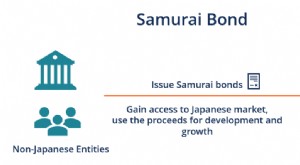
Samurai Bonds: A Guide to Understanding Yen-Denominated Corporate Debt
A samurai bond is a corporate bond issued by foreign companies in the Japanese market and is required to abide by the Japanese regulations. It is a yen-denominated bond that attracts investors from Ja
-
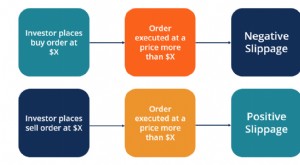
Understanding Slippage in Trading: Causes & Impact
Slippage occurs when the execution price of a trade is different from its requested price. It occurs when the market orders could not be matched at preferred prices – usually in highly volatile
invest
- Understanding Call Dates: What You Need to Know
- Call Options: A Comprehensive Guide for Investors
- Understanding Call Protection in Bonds: Investor Protection Explained
- Understanding Call Provisions in Bonds: A Comprehensive Guide
- Understanding Call Risk in Bonds: A Comprehensive Guide
- Call Warrants: Understanding Rights & Investment Potential
- Covered Calls: A Comprehensive Guide for Investors
- Understanding Hard Call Protection in Callable Bonds
- Short Call Options: Strategy, Risks & How It Works
-
 Understanding Hedging Strategies: A Comprehensive Guide
Hedging is a financial strategy that should be understood and used by investorsPrivate Equity vs Venture Capital, Angel/Seed InvestorsCompare private equity vs venture capital vs angel and seed invest...
-
 Understanding Noncallable Securities: A Comprehensive Guide
Noncallable, also called non-redeemable, refers to the type of securities that cannot be called (redeemed) by their issuer(s) before their maturities unless penalties are paid to security holders. Two...