
Understanding Near-The-Money Options: A Comprehensive Guide
Near-the-money means that an option contract’s stock price is close to its strike priceStrike PriceThe strike price is the price at which the holder of the option can exercise the option to buy or sell an underlying security, depending on. It is used to describe an option’s intrinsic value. An option only has intrinsic value if it is “in-the-money.”
An option is rarely exactly at-the-money; therefore, near-the-money options are used as a proxy.

Summary
- Near-the-money options imply that the current stock price is close to the strike price of the option. They are used as a proxy for at-the-money options.
- Options are commonly referred to as out-of-the-money, at-the-money, or in-the-money.
- Near-the-money options are used in option trading strategies. Two popular spreads that use near-the-money options are butterfly spreads and neutral calendar spreads.
Types of Options
Call Options
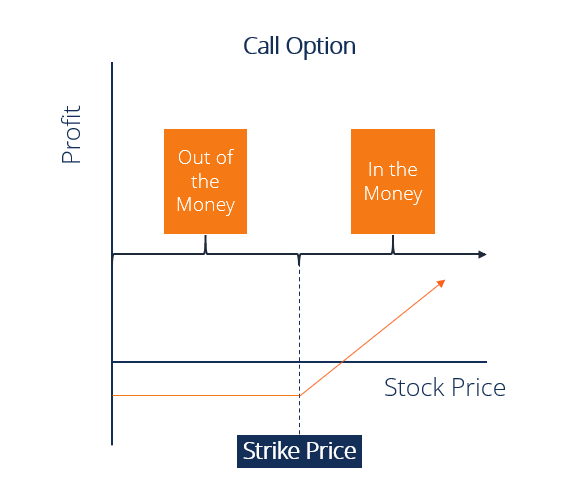
A call option gives the holder of the option the right to purchase the underlying asset at a predetermined date and price.
The predetermined date is referred to as the expiration date or maturity date. The predetermined price at which the holder can purchase the underlying asset is known as the exercise price or the strike price.
Generally, call options should always be exercised at the expiration date if the stock price is above the strike price.
Put Options
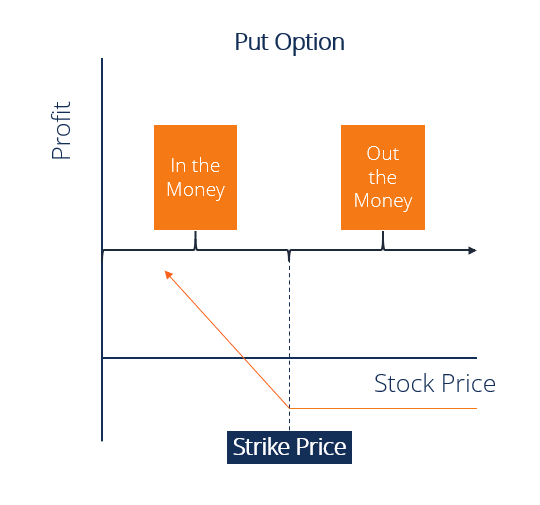
A put optionPut OptionA put option is an option contract that gives the buyer the right, but not the obligation, to sell the underlying security at a specified price (also known as strike price) before or at a predetermined expiration date. It is one of the two main types of options, the other type being a call option. gives the holder the right to sell the underlying asset by a predetermined date and price. The predetermined date is referred to as the expiration date or maturity date. The predetermined price at which the holder can sell the underlying asset is known as the exercise price or the strike price.
Popular Terminology in the Option Market
There are three primary descriptions of the positioning of the stock price relative to its strike price.
- In-the-Money
- At-the-Money
- Out-of-the-Money
When is an Option In-the-Money?
- A call optionCall OptionA call option, commonly referred to as a "call," is a form of a derivatives contract that gives the call option buyer the right, but not the obligation, to buy a stock or other financial instrument at a specific price - the strike price of the option - within a specified time frame. is referred to as in-the-money when the stock price is greater than the strike price in the contract. In-the-money call options have intrinsic value.
- A put option is referred to as in-the-money when the stock price is less than the strike price in the contract. In-the-money put options have intrinsic value.
- Assuming that there are no transaction costs, an in-the-money option will be exercised at expiration if it has not already been exercised.
When is an Option At-the-Money?
- Call and put options are referred to as at-the-moneyAt The Money (ATM)At the money (ATM) describes a situation when the strike price of an option is equal to the underlying asset's current market price. It is a concept of when the stock price is equal to the strike price in the contract. At-the-money options possess no intrinsic value.
When is an Option Out-of-the-Money?
- A call option is out-of-the-money if the stock price is less than its strike price. Out-of-the-money call options have no intrinsic value.
- A put option is out-of-the-money if the stock price is more than its strike price. Out-of-the-money put options have no intrinsic value.
Practical Application of Near-the-Money Options
Near-the-money options are commonly utilized in option trading strategies that involve trading a combination of options, zero-coupon bonds, and stocks. Common option trading strategies that involve near-the-money options include:
- Butterfly spreads
- Neutral calendar spread
A butterfly spread requires the trader to take positions in options with three different strike prices. The strategy generally involves buying a European call option with a strike price below the stock price, buying a European call option with a strike price above the stock price, and selling two European call options with a strike price that is near-the-money.
It requires a small initial investment and results in the greatest possible payoff when the two sold European call options are at-the-money at expiration.
A neutral calendar spread can be created by selling a European call option with a strike price that is near-the-money and buying a longer-maturity European call option with a strike price that is also near-the-money.
The strategy’s initial cost increases depending on how long the time to maturity is. Profit is maximized if the stock price expires at-the-money.
More Resources
CFI is the official provider of the Commercial Banking & Credit Analyst (CBCA)™Program Page - CBCAGet CFI's CBCA™ certification and become a Commercial Banking & Credit Analyst. Enroll and advance your career with our certification programs and courses. certification program, designed to transform anyone into a world-class financial analyst.
To keep learning and developing your knowledge of financial analysis, we highly recommend the additional resources below:
- Options: Calls and PutsOptions: Calls and PutsAn option is a derivative contract that gives the holder the right, but not the obligation, to buy or sell an asset by a certain date at a specified price.
- Intrinsic ValueIntrinsic ValueThe intrinsic value of a business (or any investment security) is the present value of all expected future cash flows, discounted at the appropriate discount rate. Unlike relative forms of valuation that look at comparable companies, intrinsic valuation looks only at the inherent value of a business on its own.
- American vs European vs Bermudan OptionsAmerican vs European vs Bermudan OptionsThere are different types of options that differ in terms of their exercise restrictions. Let’s explore American vs European vs Bermudan options to find out
- Stock OptionStock OptionA stock option is a contract between two parties which gives the buyer the right to buy or sell underlying stocks at a predetermined price and within a specified time period. A seller of the stock option is called an option writer, where the seller is paid a premium from the contract purchased by the stock option buyer.
-

Understanding At-The-Money (ATM) Options: A Comprehensive Guide
At the money (ATM) describes a situation when the strike price of an option is equal to the underlying asset’s current market price. It is a concept of moneyness, which describes the position be
-
Barrier Options: Understanding and Trading Strategies
A barrier option is a type of derivative option contract, the payoff of which depends on the value of the underlying asset. In other words, the payoff only comes into effect if the asset underlying th
invest
- Call Options: A Comprehensive Guide for Investors
- Understanding Delta: A Key Risk Measure in Derivatives
- Understanding Digital Options: A Comprehensive Guide for Traders
- Understanding Exercise Price in Options Trading
- Knock-In Options Explained: A Comprehensive Guide
- Knock-Out Options: A Comprehensive Guide
- Naked Options: Risks, Rewards, and How They Work
- Put Options Explained: A Comprehensive Guide for Investors
- Straddle Strategy: Definition, How It Works & Risk
-
 Understanding Put-Call Parity: A Comprehensive Guide
Put-call parity is an important concept in options Options: Calls and PutsAn option is a derivative contract that gives the holder the right, but not the obligation, to buy or sell an asset by a certa...
-
Understanding Option Intrinsic Value: A Clear Explanation
Intrinsic value for call options is literally the difference between the price of the market and the strike price (or exercise price), as long as the market is above the strike price. The intrin...