
Call Swaptions: Understanding Receiver Options for Tax Rate Swaps
A call swaption, also known as a receiver swaption, is an option that allows the holder to take part in a private tax rate swap. All swaptions are conducted over-the-counter (OTC)Over-the-Counter (OTC)Over-the-counter (OTC) is the trading of securities between two counter-parties executed outside of formal exchanges and without the supervision of an exchange regulator. OTC trading is done in over-the-counter markets (a decentralized place with no physical location), through dealer networks., meaning they are not standardized contracts. In order to participate in a call swaption – or any swaption – both the buyer and seller must agree to all of the terms within the swaption contract.

Summary:
- Call swaptions give holders the right – but not the obligation – to do an interest rate swap with the other party.
- Call swaptions are also known as receiver swaptions because the holder receives a fixed interest rate payment.
- Swaptions are similar to traditional options in that they have an expiration date, an expiration style, and a strike price.
The Basics of a Swaption
A swaption is just like an option in that it comes with an expiration date, an expiration style, a strike priceStrike PriceThe strike price is the price at which the holder of the option can exercise the option to buy or sell an underlying security, depending on, and the buyer pays the seller for the privilege. The strike price is actually a strike rate – the fixed rate that will be exchanged (swapped) for the floating rate.
In terms of expiration style, there are three commonly used standards:
- Bermuda style – Establishes a series of dates that the option can be exercised
- American style – The option can be exercised at any time prior to the expiration
- European style – Allows the holder to exercise the option only on one specified date, either the option’s expiration date or just before the expiration date, which is also the start of the swap
Elements of a Swaption
Swaptions list a number of different elements that the buyer and seller must sign off on. They include:
- The expiration dateExpiration Date (Derivatives)The expiration date refers to the date in which options or futures contracts expire. It is the last day of the validity of the derivatives contract. of the swaption
- The notional amount
- The price of the swaption
- The fixed rate
- The floating rate
When entering into a call swaption, the holder agrees to pay the floating rate and gets the right to receive the fixed rate. In effect, the buyer of a call swaption is looking to take the position of one paying the floating rate. The buyer benefits when the fixed rate is higher than the floating rate.
Swaptions are often “cash-settled” at expiration. The buyer and seller simply use an agreed-upon calculation formula to determine the value of the swap.
Who Trades Call Swaptions?
The main participants in the swaption market are financial institutions or large, multinational companies. They use swaptions to manage interest rate risk. For example, a bank or other financial institution that holds a lot of mortgages might want to hedge against falling interest rates that could result in many mortgages being paid off early. The bank would be looking to buy a receiver, or call, option.
Investment banks are active as market makers in the swaption market. They commonly own a portfolio of swaption contracts that they created with a number of counterparties. The banks will enter into call swaption or put swaption contracts themselves in order to manage their rate risk exposure. Whether they are looking to buy call or put swaptions depends on the nature of their existing swaption portfolio – whether it is over-balanced in favor of puts or of calls.
Call Swaptions vs. Put Swaptions
Call swaptions, as discussed above, afford holders the right, but not the obligation, to enter an interest rate swapInterest Rate SwapAn interest rate swap is a derivative contract through which two counterparties agree to exchange one stream of future interest payments for another. Call swaptions are also sometimes referred to as receiver swaptions because the holder receives the fixed interest rate as payment while paying the floating rate.
Put swaptions, on the other hand, enable holders to enter into a swap where they are able to pay the fixed interest rate and receive the floating rate. It is because of this that put swaptions are also known as payer swaptions. Put swaptions are designed for those individuals who are looking to receive floating interest rate payments in exchange for fixed-rate payments.
Additional Resources
CFI is the official provider of the Financial Modeling and Valuation Analyst (FMVA)™Become a Certified Financial Modeling & Valuation Analyst (FMVA)®CFI's Financial Modeling and Valuation Analyst (FMVA)® certification will help you gain the confidence you need in your finance career. Enroll today! certification program, designed to transform anyone into a world-class financial analyst.
To keep learning and developing your knowledge of financial analysis, we highly recommend the additional resources below:
- Financial IntermediaryFinancial IntermediaryA financial intermediary refers to an institution that acts as a middleman between two parties in order to facilitate a financial transaction. The institutions that are commonly referred to as financial intermediaries include commercial banks, investment banks, mutual funds, and pension funds.
- Floating Interest RateFloating Interest RateA floating interest rate refers to a variable interest rate that changes over the duration of the debt obligation. It is the opposite of a fixed rate.
- Options: Calls and PutsOptions: Calls and PutsAn option is a derivative contract that gives the holder the right, but not the obligation, to buy or sell an asset by a certain date at a specified price.
- Top Investment BanksList of Top Investment BanksList of the top 100 investment banks in the world sorted alphabetically. Top investment banks on the list are Goldman Sachs, Morgan Stanley, BAML, JP Morgan, Blackstone, Rothschild, Scotiabank, RBC, UBS, Wells Fargo, Deutsche Bank, Citi, Macquarie, HSBC, ICBC, Credit Suisse, Bank of America Merril Lynch
-

Understanding Call Prices: Callable Bonds & Preferred Stocks
A call price refers to the price that a preferred stock or bond issuer would pay to buyers if they chose to redeem the callable security before the maturity date. The price is set during the issuance
-
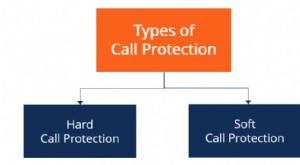
Understanding Call Protection in Bonds: Investor Protection Explained
Call protection refers to protection from investment risk to bond investors that exists by limiting the conditions under which a bond issuer may elect to call, i.e., redeem bonds before a bond’s
invest
- Bermuda Swaptions: Definition, Function & Key Features
- Call Premium Explained: Understanding Issuer Redemptions & Option Pricing
- Understanding Dividend Yield: A Comprehensive Guide
- Ex-Ante: Understanding Predictions in Finance
- Interest Rate Call Options: Understanding & Benefits
- Understanding LIBOR: What It Is and How It Works
- Put Swaption: Understanding Payer Swaptions and Rate Swaps
- Swaptions Explained: Understanding Interest Rate Option Contracts
- Understanding Burn Rate: A Key Metric for Startup Success
-
 Understanding the Call Market: Trading Hours & Price Determination
The call market refers to a market where trading does not take place continuously, but only at specified times during the trading day. Prices are dictated by the exchange rather than by bids and offer...
-
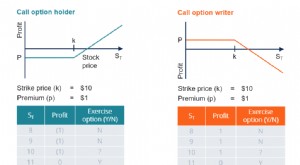 Call Options: A Comprehensive Guide for Investors
A call option, commonly referred to as a “call,” is a form of a derivatives contract that gives the call option buyer the right, but not the obligation, to buy a stockStockWhat is a stock?...