
Understanding Off-the-Run US Treasury Bonds: A Comprehensive Guide
Off-the-run Treasuries refer to debt instruments issued by the US Treasury that are not the latest offering (of such debt instruments). Conversely, debt instruments issued by the US Treasury that are the latest offering (of such debt instruments) are known as on-the-run Treasuries.

The market for off-the-run Treasuries is the secondary marketSecondary MarketThe secondary market is where investors buy and sell securities from other investors. Examples: New York Stock Exchange (NYSE), London Stock Exchange (LSE). and comprises many buyers and many sellers. On the other hand, on-the-run treasuries are traded on the primary market, which is made up of many buyers but only one seller (the US Treasury).
Example of Off-the-Run Treasuries
Consider the following example:
On February 5, 2019, the US Treasury sold 3-year Treasury Notes to capital market investors. Until the next issue of 3-year Treasury Notes, the February 5, 2019 issue are on-the-run treasuries.
On March 11, 2019, the US Treasury once again sold 3-year Treasury Notes to capital market investors. After March 11, 2019, the February 5, 2019 issue of 3-year Treasury Notes became off-the-run treasuries. Until the next issue of 3-year notes, the March 11, 2019 issue will be on-the-run treasuries.
What are US Treasuries?
The US Treasury is the biggest issuer of debt in the world and as of August 2018, with close to $21 trillion in outstanding debt. It is in large part due to the dollarization of the world economy and the adoption of the view that the US dollar is the safest asset in the world.
Treasury Bills Treasury Notes Treasury Bonds Treasury bills are debt instruments where the debt must be repaid within 1 year (52 weeks).Treasury notes are debt instruments where the debt must be repaid within 10 years.Treasury bonds debt instruments where the debt must be repaid within 30 years.Treasury bills come with 4-week, 13-week, 26-week, and 52-week maturities.Treasury notes come with 2-year, 3-year, 5-year, 7-year, and 10-year maturities.Treasury bonds come with 30-year maturities.Treasury bills are sold once a week by the US Treasury.Treasury notes are sold once a month by the US Treasury.Treasury bonds are sold every month by the US Treasury.
Off-the-Run Treasuries vs. On-the-Run Treasuries
1. Yield
Off-the-run treasuries tend to offer higher yields than on-the-run treasuries because they cost less than on-the-run treasuries. It is due to the premium paid for the greater liquidity of on-the-run treasuries.
An investor can always purchase on-the-run treasuries from the US Treasury (i.e., the investor is guaranteed to find a willing seller), whereas an investor can only purchase off-the-run treasuries from other investors (i.e., the investor is not guaranteed to find a willing seller).
2. Trading frequency
Off-the-run treasuries are traded less frequently than on-the-run treasuries due to the liquidity premiumLiquidity PremiumA liquidity premium compensates investors for investing in securities with low liquidity. Liquidity refers to how easily an investment can be sold for cash. T-bills and stocks are considered to be highly liquid since they can usually be sold at any time at the prevailing market price. On the other hand, investments such as real estate or debt instruments (investors prefer to hold assets that are liquid). Therefore, in order to incentivize investors to purchase them, off-the-run treasuries cost less and provide higher yields. The difference in yields between the two types of treasuries is known as the yield spread.
Related Readings
CFI is the official provider of the Capital Markets & Securities Analyst (CMSA)®Program Page - CMSAEnroll in CFI's CMSA® program and become a certified Capital Markets &Securities Analyst. Advance your career with our certification programs and courses. certification program, designed to transform anyone into a world-class financial analyst.
To keep learning and developing your knowledge of financial analysis, we highly recommend the additional resources below:
- 10-year US Treasury Note10-Year US Treasury NoteThe 10-year US Treasury Note is a debt obligation that is issued by the US Treasury Department and comes with a maturity of 10 years.
- On-the-Run TreasuriesOn-the-Run TreasuriesOn-the-run Treasuries are the most currently issued Treasury bonds or notes. The on-the-run Treasury is significantly more liquid than other forms of securities.
- Treasury Bills (T-Bills)Treasury Bills (T-Bills)Treasury Bills (or T-Bills for short) are a short-term financial instrument issued by the US Treasury with maturity periods from a few days up to 52 weeks.
- Investing: A Beginner’s GuideInvesting: A Beginner's GuideCFI's Investing for Beginners guide will teach you the basics of investing and how to get started. Learn about different strategies and techniques for trading
-
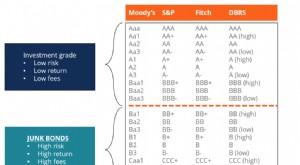
Understanding Junk Bonds: Risks, Rewards, and Investment Strategies
Junk bonds, also known as high-yield bonds, are bonds that are rated below investment grade by the big three rating agencies (see image below). Junk bonds carry a higher risk of defaultMarket Ri
-

Managed Futures: A Comprehensive Guide for Diversified Investing
Managed futures is a subclass of alternative investment strategies used by large funds and institutional investors to achieve both portfolio and market diversification. With the ability to take both l
invest
- Baby Bonds: A Comprehensive Guide to Investing in Children's Futures
- Understanding Bonds: A Comprehensive Guide for Investors
- Understanding Commodities: A Beginner's Guide to Investing
- Defensive Industries: Stability in Economic Uncertainty | [Your Company Name]
- Understanding Financial Derivatives: A Comprehensive Guide
- Understanding On-the-Run U.S. Treasuries: Liquidity & Yield
- Treasury Bills (T-Bills): Definition, Types & How They Work
- Treasury Bonds: A Comprehensive Guide to U.S. Government Debt
- Treasury Stock: Definition, Purpose, and Implications
-
 Income Stocks: A Guide to Dividend Investing
Income stocks are equity financial securities that pay regular and predictable dividendsDividendA dividend is a share of profits and retained earnings that a company pays out to its shareholders. When...
-
 Investment-Grade Bonds: Understanding Credit Risk & Ratings
An investment-grade bond is a bond classification used to denote bonds that carry a relatively low credit riskCredit RiskCredit risk is the risk of loss that may occur from the failure of any party to...