
S&P 500 Ticker Symbol (^GSPC): What You Need to Know
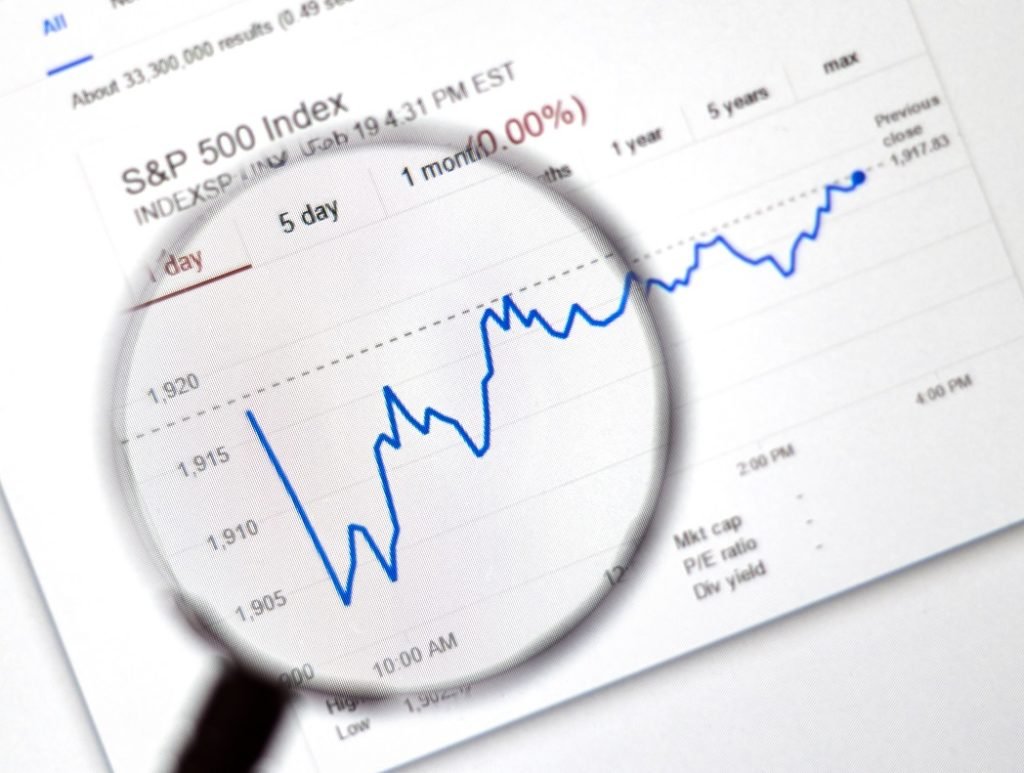
The S&P 500 index, or Standard & Poor’s 500, is a very important index that tracks the performance of the stocks of 500 large-cap companies in the U.S. The ticker symbol for the S&P 500 index is ^GSPC. The series of letters represents the performance of the 500 stocks listed on the S&P. However, it must be remembered that ^GSPC is a price index and is not tradeable. It only shows the movement of stock prices in the S&P 500 index.
Summary
- A ticker symbol is a sequence of alphabets and numbers used to represent the stock of any publicly-traded company.
- The ticker for the S&P 500 index is ^GSPC, but it cannot be traded.
- SPX and SPY represent options on the S&P 500 index, and they are traded in the market.
Understanding Ticker Symbols
A ticker symbolTickerA Ticker is a symbol, a unique combination of letters and numbers that represent a particular stock or security listed on an exchange. The ticker symbol is used to refer to a specific stock, particularly during trading. Trades are executed based on a company's ticker symbols is a sequence of alphabets and numbers used to represent the stock of any publicly-traded company. Sometimes, the symbol is an abbreviated form of the name of the company. For example, the ticker for Facebook is FB, and that for McDonald’s is MCD. However, some companies use tickers that do not resemble its name at all. For example, the stock of Harley Davidson is represented by HOG, and that of Southwest Airlines is represented by LUV.
Stocks listed on a particular exchange have certain similarities in their ticker symbols. A ticker composed of one, two, or three letters belongs to a stock listed on the New York Stock Exchange (NYSE)New York Stock Exchange (NYSE)The New York Stock Exchange (NYSE) is the largest securities exchange in the world, hosting 82% of the S&P 500, as well as 70 of the biggest, such as Ford (F) and General Motors (GM). Similarly, ticker symbols with four or five letters represent stocks listed on the NASDAQ, such as Apple (AAPL) and Amazon (AMZN).
Ticker symbols are not restricted to stocks only; futures, options, indices, and other publicly traded securities use them too. All of the symbols are structured in a way that gives the investor complete information on the security. The tickers representing a particular category of securities come with certain unique features that help people identify them. For example, symbols for mutual funds include the letter X at the end.
Other Tickers Symbols for the S&P 500
1. SPX
Investors can use optionsOptions: Calls and PutsAn option is a derivative contract that gives the holder the right, but not the obligation, to buy or sell an asset by a certain date at a specified price. to trade in the S&P 500 index, and when such trading is done, it uses a separate ticker symbol. The S&P’s own stock index is represented by SPX, which tracks the movement of its constituent stocks. It is a cash-settled option, wherein the asset underlying the option is not traded, but investors speculate only on its price.
Cash settlement is usually done in the trade of commodities that involve high transportation costs for the physical exchange process. Although stock trading does not involve transportation costs, trading the S&P 500 index requires the investors to hold and sell each of the 500 stocks in the exact proportion as the index. It is difficult to achieve, so cash settlements are preferred as the easy way out.
Since SPX does not trade on the underlying asset, it does not provide dividends either. However, the market is very liquid, and it is easy for traders to enter and exit at their convenience.
2. SPY
The SPDR S&P 500 ETFSPDR S&P 500 ETF (SPY)The Standard and Poor Depositary Receipts (SPDR) S&P 500 ETF is an exchange-traded fund that tracks the S&P 500 stock market index. is an exchange-traded fund consisting of the 500 stocks listed on the actual index in the same proportion as the index. Fund managers make up the fund in order to track the performance of the largest companies in the U.S. stock market and offer returns in line with the index. Investors can simply purchase units of the ETF in order to replicate the S&P 500 index without buying each of the constituent stocks according to the weights of their market cap.
The ticker for the SPDR S&P 500 ETF is SPY. By holding units of the fund, investors can trade in the stocks of the 500 companies. The units can be bought from or sold to other participants in the stock market.
SPX and SPY options are similar since they replicate the same index, but the value of the SPX is ten times that of SPY. Moreover, there may be slight differences in their transaction prices, since the price of SPY is determined through an auction.
In addition to the above, the S&P 500 index uses other ticker symbols as well. The Vanguard S&P 500 ETF, represented by VOO, and the Volatility Index (VIX), that depicts expected price variations in the S&P 500 in the next 30 days, are some more examples.
Additional Resources
CFI is the official provider of the global Capital Markets & Securities Analyst (CMSA)™Program Page - CMSAEnroll in CFI's CMSA® program and become a certified Capital Markets &Securities Analyst. Advance your career with our certification programs and courses. certification program, designed to help anyone become a world-class financial analyst. To keep advancing your career, the additional resources below will be useful:
- Stock Market IndexStock Market IndexA stock market index, also known as a stock index, measures a section of the stock market. In other words, the index measures the change in
- Dual-Class StocksDual-Class StocksDual-class stocks refer to a stock offering structure within a company. A dual-class structure means that a company offers two types (or
- S&P 500 Dividend AristocratsS&P 500 Dividend AristocratsThe S&P 500 Dividend Aristocrats, also known as the Dividend Aristocrats, is an exclusive index within the Standard and Poor’s 500 that was
- VIXVIXThe Chicago Board Options Exchange (CBOE) created the VIX (CBOE Volatility Index) to measure the 30-day expected volatility of the US stock market, sometimes called the "fear index". The VIX is based on the prices of options on the S&P 500 Index
-
DMI: Understanding the Directional Movement Index for Trading
The Directional Movement Index (DMI) is an indicator that helps in determining the direction the asset price is moving and the strength of the price movement. It does so by comparing the current price
-
Fear & Greed Index: Understanding Investor Sentiment | CNN Business
The Fear and Greed Index, developed by CNNMoney, is used to gauge whether investors are too bullish or bearish on the stock market. The index ranges from 0 (extreme fear) to 100 (extreme greed).
invest
- Hollister Co. Stock Symbol: ANF | Abercrombie & Fitch
- Burger King Stock Symbol: Find the Investor Code (BKC)
- EAFE Index: Understanding Developed Market Performance
- Nikkei Index: Understanding Japan's Top Stock Market Indicator
- Price-Weighted Index Explained: How It Works & Examples
- S&P 500 Dividend Aristocrats: Definition & Investment Insights
- Understanding the S&P 500: A Comprehensive Guide
- Understanding the S&P 500: Top Holdings & Long-Term Performance
- S&P 500 Average Annual Return: Historical Performance & Insights
-
 Capitalization-Weighted Index (CWI): Explained
The Capitalization-Weighted Index (cap-weighted index, CWI) is a type of stock market index in which each component of the index is weighted relative to its total market capitalizationMarket Capitaliz...
-
Russell 2000 Index: Definition, Performance & Significance
The Russell 2000 Index tracks the performance of roughly 2,000 of the smallest publicly traded companies in the U.S. The Russell 2000 is actually a subset of the Russell 3000 Index, which is much bro...