
EAFE Index: Understanding Developed Market Performance
The EAFE Index (Europe, Australasia, and the Far East) was created to measure the performance of the stock markets in developed markets – excluding the U.S. and Canada. The indicator is maintained by MSCI Inc.MSCI Inc. (Morgan Stanley Capital International)MSCI Inc. is an American investment research firm with an extensive global presence, serving clients worldwide. In particular, MSCI Inc. and is popularly known as the MSCI EAFE Index.
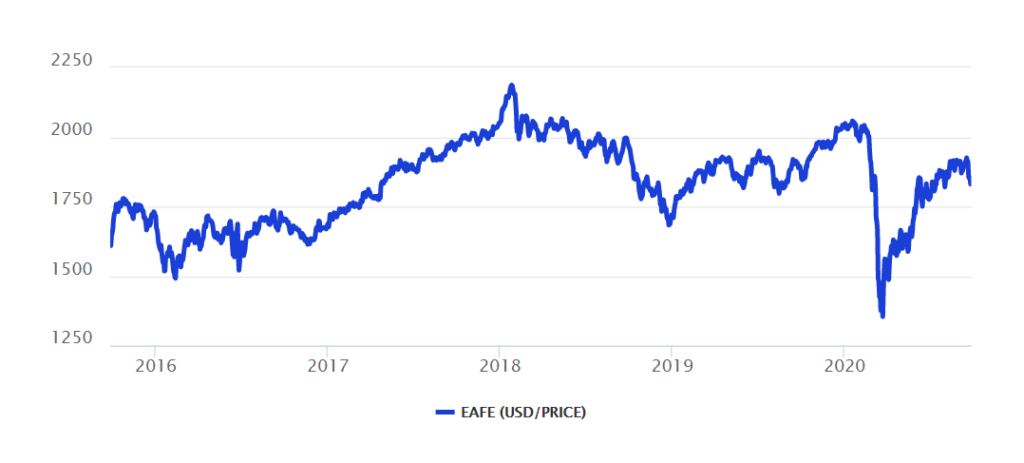
MSCI Inc. is a U.S.-based finance company that provides analysis tools for equity, multi-asset portfolio, hedge fund stock market indices, and fixed income securities or instruments on a global level. Also known as Morgan Stanley Capital International Inc., MSCI Inc. is headquartered in New York City.
Summary
- The EAFE Index (Europe, Australasia, and the Far East) was created to measure the performance of the stock markets in developed markets, excluding the U.S. and Canada.
- The indicator is maintained by MSCI Inc. and is popularly known as the MSCI EAFE Index.
- MSCI Inc. is a U.S.-based finance company that provides analysis tools for equity, multi-asset portfolio, hedge fund stock market indices, and fixed income securities or instruments on a global level.
- The EAFE Index is used as a performance benchmark for developed equity markets, including Europe, Australasia, and the Far East.
Uses of the EAFE Index
The EAFE Index is used as a performance benchmark for developed equity markets, including Europe, Australasia, and the Far East. The EAFE index can be compared to the individual performances of funds to evaluate whether or not taking them on or adding them to a client’s portfolio would ensure good returns. The indicator helps portfolio managers determine whether a certain fund would be a good fit and will enhance the value to their client’s portfolio.
In investments, it is always advisable to keep a diversified portfolio. There may be investors who are seeking investments outside the Northern American region for their portfolios. The investors can include the stocks found on the EAFE by buying financial products linked to indexes. An example would be exchange-traded funds (ETFs)Exchange Traded Fund (ETF)An Exchange Traded Fund (ETF) is a popular investment vehicle where portfolios can be more flexible and diversified across a broad range of all the available asset classes. Learn about various types of ETFs by reading this guide..
Computed since 1969, the EAFE Index consists of carefully selected stocks from 21 advanced markets (excluding the U.S. and Canada).
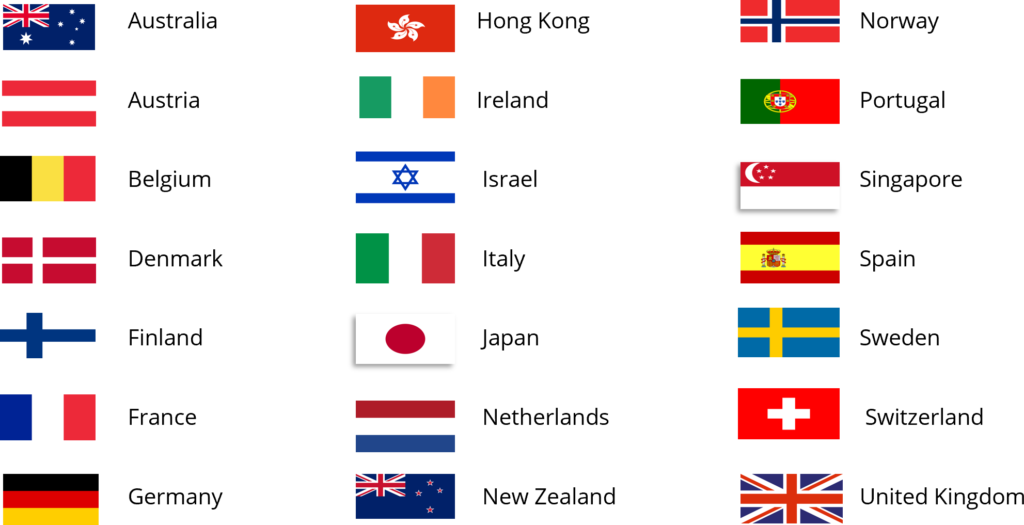
The indicator is considered the oldest international stock index and is a popular tool for assessing foreign stocks. The MSCI EAFE stocks are weighted by market capitalization. It essentially means that bigger companies obtain a greater proportion of fund investment.
Benefits of the EAFE Index
1. Lower fees or costs
Similar to the S&P 500 Index, the EAFE reflects an actively controlled portfolio basket. Constructed around actively controlled indices, mutual fundsMutual FundsA mutual fund is a pool of money collected from many investors for the purpose of investing in stocks, bonds, or other securities. Mutual funds are owned by a group of investors and managed by professionals. Learn about the various types of fund, how they work, and benefits and tradeoffs of investing in them and ETFs generally come with lower costs. It is because a portfolio or fund manager does not need to invest too much time and energy to constantly monitor the assets of the portfolio.
2. Lower volatility levels
The EAFE index is known to be less volatile in comparison to other multinational indexes, particularly those such as the MSCI BRIC, which monitors emerging economies. The EAFE is a comparatively less-volatile means of seeking out worldwide exposure.
3. Broadened diversification
The EAFE index enables investors to expand their portfolios fairly conveniently. Investors can reproduce the index in their portfolios independently or through effectively purchasing a mutual fund or ETF that emulates the index. Regardless of how the investor chooses to diversify his or her portfolio, he or she gains wide exposure to 21 foreign markets.
Drawbacks of the EAFE Index
1. Exclusion of several countries
Although the inclusion of 21 countries is wider when compared to other indices, several countries remain omitted from the EAFE. Several countries around the world, such as Russia, China, India, and Brazil, are categorized as very large and developed economies, but they are omitted from the EAFE Index.
2. Market-cap weighting distillates investments
Indexes are traditionally weighted by market capitalizationMarket CapitalizationMarket Capitalization (Market Cap) is the most recent market value of a company’s outstanding shares. Market Cap is equal to the current share price multiplied by the number of shares outstanding. The investing community often uses the market capitalization value to rank companies; however, there are drawbacks to the approach. By incorporating most of the bigger countries, investments tend to be focused on only a couple of countries, such as the U.K. and Japan.
3. Possibly fewer growth opportunities
Although excluding developing markets and developing countries tends to make the indicator less volatile, it also indicates that there might be fewer prospects for growth. Developing nations enjoy a great deal of room and potential for growth, whereas developing economies have undergone cycles of fast growth already.
Related Readings
CFI is the official provider of the global Commercial Banking & Credit Analyst (CBCA)™Program Page - CBCAGet CFI's CBCA™ certification and become a Commercial Banking & Credit Analyst. Enroll and advance your career with our certification programs and courses. certification program, designed to help anyone become a world-class financial analyst. To keep advancing your career, the additional CFI resources below will be useful:
- MSCI All Country World Index (ACWI)MSCI All Country World Index (ACWI)The MSCI All Country World Index (ACWI) is a global equity index that measures the equity performance in both the developed and emerging markets. By the end
- Debt/Bond FundDebt/Bond FundA debt fund or a bond fund is a pool of investments, usually a mutual fund or an exchange-traded fund, that invests in fixed-income
- MSCI Emerging Markets IndexMSCI Emerging Markets IndexThe MSCI Emerging Market Index is used to measure the stock market performance within emerging countries. It is one of many indexes that have
- Portfolio ManagerPortfolio ManagerPortfolio managers manage investment portfolios using a six-step portfolio management process. Learn exactly what does a portfolio manager do in this guide. Portfolio managers are professionals who manage investment portfolios, with the goal of achieving their clients’ investment objectives.
-
Herrick Payoff Index: Understanding Derivative Market Trends
The Herrick Payoff Index is a forward-looking technical analysis tool used to identify trends in derivative markets. Using price, volume, and open interest, the index provides an overview of money flo
-
MSCI Emerging Markets Index: Definition & Key Facts
The MSCI Emerging Markets Index is used to measure the stock market performance within emerging countries. Established in the 1960s, It is one of many indexes created by Morgan Stanley Capital Interna
invest
- Advance-Decline Line: Understanding Market Sentiment & Trends
- Arms Index (TRIN): Understanding Short-Term Market Sentiment
- DAX Index: Your Guide to Germany's Top 30 Companies
- KBW Bank Index: Tracking US Banking Sector Performance
- NASDAQ-100 Index: Definition, Components & Historical Data
- Nikkei Index: Understanding Japan's Top Stock Market Indicator
- Price-Weighted Index Explained: How It Works & Examples
- Understanding the S&P 500: Top Holdings & Long-Term Performance
- EAFE Index: Understanding International Stock Performance | Morgan Stanley
-
 Fear & Greed Index: Understanding Investor Sentiment | CNN Business
The Fear and Greed Index, developed by CNNMoney, is used to gauge whether investors are too bullish or bearish on the stock market. The index ranges from 0 (extreme fear) to 100 (extreme greed). ...
-
 Hang Seng Index (HSI): A Comprehensive Guide to Hong Kong's Stock Market
The Hang Seng Index (HSI) is a stock market index in Hong Kong. It records and monitors the daily changes in stock prices of the 50 largest Hong Kong stock market companies. As the companies represent...