
Wash Trading: Definition, Risks & How It Impacts Markets
Wash trading – also referred to as round trip trading – is an illegal practice where investors buy and sell the same financial instrumentsMarketable SecuritiesMarketable securities are unrestricted short-term financial instruments that are issued either for equity securities or for debt securities of a publicly listed company. The issuing company creates these instruments for the express purpose of raising funds to further finance business activities and expansion. at the same time in order to manipulate the market. The practice can unnaturally increase the trading volume in order to make the security appear as though it is more desirable than it actually is. It may also be done to provide brokers with commission fees to compensate for securities they can’t settle outright.

How Wash Trading Works
In order to execute a wash trade, an investor places both a sell order and a buy order for a security. The investor essentially sells the security to himself, which is essentially a form of insider tradingInsider TradingInsider trading refers to the practice of purchasing or selling a publicly-traded company’s securities while in possession of material information that is.
In the broadest terms, insider trading is the buying and selling of securities that the individual has more knowledge of than the general public. Because the investor is buying from and selling to himself, he has the most knowledge about the trade.
Example of a Wash Trade
Let’s say, for example, that an investor owns 50 shares of Company ABC and sells the shares on January 1 at a loss of $2,000. The investor then buys 50 shares in the same company on January 22 and subsequently realizes a gain of $4,000. A wash trade hasn’t technically occurred yet. The real wash trade is triggered when the investor seeks to claim a tax deduction for his original $2,000 loss.
If given the deduction, the investor offsets his taxes due on his $4,000 gain. It means that he pays less taxes on his earnings, despite the fact that he still ultimately owns the same amount of stock as he previously did. The U.S. Internal Revenue Service (IRS), however, taxes the investor on the full $4,000 gain from the later transaction because the purchase was made within the 30-day window. The true wash sale window is 61 days – 30 days before the sale, 30 days after the sale, and the day of the sale itself.
The Legal Aspect of Wash Trading
Some controversy still surrounds the buying and selling of securities between a few brokers. For example, is it legal if one broker sells a security to a different broker? Most in the financeFinanceCFI's Finance Articles are designed as self-study guides to learn important finance concepts online at your own pace. Browse hundreds of articles!, trading, and tax industries advise that the practice should be avoided because if nothing else, it could fall into the insider trading category.
The buying and selling don’t need to be done immediately. This is where many investors and brokers get themselves into trouble. If the buying and selling are done within a 30-day period, it could count as wash trading.
How to Avoid a Wash Trade
It is possible for investors and brokers to commit wash trades inadvertently. It is important for such individuals to catch themselves before they trigger a wash trade. It comes when tax losses are recognized. It happens when an investor disposes of an investment at a loss and then buys the same or almost identical investment within 30 days of the sale, either before or after.
Wash trading is highly illegal; however, it’s fairly easy for an investor to inadvertently fall into the wash sale trap when the time comes to recognize losses. For this reason, investors must pay close attention to when they buy and sell securities to avoid committing an illegal trade.
Additional Resources
CFI is the official provider of the global Financial Modeling & Valuation Analyst (FMVA)™Become a Certified Financial Modeling & Valuation Analyst (FMVA)®CFI's Financial Modeling and Valuation Analyst (FMVA)® certification will help you gain the confidence you need in your finance career. Enroll today! certification program, designed to help anyone become a world-class financial analyst. To keep advancing your career, the additional resources below will be useful:
- Long and Short PositionsLong and Short PositionsIn investing, long and short positions represent directional bets by investors that a security will either go up (when long) or down (when short). In the trading of assets, an investor can take two types of positions: long and short. An investor can either buy an asset (going long), or sell it (going short).
- Position TraderPosition TraderA position trader is a type of trader who holds a position in an asset for a long period of time. The holding period may vary from several weeks to years. A position trader is generally less concerned about the short-term drivers of the prices of an asset and market corrections that
- The 1933 Securities ActThe 1933 Securities ActThe 1933 Securities Act was the first major federal securities law passed following the stock market crash of 1929. The law is also referred to as the Truth in Securities Act, the Federal Securities Act, or the 1933 Act. It was enacted on May 27, 1933 during the Great Depression. ...the law was aimed at correcting some of the wrongdoings
- Trade Order TimingTrade Order Timing - TradingTrade order timing refers to the shelf-life of a specific trade order. The most common types of trade order timing are market orders, GTC orders,
-
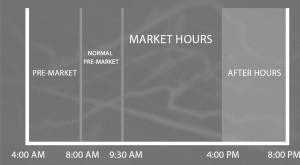
Extended Trading Hours: A Comprehensive Guide for Investors
Extended trading (or electronic trading hours) is trading conducted by electronic networks either before or after the trading day of a stock exchange, i.e., pre-market trading or after-hours tradingAf
-

Floor Trader (FT): Definition, Role & Strategies
A floor trader (FT) is an individual who conducts transactions on the exchange floor for his/her own account. Usually, a floor trader trades in derivativesDerivativesDerivatives are financial con
invest
- CFD Trading Explained: A Comprehensive Guide for Investors
- Day Trading Explained: Strategies, Risks & How It Works
- Proprietary Trading: A Comprehensive Guide for Investors
- Quantitative Trading: A Deep Dive into Models & Analysis
- Spread Trading: A Comprehensive Guide to Relative Value Trading
- Trading Authorization: Empowering Your Broker & Account Security
- Trading Channels: Understanding Uptrends & Downtrends
- Trading Plan: A Comprehensive Guide to Successful Trading
- Understanding Trading Sessions: Hours & Global Markets
-
 Circuit Breakers: Understanding Trading Halts & Market Stability
A circuit breaker is a regulatory instrument that halts the trading of a securityStockWhat is a stock? An individual who owns stock in a company is called a shareholder and is eligible to claim part o...
-
 Understanding Commodities: A Beginner's Guide to Investing
Commodities are another class of assets just like stocks and bondsBondsBonds are fixed-income securities that are issued by corporations and governments to raise capital. The bond issuer borrows capit...