
Understanding the S&P/TSX Composite Index: A Comprehensive Guide
TSX is short for the Toronto Stock Exchange, Canada’s primary exchange, and the 9th largest stock exchange in the world, based on the market capitalization of its companies. S&P stands for Standard & Poor’s, the American financial service company that took over from the previous index, the TSE 300, which lasted from 1977 until S&P took over in 2002.
Like any other benchmark index, the S&P/TSX has three primary functions: to provide an easily understood snapshot of how an country’s public companies are performing, to provide a benchmark against which fund managers can compare their results to assess their success, and to provide a formalized structure that low-cost ETFs and index funds can follow (S&P makes a great deal of money licensing its indices for use in investment products).
While its predecessor had a very specific number of companies included — the TSE 300 included, yep, 300 companies — the S&P/TSX is more fluid. It includes about 250 of the 1,500 or so companies represented on the Toronto exchange, but its companies represent about 70% of the entire market capitalization of the exchange. So obviously, bigger is better when deciding what companies get included, and to be part of the index, a company must represent at least .05 of the entire index, and those with higher market capitalization are more heavily weighted when determining any rises or falls. Membership is by no means permanent; companies will be added or fall off the index based on their market capitalization, volume of trading of their stock, and how much liquid assets they possess. In 2015, for example, the S&P/TSX added 16 new members, and dropped even more companies.
Though the exchange has become less and less natural resource company heavy as Canada’s businesses diversify into areas that have nothing to do with the country's substantial oil reserves, the index is still disproportionately affected by any swings in oil prices.
-
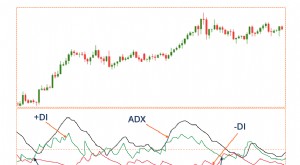
DMI: Understanding the Directional Movement Index for Trading
The Directional Movement Index (DMI) is an indicator that helps in determining the direction the asset price is moving and the strength of the price movement. It does so by comparing the current price
-
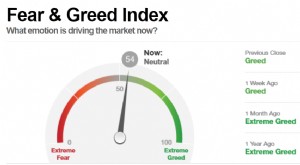
Fear & Greed Index: Understanding Investor Sentiment | CNN Business
The Fear and Greed Index, developed by CNNMoney, is used to gauge whether investors are too bullish or bearish on the stock market. The index ranges from 0 (extreme fear) to 100 (extreme greed).
invest
- S&P/TSX Composite Index: Understanding Canada's Leading Stocks
- EAFE Index: Understanding Developed Market Performance
- NASDAQ-100 Index: Definition, Components & Historical Data
- Nikkei Index: Understanding Japan's Top Stock Market Indicator
- NYSE Composite Index: Definition & What It Measures
- Price-Weighted Index Explained: How It Works & Examples
- Value Line Composite Index: Definition, History & Composition
- Understanding the S&P 500: Top Holdings & Long-Term Performance
- Composite Indexes: Understanding Financial Benchmarks & Their Use
-
 Capitalization-Weighted Index (CWI): Explained
The Capitalization-Weighted Index (cap-weighted index, CWI) is a type of stock market index in which each component of the index is weighted relative to its total market capitalizationMarket Capitaliz...
-
Russell 2000 Index: Definition, Performance & Significance
The Russell 2000 Index tracks the performance of roughly 2,000 of the smallest publicly traded companies in the U.S. The Russell 2000 is actually a subset of the Russell 3000 Index, which is much bro...