
Understanding the Maturity Risk Premium in Fixed-Income Investments

When you invest in securities that pay you a fixed rate of interest, such as a fixed-rate bond or certificate of deposit, both you and the borrower are stuck with the agreed-upon interest rate for the term of the security. If the market interest rates go up, you still receive the lower agreed-upon rate, even though it's less than the market rate. The risk that rates will rise above the set rate is known as interest rate risk.
Maturity Risk Premium
The maturity risk premium takes the interest rate risk one step further by increasing the market rate for securities with longer terms to account for the risk that the interest rate will increase. This premium is larger in long-term securities than short-term securities. For example, if your certificate of deposit is only a year, the chances that interest rates change drastically isn't as high as the risk on a five-year certificate of deposit, so the five-year CD will have the higher maturity risk premium.
-

Risk Shifting: Definition, Examples & Implications
Risk shifting is a risk strategy that involves transferring the responsibility for risk or liability to another party. The risk can be transferred in full or partially, and it ensures that the third p
-

Call Premium Explained: Understanding Issuer Redemptions & Option Pricing
A call premium refers to the amount above par value an investor receives when the debt issuer redeems the security earlier than its maturity date. If a security is redeemed before it reaches maturity,
investing
- Understanding Risk Grades: An Investor's Guide
- Risk Premium Explained: Understanding Investment Risk and Return
- Default Risk Premium: Understanding & Calculation
- Understanding Equity Risk Premium: Definition & Calculation
- Understanding Interest Rate Risk: Definition & Impact
- Liquidity Premium: Definition, Calculation & Investment Implications
- Risk-Free Rate: Definition, Importance & How It Works
- Forward Premium Explained: Understanding Currency Expectations
- Equity Risk Premium Explained: Understanding Investment Risk & Return
-
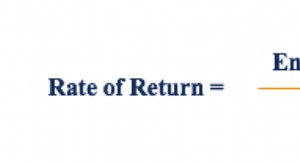 Understanding Rate of Return: A Comprehensive Guide
A Rate of Return (ROR) is the gain or loss of an investment over a certain period of time. In other words, the rate of return is the gainCapital Gains YieldCapital gains yield (CGY) is the price appre...
-
 Understanding Financial Risk: A Comprehensive Guide
In finance, risk is the probability that actual results will differ from expected results. In the Capital Asset Pricing Model (CAPM)Capital Asset Pricing Model (CAPM)The Capital Asset Pricing Model (C...