
Average Revenue Per Account (ARPA): Definition & Calculation
Average revenue per account (ARPA) is a profitability measure that assesses a company’s revenue per customer account. ARPA is generally measured on a monthly or annual basis. Although the terms average revenue per account (ARPA) and average revenue per user (ARPU)Average Revenue Per User (ARPU)Average revenue per user (ARPU), also known as average revenue per unit, is a non-GAAP metric commonly used by digital media companies, are frequently used as synonyms, this is not always correct because one customer may have several accounts with a company.

The ARPA metric is mostly used by companies operating on a subscription-based business model or those providing some type of services. For example, ARPA is widely employed by telecommunication companies, social media companies, and banks.
ARPA is a profitability metric that is not recognized by accounting standards such as GAAPGAAPGAAP, Generally Accepted Accounting Principles, is a recognized set of rules and procedures that govern corporate accounting and financial or IFRS. However, companies in relevant industries report the metric on their financial statements and devote a significant amount of time to discussing their ARPA results.
The metric is extremely valuable in providing an overview of a company’s profitability per account basis. In addition, it reveals which company’s products or services generate the most and the least revenue.
Summary
- Average revenue per account (ARPA) is a profitability measure that assesses a company’s revenue per customer account.
- ARPA is calculated by dividing the company’s revenue for a period by the number of accounts for the same period.
- Average revenue per account (ARPA) and average revenue per user (ARPU) cannot always be used interchangeably because one user (customer) can have multiple accounts with a company.
Why is ARPA Important?
Average revenue per account remains one of the most important profitability metrics for service providers and companies operating on a subscription-based business model. The key applications of the ARPA metric include the following:
1. Comparison
ARPA is commonly utilized to compare a company’s performance with that of its competitors, as well as compare its performance across time.
2. Customer segmentation
ARPA can also be used to indicate the segments of the company’s revenue. The metric can help identify which service or product generates the most/least revenue or which customers (new vs. existing) produce the most revenue.
3. Revenue forecasting
Revenue forecasting is another important application of ARPA. Note that the metric is commonly used as an input for calculating a company’s recurring revenue (MRR or ARR). At the same time, recurring revenue metrics that are distinguished by their predictability and stability are generally utilized as a baseline for revenue forecasting.
ARPA Formula
The calculation of ARPA is quite simple. Just divide the company’s total revenueRevenueRevenue is the value of all sales of goods and services recognized by a company in a period. Revenue (also referred to as Sales or Income) for a period (month or year) by the total number of accounts for the same period. Mathematically, the ARPA formula can be expressed in the following way:

Note that the number of accounts can fluctuate significantly within one time period. Due to this reason, companies tend to prefer to calculate the average number of accounts for a given period.
New Accounts ARPA vs. Existing Accounts ARPA
Revenue segmentation can be essential to understanding a company’s revenue generation dynamics. In addition to revenue analysis by a product or service, the company can evaluate its revenue generation by comparing new and existing accounts.
The revenue generation comparison between new and existing accounts allows a company to analyze the behavior of its customers. By understanding revenue trends associated with each group of accounts, a company may adjust its business strategy, as well as elaborate key decisions on its core operations.
Additional Resources
CFI is the official provider of the global Financial Modeling & Valuation Analyst (FMVA)®Become a Certified Financial Modeling & Valuation Analyst (FMVA)®CFI's Financial Modeling and Valuation Analyst (FMVA)® certification will help you gain the confidence you need in your finance career. Enroll today! certification program, designed to help anyone become a world-class financial analyst. To keep advancing your career, the additional CFI resources below will be useful:
- Average Revenue Per Paying User (ARPPU)Average Revenue Per Paying User (ARPPU)Average revenue per paying user (ARPPU) is a non-GAAP metric used to assess the average revenue generated from a paying customer. Although
- Customer Acquisition Cost (CAC)Customer Acquisition Cost (CAC)Customer acquisition cost (CAC) is the cost related to acquiring a new customer. In other words, CAC refers to the resources and costs
- Revenue Per EmployeeRevenue Per EmployeeRevenue per employee is an efficiency ratio used to determine the revenue generated per individual working at a company. The revenue per employee ratio is important for determining the efficiency and productivity of the average employee of a company.
- Revenue StreamsRevenue StreamsRevenue Streams are the various sources from which a business earns money from the sale of goods or provision of services. The types of
-

Understanding Revenue Streams: A Comprehensive Guide
Revenue streams are the various sources from which a business earns money from the sale of goods or the provision of services. The types of revenue that a business records on its accounts depend on th
-
Sales Revenue: Definition, Calculation & Importance
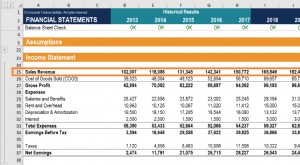
Sales revenue is the income received by a company from its sales of goods or the provision of services. In accounting, the terms “sales” and “revenue” can be, and often a
Accounting
- Revenue Per Employee: Definition, Calculation & Importance
- Ancillary Revenue: Definition, Examples & Maximization
- Average Revenue Per Account (ARPA): Definition & Calculation
- ARPPU: Understanding Average Revenue Per Paying User
- ARPU: Understanding Average Revenue Per User & Its Significance
- Understanding Due to Account: A Comprehensive Guide
- Marginal Revenue: Definition, Calculation & Importance
- Understanding Revenue: A Comprehensive Guide for Businesses
- Revenue vs. Income: Understanding the Key Differences
-
 Account Reconciliation: Definition, Process & Importance
Reconciling an account is an accounting process that is used to ensure that the transactions in a company’s financial records are consistent with independent third party reports. Reconciliation ...
-
 Revenue Recognition: A Comprehensive Guide (IFRS & GAAP)
Revenue recognition is an accounting principle that outlines the specific conditions under which revenueSales RevenueSales revenue is the income received by a company from its sales of goods or the pr...