
Closing Entries: A Comprehensive Guide for Accounting
A closing entry is a journal entryJournal Entries GuideJournal Entries are the building blocks of accounting, from reporting to auditing journal entries (which consist of Debits and Credits) that is made at the end of an accounting periodFiscal Year (FY)A fiscal year (FY) is a 12-month or 52-week period of time used by governments and businesses for accounting purposes to formulate annual to transfer balances from a temporary account to a permanent account.
Companies use closing entries to reset the balances of temporary accounts − accounts that show balances over a single accounting period − to zero. By doing so, the company moves these balances into permanent accounts on the balance sheetBalance SheetThe balance sheet is one of the three fundamental financial statements. The financial statements are key to both financial modeling and accounting.. These permanent accounts show a company’s long-standing financials.

Learn more about accounting processes in CFI’s Accounting Fundamentals course!
Temporary Accounts
Temporary accounts are accounts in the general ledgerGeneral LedgerIn accounting, a General Ledger (GL) is a record of all past transactions of a company, organized by accounts. General Ledger (GL) accounts that are used to accumulate transactions over a single accounting period. The balances of these accounts are eventually used to construct the income statementIncome StatementThe Income Statement is one of a company's core financial statements that shows their profit and loss over a period of time. The profit or at the end of the fiscal year.
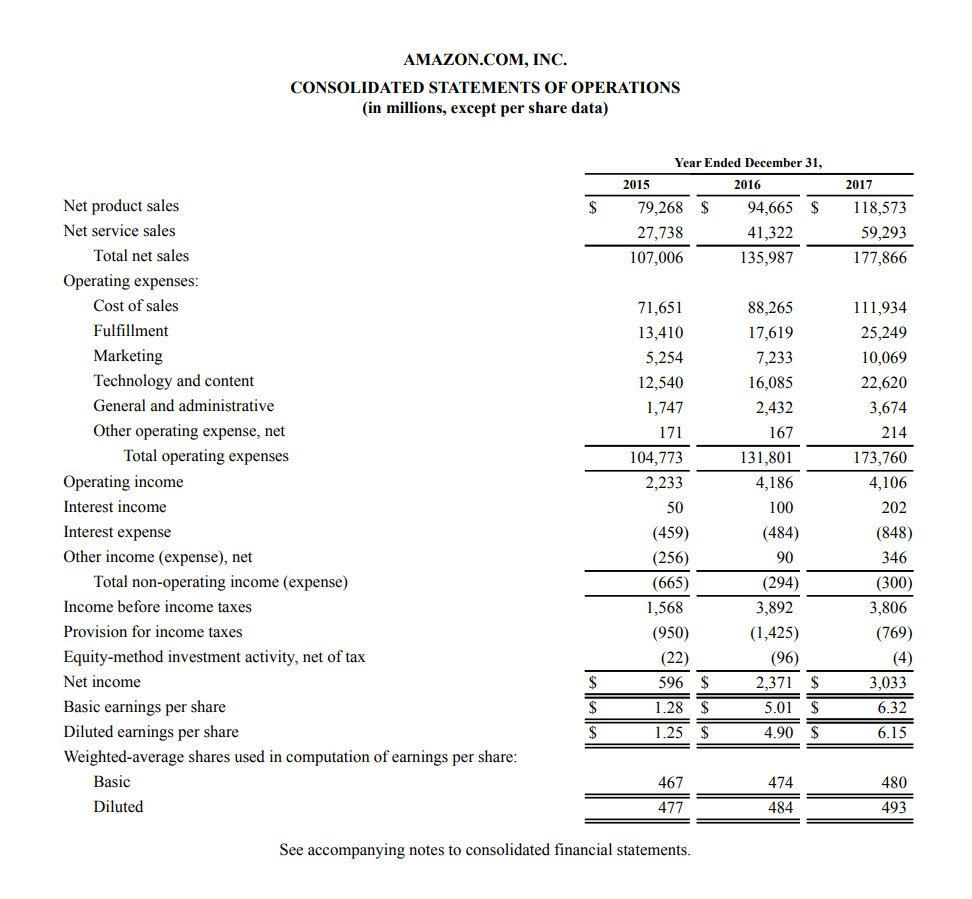
The income statement is a financial statement that is used to portray a company’s financial performance and activities over a single fiscal year. It is for this reason that the date line in the annual income statement is written as “Year ended.”
Below is an example of Amazon’s 2017 annual income statement. You can see that for the date, it is written as “Year ended December 31, YYYY”.
Learn to read financial statements in CFI’s free reading financial statements course!
As mentioned, temporary accounts in the general ledger consist of income statement accounts such as salesSales RevenueSales revenue is the income received by a company from its sales of goods or the provision of services. In accounting, the terms "sales" and or expense accounts. When the income statement is published at the end of the year, the balances of these accounts are transferred to the income summary, which is also a temporary account.
The income summary is used to transfer the balances of temporary accounts to retained earningsRetained EarningsThe Retained Earnings formula represents all accumulated net income netted by all dividends paid to shareholders. Retained Earnings are part, which is a permanent account on the balance sheet.
Income Summary
The income summary is a temporary account used to make closing entries.
All temporary accounts must be reset to zero at the end of the accounting period. To do this, their balances are emptied into the income summary account. The income summary account then transfers the net balance of all the temporary accounts to retained earnings, which is a permanent account on the balance sheet.
Permanent Accounts
Permanent accounts are accounts that show the long-standing financial position of a company. Balance sheet accounts are permanent accounts. These accounts carry forward their balances throughout multiple accounting periods.
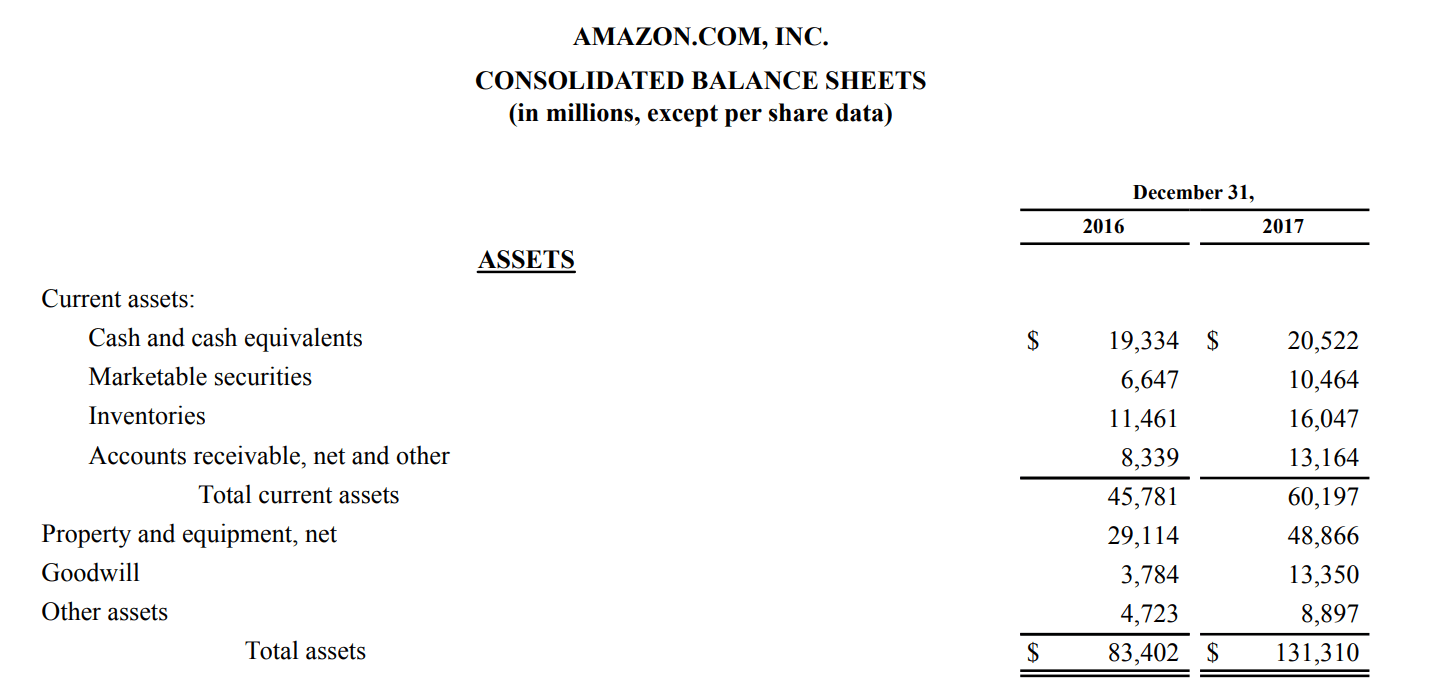
To understand this better, we can look at an account such as inventoryInventoryInventory is a current asset account found on the balance sheet, consisting of all raw materials, work-in-progress, and finished goods that a. Below is an excerpt from Amazon’s 2017 annual balance sheet.
Learn to read financial statements in CFI’s free reading financial statements course!
The balance sheet captures a snapshot of a company at a given point in time. By looking at this balance sheet, we can observe the following:
- On December 31, 2016, Amazon reported $11,461 million of inventory. This amount was carried forward into the beginning of 2017.
- On December 31, 2017, Amazon posted $16,047 million of inventory.
- Amazon increased its inventories by $4,586 million in 2017 to come to the balance it reported on December 31, 2017.
By looking at it this way, we can see how Inventory is a permanent account that carries forward balances through multiple accounting periods.
Example of a Closing Entry
Below are examples of closing entries that zero the temporary accounts in the income statement and transfer the balances to the permanent retained earnings account. This is done using the income summary account.
1. Close Revenue Accounts
Clear the balance of the revenueRevenueRevenue is the value of all sales of goods and services recognized by a company in a period. Revenue (also referred to as Sales or Income) account by debiting revenue and crediting income summary.

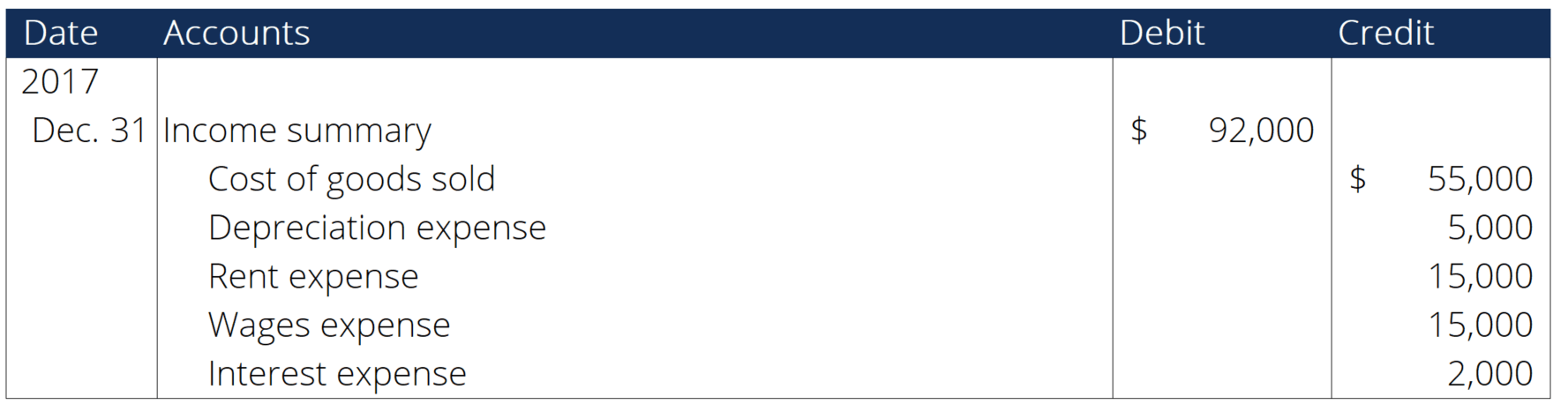
2. Close Expense Accounts
Clear the balance of the expense accounts by debiting income summary and crediting the corresponding expenses.
3. Close Income Summary
Close the income summary account by debiting income summary and crediting retained earnings.

4. Close Dividends
Close the dividendsDividendA dividend is a share of profits and retained earnings that a company pays out to its shareholders. When a company generates a profit and accumulates retained earnings, those earnings can be either reinvested in the business or paid out to shareholders as a dividend. account by debiting retained earnings and crediting dividends.

Additional Resources
Thanks for reading CFI’s closing entry guide. Corporate Finance Institute has other resources that will help you expand your knowledge and advance your career! Check out the links below:
- Accounting Fundamentals
- Introduction to Corporate Finance
- Accounting EquationAccounting EquationThe accounting equation is a basic principle of accounting and a fundamental element of the balance sheet. Assets = Liabilities +
- Linking the Financial StatementsHow the 3 Financial Statements are LinkedHow are the 3 financial statements linked together? We explain how to link the 3 financial statements together for financial modeling and
-

Annualized Income: Definition, Calculation & Tax Implications
Annualized income refers to an estimate of the total income generated for one year. It is calculated using partial data, and therefore, the income generated represents an estimate of the amount a busi
-
Understanding Business Expenses: A Comprehensive Guide
Businesses incur various types of expenses. An expense is a type of expenditure that flows through the income statementIncome StatementThe Income Statement is one of a companys core financial statemen
Accounting
- Accounts Payable (AP): Definition, Function & Importance
- Understanding Accounting Income: A Key Financial Metric
- Accrued Income Explained: Definition & Accounting
- Income Smoothing: Definition, Methods & Implications
- Understanding Net Income: A Comprehensive Guide
- Non-Operating Income: Definition, Examples & Significance
- Understanding Profit: A Key Financial Metric
- Understanding Revenue: A Comprehensive Guide for Businesses
- Revenue vs. Income: Understanding the Key Differences
-
 Understanding Taxable Income: Definition & Calculation
Taxable income refers to any individual’s or business’ compensation that is used to determine tax liability. The total income amount or gross income is used as the basis to calculate how m...
-
 Understanding After-Tax Income: A Comprehensive Guide
After-tax income refers to the net income after deducting all applicable taxes. Therefore, the after-tax income is simply one’s gross income minus taxes. For individuals and corporations, the af...