
Stakeholder Impact Analysis: A Comprehensive Guide
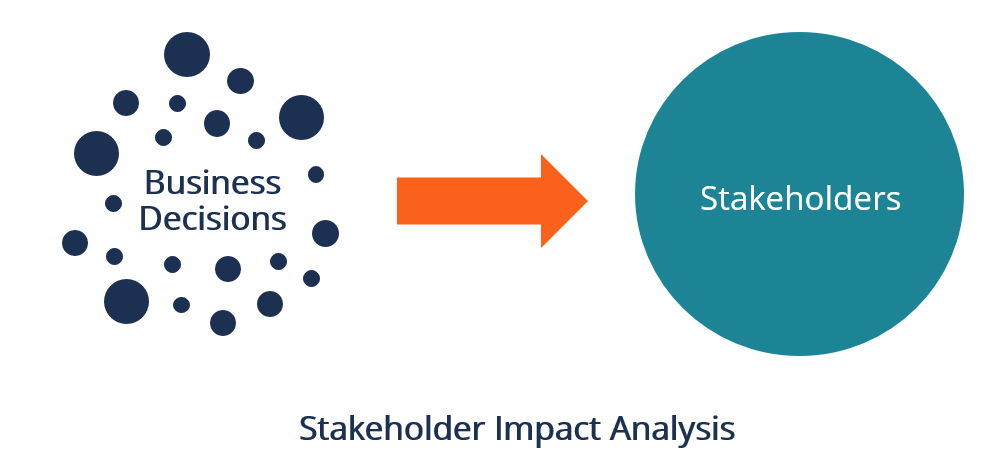
Stakeholder impact analyses or stakeholder analyses refer to the use of analytical tools and techniques to analyze the effect of business decisions on stakeholders.
Understanding Stakeholder Impact Analysis
Stakeholder impact analysis uses analytical tools and techniques to quantify and analyze the effect of business decisions on the stakeholders of the business. It is a key task for the management of a company. It is used to formulate business strategyCorporate StrategyCorporate Strategy focuses on how to manage resources, risk and return across a firm, as opposed to looking at competitive advantages in business strategy and make production, distribution, and final sales-related decisions. Common frameworks used to evaluate stakeholder impact analyses include the following:
- Mendelow’s Power-Interest Grid
- Bourne and Kasprczyk Stakeholder Circle
- Murray-Webster Simon 3D Cube
Mendelow’s Power-Interest Grid
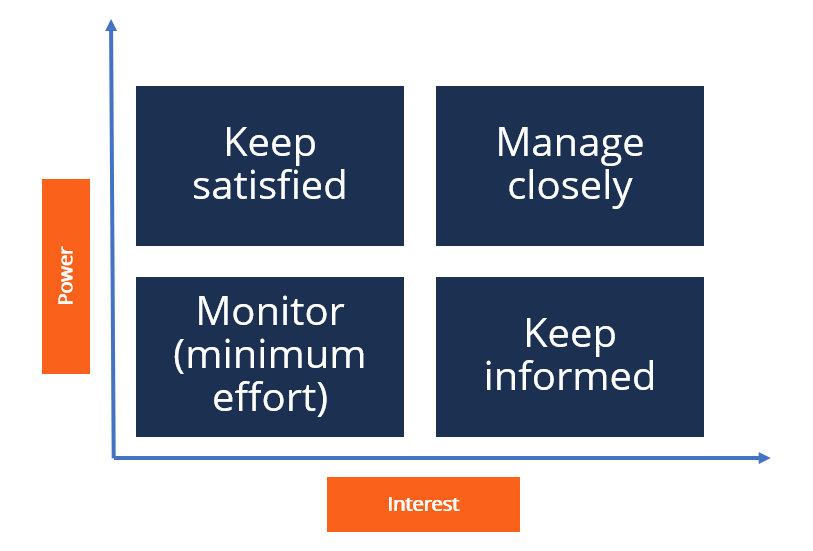
Mendelow’s Power-Interest Grid categorizes stakeholders on the basis of two key characteristics: Power over the business and Interest in the business. Power can be defined as a stakeholder’s ability to influence the core structure of the business. It includes the ability to make key business decisions such as overall strategy and resource allocation.
Interest can be defined as the degree of correlation between the stakeholder’s aims and ambitions and the business’ aims and ambitions. For example, the CEOCEOA CEO, short for Chief Executive Officer, is the highest-ranking individual in a company or organization. The CEO is responsible for the overall success of an organization and for making top-level managerial decisions. Read a job description of a business has a lot of interest in the business and also has a lot of power over the business. The government may have very little interest in the business but may hold a lot of power over the business.
Bourne and Kasprczyk’s Stakeholder Circle
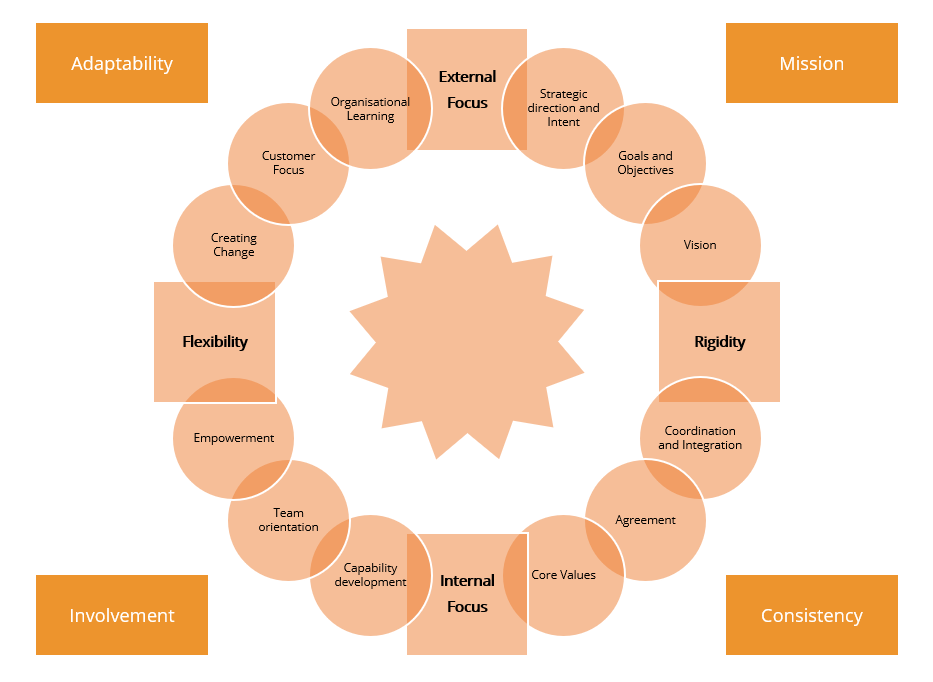
The Bourne-Kasprczyk Stakeholder Cycle seeks to first define a company’s overall culture and then uses that culture to analyze how a decision will impact the company’s shareholders.
The introduction of stakeholder relationship management practices and processes in an organization may be affected by four types of cultures, which include organizational, professional or industry, national/regional, and generational cultures.
Murray-Webster-Simon 3D Cube
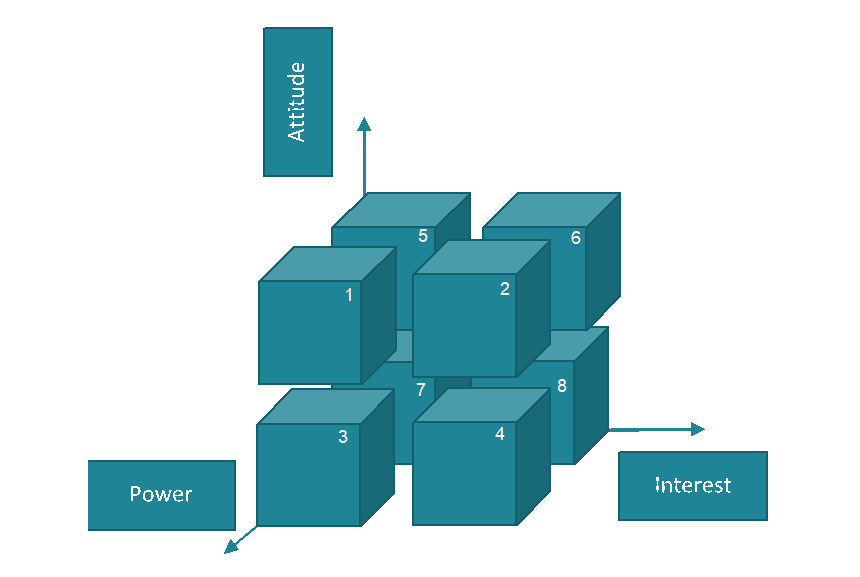
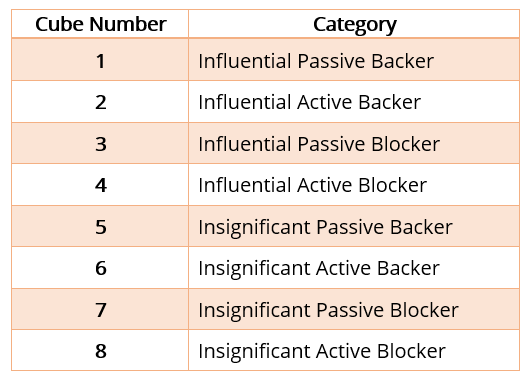
The Murray-Webster-Simon Power-Interest-Attitude Cube is an extension of Mendelow’s Power-Interest Cube. The Murray-Simon-Webster Cube applies Mendelow’s mapping to a specific business project while incorporating the additional dimension of attitude.
The Murray-Simon-Webster Cube approach categorizes stakeholders on the basis of three key characteristics: Power, Interest, and Attitude. Power, as previously noted, is defined as a stakeholder’s ability to influence the core structure of the business. It includes the ability to make key business decisions such as overall strategy and resource allocation.
Interest is defined as the degree of correlation between the stakeholder’s aims and ambitions and the business’ aims and ambitions. Attitude is a project-related measure that can be defined as a stakeholder’s attitude toward a specific project.
Additional Resources
CFI offers the Financial Modeling & Valuation Analyst (FMVA)™Become a Certified Financial Modeling & Valuation Analyst (FMVA)®CFI's Financial Modeling and Valuation Analyst (FMVA)® certification will help you gain the confidence you need in your finance career. Enroll today! certification program for those looking to take their careers to the next level. To keep learning and advancing your career, the following CFI resources will be helpful:
- Competitive AdvantageCompetitive AdvantageA competitive advantage is an attribute that enables a company to outperform its competitors. It allows a company to achieve superior margins
- Operations ManagementOperations ManagementOperations management is a field of business concerned with the administration of business practices to maximize efficiency within the organization. It
- Stakeholder vs ShareholderStakeholder vs. ShareholderThe terms “stakeholder” and “shareholder” are often used interchangeably in the business environment. Looking closely at the meanings of stakeholder vs shareholder, there are key differences in usage. Generally, a shareholder is a stakeholder of the company while a stakeholder is not necessarily a shareholder.
- Types of BusinessesTypes of BusinessesThere are four main types of businesses to choose when forming a company: sole proprietorships, partnerships, limited liability companies, and corporations.
-

Business Strategy vs. Business Model: Understanding the Difference
Setting up and successfully running a business involves differentiating between business strategy vs business model. To reach their goals and achieve success, owners need to adopt the right strategy f
-
![Corporate Strategy: A Comprehensive Overview | [Your Company Name]](https://www.etffin.com/article/uploadfiles/202110/2021100815410409_S.png)
Corporate Strategy: A Comprehensive Overview | [Your Company Name]
Corporate Strategy takes a portfolio approach to strategic decision making by looking across all of a firm’s businesses to determine how to create the most value. In order to develop a cor
Business strategy
- Understanding Operating Expenses (OpEx): A Comprehensive Guide
- Understanding Business Metrics: Key Performance Indicators & KPIs
- Non-Operating Assets: Definition, Examples & Financial Impact
- Understanding Fixed Charges: A Comprehensive Guide
- Understanding Business Overheads: Costs & Examples
- Business Operations: Definition, Activities & Optimization
- Exit Strategies: Planning Your Business's Future
- Understanding Business Structures: A Comprehensive Guide
- Essential Business Metrics: 35 KPIs to Drive Growth & Profitability
-
 Understanding Bank Business Segments: Retail, Wholesale & Wealth Management
A bank’s major business segments are retail banking, wholesale banking, and wealth managementPrivate Wealth ManagementPrivate wealth management is an investment practice that involves financial ...
-
 Choosing the Right Organizational Structure for Your Business
Organizational structures are essentially blueprints that reveal how companies are run and managed and how information is passed within the organization. An organizational structure is literally a cha...