
Understanding Privately Held Companies: Definition & Key Features
A Privately Held Company is a company that is wholly owned by individuals or corporationsCorporationA corporation is a legal entity created by individuals, stockholders, or shareholders, with the purpose of operating for profit. Corporations are allowed to enter into contracts, sue and be sued, own assets, remit federal and state taxes, and borrow money from financial institutions. and does not offer equity interests in the company to investors in the form of stock shares traded on a public stock exchangeStock MarketThe stock market refers to public markets that exist for issuing, buying and selling stocks that trade on a stock exchange or over-the-counter. Stocks, also known as equities, represent fractional ownership in a company. A company in the “private sector” refers to non-government-owned businesses, and includes both privately held (non-traded) and publicly traded (offering stock shares traded on an exchange) companies.

Examples of a privately held company
There are many more privately held companies than public companies in existence. While extremely large businesses tend to become publicly traded at some point (to access capital marketsEquity Capital Market (ECM)The equity capital market is a subset of the capital market, where financial institutions and companies interact to trade financial instruments and gain liquidity), there are many well-known private companies.
Well-known private companies include:
- Koch Industries
- Deloitte (one of the Big Four accounting firmsBig Four Accounting FirmsThe Big Four accounting firms refer to Deloitte, PricewaterhouseCoopers (PwC), KPMG, and Ernst & Young. These firms are the four largest professional services firms in the world that provide audit, transaction advisory, taxation, consulting, risk advisory, and actuarial services.)
- C. Johnson
- KPMG
- Ernst & Young (E&Y, Big Four)
- PricewaterhouseCoopers (PwC, Big Four)
- IKEA
- LEGO
- Rolex
How to start a privately held company
If you wish to start your own company, the resources below will be a great place to begin. Starting a privately held company in the U.S., Canada, and other countries is quick and easy, while in other countries such as India and China it is more challenging.
Here are country-specific information resources for starting a private company:
- The USA
- Canada
- The UK
- India
- China
- Australia
Types of privately held companies
There are various types of private company structures, each of which offers its own advantages and disadvantages. The most common types are Corporation, Limited Liability Partnership (LLP), Sole Proprietorship, and Non-Profit Organization. These types vary in their specific definitions and structures by country, but in most countries, a corporation is the most commonly used company structure.
Risks of ownership
Owning shares in a private company poses many risks. While all investments are risky, owning shares in a private business entails some unique risks, such as the following:
- Lack of liquidity (since shares do not trade on a public exchange)
- Challenging to value (private company valuation and financial modeling exercises pose challenges due to less readily available information)
- Governance issues (many private businesses lack the corporate governance structures that are in place in public companies)
- Personal liability (owners of private companies typically need to pledge personal assets as collateral to get financing from banks)
Additional resources
CFI’s mission is to help you advance your career in the financial industry. With that goal in mind, these additional resources will be helpful:
- Corporate StructureCorporate StructureCorporate structure refers to the organization of different departments or business units within a company. Depending on a company’s goals and the industry
- Private Company vs Public CompanyPrivate vs Public CompanyThe main difference between a private vs public company is that the shares of a public company are traded on a stock exchange, while a private company's shares are not.
- Private Company ValuationPrivate Company Valuation3 techniques for Private Company Valuation - learn how to value a business even if it's private and with limited information. This guide provides examples including comparable company analysis, discounted cash flow analysis, and the first Chicago method. Learn how professionals value a business
- Financial Analyst Job DescriptionFinancial Analyst Job DescriptionThe financial analyst job description below gives a typical example of all the skills, education, and experience required to be hired for an analyst job at a bank, institution, or corporation. Perform financial forecasting, reporting, and operational metrics tracking, analyze financial data, create financial models
-
Understanding Dividend Yield: A Key Metric for Investors
The Dividend Yield is a financial ratio that measures the annual value of dividends received relative to the market valueMarket CapitalizationMarket Capitalization (Market Cap) is the most recent
-

DuPont Analysis: A Comprehensive Guide to Profitability Assessment
In the 1920s, the management at DuPont Corporation developed a model called DuPont Analysis for a detailed assessment of the company’s profitability. DuPont Analysis is a tool that may help us t
finance
- Private Placement Memorandum (PPM): Definition & Key Information
- Acquirer Definition: Understanding Corporate Acquisitions
- Understanding Clawbacks: Protecting Stakeholders from Failed Performance
- Understanding Financial Gearing: Debt & Leverage Explained
- Leverage in Finance: Strategies, Types & Risks
- Parent Company Explained: Definition, Control & Examples
- Understanding Private Companies: Ownership, Structure, and Types
- Private vs. Public Company: Key Differences Explained
- Understanding Stocks: A Beginner's Guide to Share Ownership
-
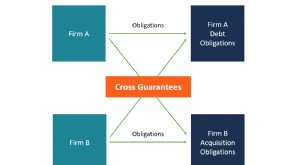 Cross Guarantee: Definition, Purpose & Examples
A cross guarantee refers to an arrangement between two or more related companies to provide a guarantee to each other’s obligations. Such a guarantee is commonly made among companies trading und...
-
 Divestiture Explained: Definition, Types & Examples
A divestiture (or divestment) is the disposal of company’s assets or a business unit through a sale, exchange, closure, or bankruptcyBankruptcyBankruptcy is the legal status of a human or a ...