
Pro-Rata Rights: Understanding Investor Ownership in Funding Rounds
Pro-rata right is a legal term that describes the right, but not the obligation, that can be given to an investor to maintain their initial level of percentage ownershipStockholders EquityStockholders Equity (also known as Shareholders Equity) is an account on a company's balance sheet that consists of share capital plus in a company during subsequent rounds of financing.
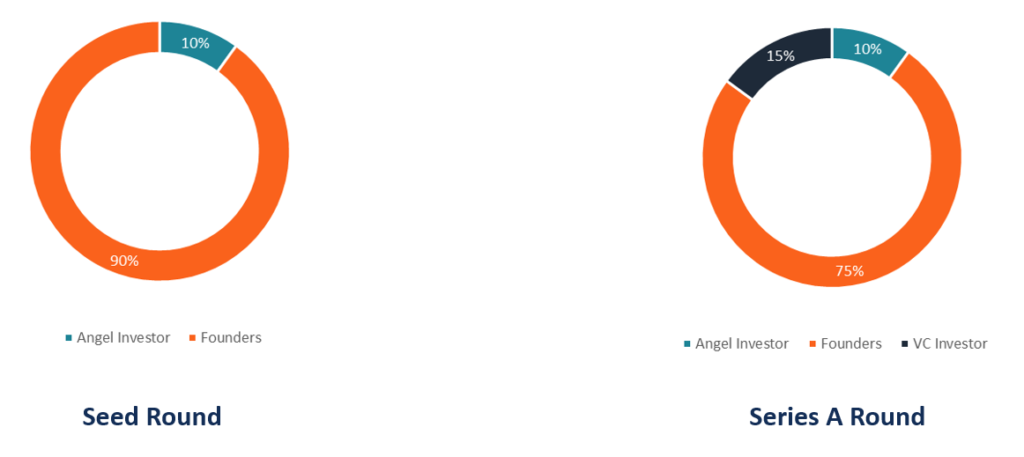
In other words, if an investor with a pro-rata right initially acquired a 10% equity stake in a company, then he or she is given the option to invest more in the next rounds of the company’s financing to maintain a 10% stake. The term pro-rata right is commonly used in venture capital financingVenture CapitalVenture capital is a form of financing that provides funds to early stage, emerging companies with high growth potential, in exchange for equity or an ownership stake. Venture capitalists take the risk of investing in startup companies, with the hope that they will earn significant returns when the companies become a success..
How Do Pro-Rata Rights Work?
The idea of a pro-rata right is essentially related to the concept of dilution. Each new round of equity financing implies the issuance of new shares. When new shares are issued, the percentage of the equity stake of current shareholders (foundersFounders StockFounders stock refers to the equity that is given to the early founders of an organization. This type of stock differs in a few important ways from common stock sold in the secondary market. Key differences are (1) that founders stock can only be issued at face value, and (2) it comes with a vesting schedule., investors) is diluted. In other words, the current shareholders lose part of their voting power as calculated on a percentage basis.
In order to prevent such a scenario, the investors can ask a company to include a provision that grants them pro-rata rights. The investor with the pro-rata right is then able to maintain the percentage of their equity stake and voting power even with the issuance of new shares.
Note that the pro-rata right is not an obligation, and it can be exercised at the discretion of its holder. Some investors with pro-rata rights may opt not to exercise their option to invest in the next rounds of financing. The reasons for abandoning the rights include poor performance or development of a company, as well as extremely large additional investments required to maintain the initial ownership percentage.
In addition, in some cases, investors do not receive pro-rata rights. Some companies opt to grant such rights to valuable investors who have made a significant impact on the business.
Pro-rata rights are generally granted to, or asked for by, investors who invest in early rounds of financingSeries A FinancingSeries A financing (also known as series A round or series A funding) is one of the stages in the capital-raising process by a startup. Essentially, the series A round is the second stage of startup financing and the first stage of venture capital financing.. The investors are often not willing to exercise their rights in the later financing stages due to the high investment amount required.
Additional Resources
Thank you for reading CFI’s explanation of a pro-rata right. CFI is the official provider of the Financial Modeling and Valuation Analyst (FMVA)™Become a Certified Financial Modeling & Valuation Analyst (FMVA)®CFI's Financial Modeling and Valuation Analyst (FMVA)® certification will help you gain the confidence you need in your finance career. Enroll today! certification program, designed to transform anyone into a world-class financial analyst.
To keep learning and developing your knowledge of financial analysis, we highly recommend the additional CFI resources below:
- Angel InvestorAngel InvestorAn angel investor is a person or company that provides capital for start-up businesses in exchange for ownership equity or convertible debt. They may provide a one-time investment or an ongoing capital injection to help the business move through the difficult early stages.
- Preferred SharesPreferred SharesPreferred shares (preferred stock, preference shares) are the class of stock ownership in a corporation that has a priority claim on the company’s assets over common stock shares. The shares are more senior than common stock but are more junior relative to debt, such as bonds.
- Proxy VoteProxy VoteA Proxy Vote is a delegation of voting authority to a representative on behalf of the original vote-holder. The party who receives the authority to vote is known as the Proxy and the original vote-holder is known as the Principal. The concept is important in financial markets and particularly with public companies
- Rights IssueRights IssueA rights issue is an offering of rights to the existing shareholders of a company that gives them an opportunity to buy additional shares directly from the company at a discounted price
-

Understanding Liquid Equity: A Guide to Company Stock
Liquid equities can be bought and sold quickly. Equity is another name for a company stock. When you buy shares in company stock, you take an ownership interest in the company and each share
-

Understanding Deficit Equity: Causes, Impacts & Solutions
Deficit equity, more commonly referred to as negative owners' equity, results when the total value of an organization's assets is less than the sum total of its liabilities. In any company, &q
finance
- Backstop: Understanding Financial Safety Nets and Contingency Funding
- Cost of Equity: Definition, Calculation & Importance
- Understanding Equity: A Comprehensive Guide for Investors
- Equity Crowdfunding: A Comprehensive Guide for Startups & Investors
- Equity Multiplier: Definition, Calculation & Financial Significance
- Understanding Negative Equity: Causes, Risks & Solutions
- Growth Equity: Investing in Expanding Businesses | [Your Company Name]
- Understanding Equity Statements: A Comprehensive Guide
- Understanding Home Equity: A Comprehensive Guide
-
 Margin Equity Percentage: Understanding Your Brokerage Loan Limits
A brokerage margin account allows an investor to buy stocks and other securities with a portion of the purchase price paid with a margin loan from the broker. A brokerage margin account allow...
-
Private Equity Explained: Diversify Your Portfolio & Investment Options
Personal Capital recently announced that we are offering private equity for our high net worth clients. But exactly what is private equity? It is well-known that proper diversification is the key to p...